Showing posts with label Washington Bullets. Show all posts

Thursday, November 4, 2010

The Five Best NBA Coaches Not In The Hall Of Fame

Gene Shue


Shue was a legend at Maryland University as an All-American guard before the Philadelphia Warriors made him the third overall pick in 1954. He was traded to the New York Knicks after just six games, then was traded to the Fort Wayne Pistons in 1956.

He became a star with the Pistons, being chosen an All-Star six straight years while always being amongst the league leaders in minutes played. He returned to the Knicks in 1962, then joined the Baltimore Bullets in 1963 before retiring.

Getting into coaching, the Bullets asked him to take over for Hall of Famer Buddy Jeannette in 1967. The Bullets were a bad team, but Shue got them to improve their win total by seven games in his second year. It improved an additional 21 games in 1969, as the Bullets won their division.

Wes Unseld, one of the 50 greatest players in NBA history, was a big reason why in 1969. He became just the second man in NBA history to be named Rookie of the Year and MVP in the same season. Hall of Famers Earl "The Pearl" Monroe and Gus Johnson joined Unseld and Shue was named Coach of the Year.

In his last five years with the Bullets, the team won over 50 games three times. One of the years they didn't saw them reach the NBA Finals before losing to the Milwaukee Bucks and former Warriors teammate Larry Costello.

Shue was replaced by Hall of Famer K.C. Jones in 1973, but he immediately got a job with the Philadelphia 76ers. The Sixers were struggling during this time. They had won just nine games the season before.

It wasn't long before they started to improve greatly under Shue, and Philadelphia made the NBA Finals in 1977 before losing to a red-hot Portland Trail Blazers. Shue was fired six games into the 1978 season, replaced by Hall of Famer Billy Cunningham. He was back in the NBA the next year, leading the San Diego Clippers to a 16 win improvement over the season before when they were the Buffalo Braves.

He left the Clippers after the next season to take the helm of the Washington Bullets. Lasting six years there, the Bullets made the playoffs three times before he was replaced by Kevin Loughery, the man he replaced in Philadelphia.

Shue was named Coach of the Year again in 1982, making him the second coach to win the award more than once. Don Nelson, Bill Fitch, and Cotton Fitzsimmons duplicated the feat since, but the 12 year gap between winning the award is still a record.

He joined the Los Angeles Clippers in 1988, lasting two years before retiring to become the general manager of the 76ers for two years.

He ended up with 784 wins, which was the second most in NBA history then. It is still the 12th most today. It is amazing Shue has yet to be inducted. Let alone the fact he won two awards for coach of the year, Shue turned around the program of almost every team he took over.

Factor in his six All-Star games as a player, his contributions are unmatched by many and worthy of being honored with induction.


Bill Fitch


Fitch started his coaching career in the college ranks for several years after first becoming a drill instructor for the U.S. Marine Corps.

In 1970, he got his first NBA head coaching job with a expansion Cleveland Cavaliers team that won just 15 times in his first year. Staying there nine years, the team improved each season.

In 1976, known as the "The Miracle of Richfield" to Cavaliers fans, the team made an unexpected playoff run that was also the first postseason appearance in franchise history. Fitch won the Coach of the Year award for his efforts.

Leaving Cleveland in 1979, he was immediately hired by the Boston Celtics and won a league best 61 games with rookie Larry Bird as the star of the club. Boston had won just 29 games the year before, and the 32-win improvement was a record at the time. Bird, who won Rookie of the Year, cites Fitch as a huge influence on his own personal work ethic.

Boston then won the NBA Championship the next year, and Fitch was named Coach of the Year for the second time. Only three other coaches have ever won this award more than once ,and Fitch was the first coach to accomplish this.

After winning a career best 63 games the next year, Fitch left the Celtics after a 56-win year in 1983 and joined the Houston Rockets. After 29 wins in his initial season, Houston won 48 the next year and appeared in the NBA Finals in 1986 before losing to the Celtics in six games.

Fitch left Houston in 1986 despite 46 wins, but resurfaced as the coach of the New Jersey Nets in 1988. The team won 17 games his first year, 26 the next, then 40 in his third and final year before being fired.

After being out of the game several years, the Los Angeles Clippers hired him in 1995. After 17 wins his first year, the Clippers won 29 then 36 over the next two, which also included a playoffs appearance. The Clippers reverted to 17 wins in 1998, and Fitch retired from the game with 944 wins.

Though his win total is the sixth most in NBA history, critics point to his 1,106 losses without looking at his career. Every team he coached was lousy the year before he got there, except the expansion Cavaliers. Every team he coached improved dramatically under his guidance.

Bill Fitch should be in the Hall of Fame for more than his Coach of the Year awards, or his championship ring. The man took franchises out of the graves and into the playoffs. He is the epitome of what a coach should be, which should be more than enough to get him inducted into the Basketball Hall of Fame.


Cotton Fitzsimmons


Fitzsimmons first tasted coaching success in college. He once replaced Tex Winters, the man who perfected the Triangle Offense and mentored Phil Jackson, at Kansas State University.

He joined the Phoenix Suns in 1970, replacing interim coach Jerry Colangelo. Colangelo was the general manager of the Suns, and would later buy the team in 1987. Fitzsimmons won 97 games in two years before moving on to the Atlanta Hawks in 1972.

After almost four years with the Hawks, he took over as coach of the Buffalo Braves for one season before joining the Kansas City Kings in 1979 for six years. Fitzsimmons was named Coach of the Year in his first year, the only one where his team won a divisional title, then led them to the Western Conference Finals two years later.

The San Antonio Spurs hired him in 1985, then fired him after 1986. Phoenix hired him in 1989, and the Suns won no less than 53 games over the next four seasons.

He won the NBA Coach of the Year Award in his first season, making him just the fourth coach ever to win it twice. He retired after 1992 to do television, but was coaxed out of retirement during the 1996 season for 49 games. After the team lost the first eight games of the next year, Fitzsimmons turned the team over to Danny Ainge and retired for good.

The 832 wins he had are still the 11th most in NBA history. The only reasons I can think of his still being excluded for the Basketball Hall of Fame is because none of his teams ever reached the finals, and only one won their division.

It is evident to see Cotton Fitzsimmons was a winner, having won 57 more games than he lost, on a lot of teams not many expected much from.

Excellence in coaching comes from getting the players to maximize their talents. Fitzsimmons did that yearly with mostly positive results, having ten seasons of 45 wins or more. He is certainly worthy of induction to the Naismith Memorial Basketball Hall of Fame.


Dick Motta


Despite never having played organized basketball in high school or beyond, Dick Motta got into coaching the game and first worked his way through the college ranks that culminated in six years at Weber State University.

The Chicago Bulls hired him in 1969, and they improved their win total in each of his first four years with the club. Motta won Coach of the Year in 1971, then a career best 57 games in 1972. In his eight years, the team won more than 50 games four times.

He was fired after the 1976 season, but was immediately hired by the Washington Bullets. The Bullets had already been to the finals twice in the decade, but had failed to won in either year. Led by Hall of Famers Wes Unseld and Elvin Hayes, the team had talent but had nothing to show for it. That changed under Motta.

The 1978 season saw the Bullets deal with injuries, but they still won 44 games and got into the playoffs. They faced opponents who were favored to defeat them, but the Bullets stormed through the playoffs despite sportswriters continuously predicting their impending end.

While up three games to one against the San Antonio Spurs, a beat writer for the Spurs named Dan Cook wrote "The opera isn't over 'til the fat lady sings". Motta loved the phrase and adopted it for his Bullets as they faced the heavily favored Philadelphia 76ers in the Eastern Conference Finals.

After defeating Philadelphia in six games, they faced the favored Seattle Supersonics for the championships. In a closely played battle, Seattle went up three games to two as they headed to Washington. Motta came into town proclaiming "Wait for the fat lady!"

His Bullets responded with a 35-point victory that was a record in margin of victory until 1998. Buoyed by this, Washington then went to Seattle and became become the third team to win the championship in a seventh game on the road.

It was the first championship for the city of Washington D.C. in 36 years, and is the only title the Bullets franchise has ever won.

The Bullets won 54 games the next year, winning their division. They then won two exhausting playoff series against both the Spurs and Atlanta Hawks that went seven games. They reached the finals for the fourth time in the 1970's, but lost to Seattle.

Motta left Washington after 1980 to become head coach of the expansion Dallas Mavericks. After 15 wins in the first year, the team improved each year and won 55 games in his seventh and last season in 1987. It was the most wins in Mavericks history until 2001.

The Sacramento Kings hired Motta in 1990. He lasted just over two years there, then rejoined the Mavericks in 1995 for two more years. The Denver Nuggets hired him in 1996, his last in the NBA before retiring.

The 935 wins that Dick Motta has is the eighth most in NBA history. He showed he could win with a talented team like the Bullets, as well as showed he could improve the Bulls, and take a fledgling Mavericks to new heights. He deserves entry into the Basketball Hall of Fame.


Larry Costello


Costello was a great player before he was a coach. A former second round draft choice of the Philadelphia Warriors in 1954, right after Gene Shue was taken in the first round, the point guard went to six All-Star games and won a championship in a 12 year career.

When he retired after winning it all in 1968, he was coaching the Milwaukee Bucks the next year in their expansion season. The Bucks drafted Kareem Abdul-Jabbar the next season, then got Oscar Robertson in a trade the following year and won the NBA Championship over Shue's Bullets after winning 66 games and setting a record with 20 straight wins.

He led Milwaukee back to the championship three years later, where they lost in seven games to the Boston Celtics. Jabbar requested a trade to the Los Angeles Lakers and Robertson retired, so the Bucks won less games. After two consecutive 38 win seasons, Milwaukee fired Costello 18 games into the 1977 season.

Costello joined the Chicago Bulls in 1979 and went 20-36 before being fired. After coaching in women's pro basketball, he later coached at Utica College and improved their program greatly before retiring.

In the 730 regular season games he coached, Larry Costello won 430 of them. He also won 37 of 60 postseason games, and won one of two championship appearances.

When you factor in his six All-Star games, two championship wins as both a player and coach, along with a .589 winning percentage, it is evident that Costello belongs in the Naismith Memorial Basketball Hall of Fame.

Wednesday, November 25, 2009

Thank You Abe Pollin For Caring About Us


Today is a sad day for the Pollin family, the city of Washington D.C., the world of sports, and mankind itself, because Abe Pollin passed away at the age of 85 earlier this evening.

He was much more than the owner of the NBA's Washington Wizards or the longest tenured NBA owner to millions of people. Mr. Pollin was a beacon of courage and hope for all. His impact on the Washington Metropolitan Area for the past 46 years will be felt for countless future years ahead. He was a philanthropist whose generosity has donated countless millions of dollars that fed, clothed, housed, and educated many of the misfortunate dwellers of our Nation's Capitol.


He moved into the area in 1931 at the age of eight years old, and stayed in the area for the rest of his life. He attended George Washington University at a time when future NBA Legend Red Auerbach was a star player on the basketball team. After graduating, he went into the construction business and prospered. Pollin then made a business move in 1964 that changed the landscape of the area forever.

There had not been a professional basketball team since the Washington Capitols went defunct in 1951. Ironically, Auerbach had coached that team for three years and set records that still stand today. Pollin bought the Chicago Zephyrs for $1.1 million, which was a record at the time. He then moved the team to the city of Baltimore and named them the Bullets. The team moved to the Washington D.C. area in 1973, and has been here since.

His teams quickly became a force in the league, and helped the NBA from being a regional marketed game to the global entity is is today. The Bullets went to the Western Conference Finals in 1965, but lost to the Los Angeles Lakers in six games. The Bullets then later became a consistent winner a few years later after drafting two of the greatest players in NBA history, Earl "The Pearl" Monroe and Wes Unseld, in two consecutive years on 1967 and 1968.

From 1969 to 1979, the Bullets won seven division titles, including five straight at one point. They also won Eastern Conference crown four times in the era, and won the NBA Championship in 1978. The franchise has failed to achieve any of these accolades since, though there have been several excellent teams that have competed over the last thirty seasons.

Thirty years ago, he had his Bullets travel overseas to play basketball in China to serve as an ambassador to the game and help spread the game into the global market. This was an important move, because several international players have played in the NBA since. The NBA commemorated this trip earlier in the year, and sent another team to play in China. Antawn Jamison and Randy Foye represented Pollin's Wizards in the games.

Another of Pollin's contributions to the city was bringing in the game of professional hockey in 1974, when the Washington Capitals were born. He has just built a huge arena in Landover, Maryland called the Capital Centre, and it was the first arena ever to have luxury box seating and a large screen television that stood in the middle of the arena suspended above the field of play.

The Capitals struggled for decades as the fourth most popular team in the area, behind the Redskins, Bullets, and the neighboring Baltimore Orioles. Many years the team struggled to make the playoffs, though their fortunes began to turn for the better in the 1980's. The Capitals even made the Stanley Cup Finals in 1998, but Pollin still lost over $20 million that season on the team. He then sold the team to current owner Ted Leonsis.

Pollin also brought the city women's professional basketball in 1998, when he founded the Washingtom Mystics just before the second year of the WNBA. The teams mostly struggled on the court, though they did reach the Eastern Conference Finals in 2002. What the Mystics did attain, however, was a huge following. They led the WNBA in attendance in six of the seven years Pollin owned the team. He sold the team to Leonsis just before the 2005 season.

One common theme he had with his ownership was a family run atmosphere. He was fiercely loyal to his players and teams. He would often voice his displeasure to media members who had spoken negatively of his teams, which he viewed as his family. His loyalty was legendary to the people of Washington D.C. especially.

When he changed the teams name from the Bullets to the Wizards in 1995, he gave his reasons as to being uncomfortable with the names connotation of violence in the wake of the areas high crime and murder rate. When his close friend, Israel Prime Minister Yitzhak Rabin, was assassinated, he felt further compelled to hasten the move. Some fans note the lack of success the team has had since this moment, since the Wizards have mostly struggled.


It is almost fitting that his Wizards faced their long time rival Philadelphia 76ers today in D.C., a game he had planned on attending. The 76ers are coached by local legend Eddie Jordan, who was fired one year ago today by the Wizards after a stint of just over five years with the team. Jordan, like many other Wizard employees, probably stayed on longer than he deserved because of Pollin's loyalty.

Sometimes this loyalty was met with the chagrin of fans. This was echoed today by Bullets legend Unseld, the face of the franchise, when he said, "He saw the big picture. He had an answer for everything. He kept me on longer with the team than I should have been, and longer than perhaps I wanted to be at times. He knew what was best for the team and community."

Pollin always put the community first. This can be seen throughout the history of his ownership. He would often fire a star player if he felt that person was having a negative impact. The list of greats he cut ties with is long, and includes such players like Chris Webber, Rasheed Wallace, and Michael Jordan.

Though he often lamented the escalating salaries of players over the years, he knew how much impact they had on society. He was the man who demanded, and brought in, the rule of player conduct on the current labor agreement of the league. "You may or may not want to be role models, but you are role models. If you don't want to be role models, you should get out of this business and go do something else."

He was a role model himself. He saved a historic synagogue from being turned into a dance club a few blocks from his offices, even though it cost millions of dollars to refurbish. He gave every school in the city working computers so children could use them. He established a program called "Abe's Table", where his team would go door to door and give food to the needy. Today the program was out giving food when he passed away.

A mere hours before he died today, he spoke with his assistant on the phone. He told the assistant to make sure everyone employed by his Washington Sports & Entertainment Company went home early tomorrow to beat the holiday traffic. That truly epitomizes what type of character he had. As he stood on deaths doorstep, he was thinking of others.

The contribution that Pollin gave to the city that may be most remembered was when he built the Verizon Center in 1997 with his own money. He spent over $200 million on the building in his effort to revitalize a part of town that had not yet fully recovered from being torched to the ground during the 1968 riots. "I wanted to build a beautiful arena and one that served as a catalyst to turn things around downtown. I'm proud to say we succeeded in both scores."

That part of town is now immensely popular in the city, and is chock full of restaurants and other businesses. Every person who partakes in this areas enjoyment can thank Pollin for this, and can be reminded of his impact on the street named after him by the arena known to locals as, "The Phone Booth".

This year had been both mixed with pain and pleasure for Pollin. He was diagnosed with a rare disease called progressive supranuclear palsy. The disease impairs movement and balance, and left Pollin wheelchair bound in his final months. The disease and wheelchair did not slow him down, however, as Pollin could often be seen around his team so he could continue to stay close with his players.

Earlier this year, his Alma mater George Washington University inducted him into their School of Business Sports Executives Hall of Fame. At his induction he told fans that he wanted to win another championship, and that the team would not ever move so as long as he owned the team. "I've contracted a very rare disease, but it's not going to keep me from winning a championship. Until then I'm not going to quit, and I'm going to do whatever I can to win a championship for this town, for me, and for the fans."

Leonsis, his longtime business partner, is expected to take ownership of the Wizards and Washington Sports & Entertainment Company as agreed upon by the two men several years ago. Fans of the team are relieved at this thought, and expect the Wizards to be in the area for many more years to come.

All Abe Pollin wanted was for his teams to win. He did not own the Wizards for the money he made alone. He was a competitor, and it showed by his actions both with the team and community. Most of the fans of the team, especially the older ones who had been along with Abe on the fun journey, knew this.

As a life long fan of the team myself, I hope the Wizards rally and win a championship for him this season. Pollin would want them to win it all for the town, fans, and themselves first. As the Wizards would play with a heavy heart tonight against the 76ers, they showed a lot of energy and brotherhood in their hard fought 108 - 107 victory despite being short handed due to injuries.

They did for Abe. As team captain Antawn Jamison said, "It is tough. I love him. He had a lot of faith in me, and I am just trying to walk in the shoes he expected me to wear. It won't be the same without him with his pumping us up and wanting us to do our best. He loved the game of basketball, but is in a better place now. He saw us win tonight."

The real winners were us for having been blessed to have known and to have lived alongside him. Thank you Abe Pollin. Rest In Peace.


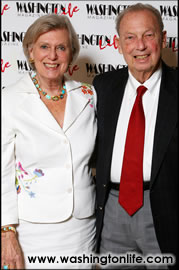
Abe And Irene Pollin


Abe And Wes Hug After Winning The Title


Abe Carries The Championship Trophy To The Fans


Your 1978 NBA Champion Washington Bullets


Abe And His Family In China


Abe And Michael Jordan


Abe And Gilbert Arenas


Abe And Antawn Jamison


Abe And Irene

Friday, October 17, 2008

When The Fat Lady Sang

It was another season full of hope for the Bullets. There had been a few seasons of unfulfilled expectations. Two seasons were most remembered for quick exits after a long journey. Age had crept into its own jersey and was as much a part of the team as any other.


The city had high hopes regardless of the past. There was good reason. The finest player ever to suit up in the hometown uniform was still captain of the roster. His knees were worn, but his shoulders were still wide and strong. He was the epitome of determination. He did have help, thank goodness. One was a guy who is amongst the finest to ever play his position. Both of these players names are written all over the Bullets, and leagues, history books. There were also other local legends participating. One still is part of the organization as a broadcaster. Another is the General Manager of one of the most celebrated franchises in the leagues history. There was a member of that 1972 U.S. Olympic team that won silver after an incorrect call by the officials had cost the U.S.A. gold late in the final game.


It had been a difficult season. They had a new coach. One of their star players had threatened to retire rather than play in his new system. Injuries had plagued the team for most of the season. They rallied midway through the season, getting many career high performances from the roster. One important piece was the acquisition of an All Star player who had helped his team sweep them in the 1971 Finals. They lost an important piece of their puzzle and had to replace him with a guy who had helped embarrass them just 3 years earlier in yet another Finals sweeping. In fact, his signing is viewed as a major catalyst in the teams resurgence. The team had only 1 All Star, who ended up playing the fewest minutes in that years All Star game for his conference. They only averaged .5 points better than their opponents that season, and finished 8 games out of first place. Still, they ended up the 3rd seed in their conferences playoff bracket. After a fairly easy first round, they eked out victories in the next two rounds by defeating the #2 and #1 seeds in 6 games each. During this time, a journalist from the #2 seeds town tried to urge his fellow fans on by saying, " The opera isn't over until the fat lady sings." He had invented this phrase a year earlier in his sports column. The coach had heard this phrase, but changed it to, "It Ain't Over Until The Fat Lady Sings" to encourage his underdog team. It would set the stage for one of the more exciting Finals in recent history.


Their opponents had gotten off to bad start that season as well. They had lost 17 of their first 22 games They then fired their coach and replaced him with a Hall of Fame player who would go on and win the most games via a coaching career in the leagues history. He would be later also inducted into the Hall of Fame as a coach. The team was balanced with six players having averaged over double figures per game for the season. They had the best back court trio in the league, which featured a future Hall of Famer, a player whose number was later retired by the franchise, and a multiple All Star. That year, however, the team had no one represent the franchise in the All Star game. The bench was deep, and was led by a great player whose playing career was winding down after many successes in his great career. He would go on to coach several teams. They also had a future Hall of Famer starting in the post. They were deep, young, and talented. They knocked off the leagues defending champion on their way to the finals. They also would go back to the finals in the following season as well.


The Finals got off to a wild start and ended up setting the tone to what would be an unpredictable series. The opponents were down 19 points going into the final period. Led by one of their great guards scoring 16 points in less than nine minutes, they stormed back and pulled out a convincing win on their home court. Due to an eccentric scheduling format by league officials to accomodate the opposing city's construction issues, the next 2 games shifted to the Bullets court. After the series was tied, the opponents took a road win, while led by a great defensive performance by their rookie guard who was beginning to be known nation wide simply as "D.J." D.J. almost got his team another win the next game. He ended up blocking a game winning shot attempt to force the game into overtime. In O.T., the visiting Bullets got off two quick field goals and eventually won in front of a then-record playoff crowd of 39,457 fans, due to the game being moved to the city football stadium after a scheduling gaffe by city officials. The opponents, back on their regular home floor, then scraped out a win thanks to 11 missed free throws in the final period. Things looked bleak. The opponents were up 3 - 2. The Bullets trudged back home. Many thoughts were running through each persons mind with the team, and their city. Ranging from confidence to the inevitably pessimistic question of, "Would they fall short again?". This would be when the head coach would stand up in front of all with a new variance of the now famous and often used phrase.


"Wait For The Fat Lady!"


Back home, they were energized by the fans. Momentum was against them, but determination had not waned. The team got off to a bad start. Then, to make these finals even more memorable, the lights in the arena went out. After a delay, the coach decided to gamble. Tired of seeing his back court dominated by the opponents, he shuffled the line up. Leaving one experienced back court player on the floor with 4 front court players, the Bullets exploded for 70 points in the second half for a then record 35 point victory that was just broken this year. They had to go back to the opponents arena, but the Bullets went in there relaxed and ready to play. That game might be remembered by some as when the opponents back court mostly failed them. Two players combined shot 4 - 26. D.J. missed all 14 of his shots. Down by 11 with 90 seconds left, the opponents then pared the difference down to 2 as the seconds ticked off the clock. The Bullets captain was then fouled. Shooting 55% from the line in the series, and a 63% career average, he calmly sank both shots to seal the victory. They had become only the third team ever to win the title in a seventh game on the road.

Finally! That was all that could be said by the players and fans. The best quote came from their best player. "All my life I had dreamed about all of the things I would do if I ever got to be a champion. After I finally won it, I was so exhausted that all I did was go back to my hotel room and slept."


These teams met again the next year in the championship, but it didn't have the same aura. Both teams precense wasn't nearly as unexpected. The opponents won this time by defeating a tired Bullets that had just gotten to the dance by coming back from a 3-1 deficit in their conference's finals.


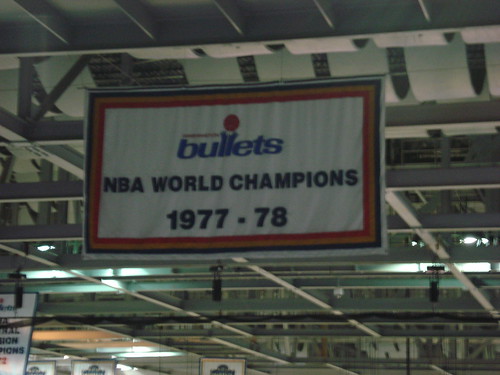
Regardless, it was a magical time. The Bullets had won the first professional sports championship for D.C. in 32 years. In fact, it is the only championship in franchise history. You can still see the banner even if you don't share the memories. It simply reads :


WASHINGTON BULLETS 1977 - 78 NBA WORLD CHAMPIONS

Friday, September 19, 2008

Chocolate City Professional Sports History


Washington D.C. is known as the capitol of the United States to all, but there is more to this little city that is 12 miles wide and 10 miles long. It's conception was born from a conversation between future President James Madison and Alexander Hamilton, the first Secretary of the U.S. Treasury and founder of the U.S. Mint, while dining at the home of another future President (Thomas Jefferson) in 1790. It was initially planned to be shaped as a diamond by architects Charles L'Enfant and Benjamin Banneker and measure 10 miles on each side. Many may not know that D.C. was built over swamp land (locals do from the summer humidity). The city has gone through many changes since then. It survived being burned, along with the White House, Capitol, Treasury building and Navy Yard after a British invasion in 1814 in retaliation for America burning down York (now known as Toronto), Canada. Many of D.C.'s own citizens contributed to the fire, so that the British wouldn't take possession of properties. There have been countless other occurrences besides protest marches, riots, and failed invasions. George Washington referred to the city as Federal City and rarely visited, despite only living about 8 miles from it in Mount Vernon, Virginia. D.C, has always been run by the Federal government. It wasn't until 1973 that they allowed the city to elect a elected mayor, whose name coincidentally was Walter Washington. It is a transient city to some. Many come and go with the administrations elected, as well as government workers and contractors. Yet, through all of the marches, protests, tourists and temporary citizens, D.C. is a great city thanks to its native residents. Sports has had an erratic, but important role in every day life.


Since the 1870's, baseball has had teams come and go (a recurring theme) in D.C. Teams named the Statesmen, Senators, and Nationals all played for brief periods of time until the turn of the century, when the National League disbanded a version of the Senators in 1900. In 1901 the Senators (now the Minnesota Twins) were born when the newly formed American League decided to place a team in the nations capitol. This team employed such Hall of Fame players like Sam Rice, Bucky Harris, Goose Goslin, Heinie Manush, and Joe Cronin. The team was terrible its first few seasons, once losing 113 games in 1904. In 1905, the teams owners tried to rename the team the Nationals, but the move was so resisted by the locals that they switched it back to the Senators. Fortunes began to turn in 1907, when a 19 year old pitcher came to D.C. His name was Walter Johnson. Johnson would soon be called "The Big Train". Johnson threw the ball harder than anyone in all of baseball at the time. His frisbee like delivery also made it hard to pick up the ball until too late. In 1910, Johnson struck out 313 batter, while compiling a paltry E.R.A. of 1.36. Johnson would win 33 games in 1912, then 36 in 1913 with an E.R.A. of 1.14! The Senators improved yearly, then finally won its lone World Series in 1924 over the heavily favored New York Giants in 7 games when Johnson, pitching on 1 days rest, held the Giants scoreless for 4 innings until the Senators scored the winning run when a ground ball deflected off of a pebble over the Giants 3rd baseman's head in the 12th inning. It is called the greatest World Series Game 7 ever by many. In 1925, the Senators returned to the World Series, but lost to the Pittsburgh Pirates. Johnson retied after 1927, accumulating 417 wins and 3, 509 strikeouts (a record that stood for over 50 years), with an E.R.A. of 2.17 in 5914.2 innings pitched to go with 34 saves. Johnson (also nicknamed "Barney") led the league in wins in 1913-16, 18, 24, and in strike outs in 1910, 12-19, 21, 23-24. He was the Most Valuable Player Award in 1913 and '24. He was inducted into the Hall of Fame in 1936. He amassed 110 shutouts, the most ever. His 38 1-0 wins are an all-time record. 65 of his losses were by shutouts, 26 of them by 1-0 scores (both records). Johnson would return to the team as a manager to help a team mired in a losing slump of a few years and lead them to 3rd place finish, but was fired after the season. In 1933, led by player- manager Joe Cronin, the Senators returned to the World Series. They lost to the New York Giants. The team then would begin a swoon and endured losing seasons until 1960, when they would move to Minnesota. In 1957, Hall of Famer Joe Black played 1 season in Washington. 1959 saw Harmon Killebrew, the Senators last Hall of Famer, slug 42 home runs to be the last Senator from this incarnation to lead the league in a major category. This franchise was also the inspiration for the movie, "Damn Yankees".
In 1961, D.C. was awarded an expansion team to replace the old team now known as the Twins. This team was also called the Senators. This team was led by a 10 man committee of ownership and none knew anything about baseball. Most worked in government. This team averaged 90 losses a season in its brief existence. The owners made a serious error by only having the team involved in a 10 year lease in RFK stadium. In 1971, the Senators announced they were moving to Texas, and would be renamed the Rangers. This outraged fans and D.C. citizens. In the teams final game versus the Yankees, the security guards walked off the job early into the game. The paid attendance of 14,000 swelled to 25,000 non paying spectators. With 2 outs in the ninth, and the Senators up 7-5, the fans stormed the field. The game was awarded to the Yankees 9-0 due to forfeit. The teams highlights were Frank Howard leading the league twice in home runs. Their only winning season would be the year the Splendid Splinter, Ted Williams, was hired as manager in 1969. The team went 86-76. Williams stayed with the team in its move until he left after the 1972 season. This franchise would not approach that record again until their 6th year in Texas.
It would not be until 2005 that Washington D.C. would have another Major League baseball team. The Montreal Expos, then owned by MLB, were moved to D.C. and were renamed the Nationals. The new ownership still keeps the Expos records, but has put their retired numbers back into circulation. The team went .500 in its inaugural season, and has hovered just below that in the 2 seasons that followed. The teams first manager was Hall of Famer Frank Robinson, who was replaced by Manny Acosta after 2006. The face of this franchise is 3rd baseman Ryan Zimmerman.
The Homestead Grays adopted D.C. as its "home away from home" in the late 1930's until the Negro Leagues disbanded in 1950. Such Hall of Fame players like Josh Gibson, Buck Leonard, Cool Papa Bell, Ray Brown, Jud Wilson, as well as owner Come* (*TSN won't let me use the U : his actual name!) Posey, graced D.C.
In 1923, the Washington Potomacs played in the Eastern Colored League. They also played in Wilmington, Delaware and were known as the Rosedales briefly that one season.
In 1932, the Washington Pilots joined the East-West League and compiled a 15-37 record before the team, and league, went defunct. The team featured the Negro Leagues All Time Home Run king, and Hall of Famer George "Mule" Settles. Jesse "Nip" Winters, considered to be one of the best pitchers in all negro leagues baseball history, was also on the team.
In 1936, the Washington Elite Giants played two seasons in D.C. That team boasted Hall of Famer Roy Campanella in its final year.
In 1938, the Washington Black Senators lasted 15 games in the Negro National League, winning 2 games.
The Washington Glory is a woman's softball team that joined the National Pro Fastpitch league in 2007, and won the leagues championship.


Basketball has long been considered a primary sport in D.C. Such luminaries like Elgin Baylor, Dave Bing, Adrian Dantley, Thurl Bailey, Kenny Carr, Jerome Williams, Kermit Washington, John Thompson Jr., and many, many more D.C. natives have played at the NBA level.
The Washington Capitols were D.C.'s first pro team. They joined the Basketball Association of America in 1946. Their first coach was legendary Hall of Famer Arnold "Red" Auerbach, who had played his college basketball at D.C.'s George Washington University. Led by star players (and later head coaches of the team), Horace "Bones" McKinney and Bob Feerick, the team had a 17 game winning steak (a record that stood for 23 years) in its inaugural season. The 1948-49 season saw the Capitols start the season by winning a record (that still stands and tied with the 1993-94 Houston Rockets) 15 games in a row. That team reached the Finals, but lost to the George Mikan - led Minneapolis Lakers. The next year the BAA merged with rival league, National Basketball League, to become the NBA. Auerbachs proposals for roster changes were deterred by the owner, so Red resigned and went on to greater things. The first black player to play in the NBA, Hall of Famer Earl Lloyd,played for the Capitols in the 1950 season after being drafted in the 9th round. The Capitols went defunct after the 1951 season, which featured Hall of Famer Bill Sharman. The teams .817 winning percentage in its inaugural season still ranks in the NBA's top ten of All Time best winning percentages. Coincidentally, the teams colors were green and white, the same as Auerbachs Boston Celtics.
The Washington Bullets moved from Baltimore to Landover, Maryland in 1973 and were named the Capital Bullets. In 1974, they were named the Washington Bullets. They won one NBA title in 1977-78. They also made 2 other NBA Finals appearances, losing to the Golden State Warriors and Seattle Super Sonics. Such Hall of Famers like Wes Unseld, Elvin "The Big E" Hayes, Earl "The Peal" Monroe, and Moses Malone wore Bullets uniforms in Washington. Other greats, like Phil Chenier, Bobby Dandridge, Mitch Richmond, Jeff Ruland, and Bernard King also did. In 1995, the Bullets name was changed to the Wizards. Such greats like Michael Jordan have worn this jersey, as has Richard "Rip" Hamilton and several other current NBA players.
Wes Unseld is one of only 2 players (Wilt Chamberlain) to have won both the NBA MVP and Rookie of the Year in the same season.
The Washington Mystics are a WNBA team formed in 1998. They have led the league in attendance in 1998 through 2000 and from 2002 through 2004. Maryland University legend and Olympic Gold Medalist Vicky Bullett was once a member of the team. They have made the WNBA playoffs 4 times, They lost in the first round 3 of those times, and the conference finals the other time. Newly drafted Crystal Langhorne, is also a legend at Maryland University. She broke most of Bulletts records and is the first player in the University of Maryland's history to score 2,000 points and grab 1,000 rebounds for either the men's or women's basketball teams histories.


Football may be the most beloved professional sport in Washington. The Redskins came to D.C. from Boston in 1937 due to lack of fan support, even though they had won the NFL Championship (led by Hall of Famers Cliff Battles, Wayne Milner, and Turk Edwards) 2 seasons before and lost in the NFL Championship the following season. Hall of Famer "Slingin" Sammy Baugh was signed that year. While most teams hardly passed the football, the Redskins used it as their primary weapon as Baugh is hailed as the man who perfected the passing game and moved the NFL forward. Baugh also was a NFL record setting punter and played cornerback as well. Baugh led the Redskins to a NFL Championship win over the Chicago Bears in his first season. The teams met again for the 1940 Championship, where the Bears smashed the Redskins 73-0. The teams met yet again in the 1942 Championship, this time the Redskins won and spoiled the Bears run for a perfect season. The teams met for the final time in the 1943 Championship and the Bears won. The Redskins then would appear in their final NFL Championship in 1945 and lost to the Cleveland Rams. Baugh retired after the 1952 season with many NFL records. His passing records are now broken, but his 4 interceptions in one game as a cornerback still stands. His season punting average of 51. 4 (1940) still stands as well. Baugh was a 9 time All Pro and one of Cantons first inductees. He is a member of the 1940's NFL All Decade team and one of the 70 Greatest Redskins. He is the only Redskin to have his number (33) officially retired. Baugh and Sid Luckman careers are the only players from that era in which todays passer ratings apply.
The Redskins would then go 27 years before getting to a championship game, now called the Super Bowl. In 1966, the highest scoring game was played between the Redskins and New York Giants. The Redskins won 72-41. Many Hall of Famers played on the organization during that time such as Charley Taylor, Sonny Jurgenson, Bobby Mitchell, Sam Huff, Paul Krause, Bill Dudley and Stan Jones. Hall of Famers like Ray Flaherty, Otto Graham, Curly Lambeau, Vince Lombardi, George Allen and Joe Gibbs have been head coaches of the Redskins. Hall of Famers Charley Taylor, Mike McCormack, and Emmitt Thomas have been assistant coaches in the organization. In 1972, coached by George Allen, the Redskins were led by the Over The Hill Gang to Super Bowl VII before falling the the Miami Dolphins 14-7. Such great players like Chris Hanburger, Jerry Smith, Taylor, Harold McClinton, Jack Pardee, Brig Owens, Ron McDole, Diron Talbert, Bill Brundige, Jurgenson, Billy Kilmer, Larry Brown, Pat Fischer, Mike Bass, Rusty Tillman, and Len Hauss was on that team and are all members of the 70 Greatest Redskins team. Hall of Famer Deacon Jones was a member of the 1974 Redskins, and Hall of Famer Ken Houston (considered to be the best SS to ever play) was on the team from 1973-80. George Allen was the first to hire a special teams coach (Dick Vermeil for the LA Rams, then Marv Levy for the Redskins). The Redskin/ Cowboy rivalry was introduced to NFL during this time. The team continued to make the play offs many years, but did not return to the Super Bowl until second year coach Joe Gibbs led the Redskins, in 1982-83, to a victory over the Miami Dolphins in Super Bowl XVII. Hall of Famers like John Riggins and Art Monk were on that team. Such great terms now commonly known were invented during the Gibbs era. Gibbs invented the 2 tight end set with an H-back in motion. Joe Bugel coached up the best offensive line in football then : The Hogs. Russ Grimm, Joe Jacoby, Jeff Bostic, Mark May, and George Starke were the original members and all are members of the 70 Greatest Redskins. Riggins, along with tight ends Don Warren and Clint Didier were "Honerary Hogs". The Smurfs and the Fun Bunch were two different groups of receivers during that era which excelled. The Redskins would draft Hall of Famer Darrell Green after the '82 season. The Redskins Dynasty would last a decade. 4 Super Bowl appearances between 1983 - 92. 3 wins (Miami, Denver, Buffalo) and 1 loss (Los Angeles Raiders). The Redskins set NFL records for scoring in a season (541-since broken), as well as Riggins scoring a then record 24 rushing touchdowns. In Super Bowl XXII, Doug Williams set a Super Bowl record of 4 passing touchdowns in one quarter, and Timmy Smith set a record for accumulating 204 yards rushing. Many great players passed through this era. Joe Theisman, Jim Lachey, Ed Simmons, Raleigh McKenzie, Gary Clark, Brian Mitchell, Mike Nelms, Dexter Manley, Charles Mann, Joe Washington, Ricky Sanders, Williams, Mark Murphy, Mark Moseley, Wilbur Marshall, Monte Coleman, Dave Butz, Earnest Byner, Gerald Riggs, George Rogers, Terry Allen, and many more. Most of these listed players are on the 70 Greatest Redskin Team. Gibbs retired after 1993 and the teams fortunes began to fade. Under present ownership, there has been a coaching carousel (including a brief return by Gibbs), as well as bad drafting and other extremely poor personnel decisions that have contributed to the Redskins non appearances in Super Bowls since 1991. Still, at present time, the Redskins are the NFL's 2nd most valuable franchise and valued well over a billion dollars.
The Washington Federals were created in 1983 and joined the United States Football League. They lasted until 1984. The team had the worst attendance in the league and their owner called them "trained gerbils" after selling them with 6 games left in the 1984 season. They won only 7 out of 36 games. They would move to Orlando in 1985 and be renamed the Renegades. They, and the league, folded after that season. Such notable NFL players like "Jefferson Street" Joe Gilliam, Craig James, Coy Bacon (who had 130 sacks in his 14 year NFL career), and CFL Hall of Famer Ron Estay played for the Federals.
The D.C. Divas are a woman's tackle football team that was formed in 2001, joining the National Woman's Football Association. They were mostly dominant in the regular seasons they played, winning the 2006 championship game. The team then joined the Independent Womans Football League in 2007. They finished that season 8-1, but lost in the first round of the playoffs.
D.C. Explosion is a minor league men's football team that has existed since 2001. They have won the 2006 and 2007 USA Bowl Division 1 AAA National Championships.


Hockey has, for the most part, been the 4th sport in D.C. The Washington Capitals were formed in 1974, joining the NHL. The "Caps" have mostly been at the bottom in their divisions throughout the history of the franchise. They did make on Stanley Cup Finals in 1998, where they were swept by the Detroit Red Wings. Hall of Famers Rod Langway, Scott Stevens, Mike Gartner, and Larry Murphy all spent many years in a Capitals jersey. Other notable players who were part of the organization are Yvon Labre, Bob Carpenter (1st American to score 50 goals in a season), Sergei Gonchar, Olaf Kolzig, Jaromir Jagr, Peter Bondra, Dale Hunter, Kevin Hatcher, Robert Lang, Adam Oates, Dino Ciccarelli, and Dennis Maruk. The teams recent fortunes and future have turned much brighter when they drafted the top player in the NHL, Alexander Ovechkin, in 2004.
The Potomac Mavericks joined the Professional Inline Hockey Association in 2008 and are currently in 4th place in their division.


Soccer has always had a decent following thanks, in part, to its popularity in the D.C. Metro area. The Washington Diplomats were formed in 1974 and joined the North American Soccer League. This incarnation lasted until 1980. They made the playoffs 3 times. After they folded after the 1979 season, the Detroit Express moved to Washington and were renamed the Diplomats. They only lasted one season and lost in their only playoff game in 1981.
In 1988, another team came to Washington as part of the American Soccer League. They also were named the Diplomats. They lasted until 1990.
D.C. United was formed in 1995. They are one of the ten founding members of Major League Soccer. The team has been popular in the area and enjoyed many successes. They have won the MLS Cup 4 times (1996,'97, 99, 2004), the MLS Supporters Shield 4 times (1997, 99, 2006, '07), the US Open Cup (1996), the CONCACAF Champions Cup (1998 ), and the InterAmerican Cup in 1998. Many casual fans may best remember them as the team who signed 14 year old Freddy Adu to a huge contract in 2004. Adu is the youngest player to appear in a United States professional sporting event since 1887.
The Washington Freedom is a woman's soccer team that was formed in 2001 and is part of the United States Leagues W-League currently. They initially joined the Woman's United Soccer Association in 2001 until 2003, when the league folded. That team featured Mia Hamm and won the 2003 WUSA Founders Cup Championship. From 2004 to 2005, the team played exhibition matches. In 2006, they joined their current league and won the 2007 championship.

Lacrosse is popular in the area, and D.C. has hosted professional team, the Washington Bayhawks, since 2007. They are part of Major League Lacrosse. They were very successful in Baltimore from 2001-06, having won 2 championships in 4 finals appearances.
The Washington Wave were members of both the Eagle Pro Box Lacrosse League and Major Indoor Lacrosse League from 1987 to 1989. They appeared, and lost, in 2 championship games.


Rugby is also a sport that does pretty well in D.C. The Washington Football Club is a SuperLeague rugby union team since 1963. They are the founders of D.C.'s Cherry Blossom Festival, which started in 1966. The club has won many championships in different divisions throughout their existence. They also host the Potomac Rugby League.
The Washington D.C. Slayers are a semi-pro rugby team that was formed in 2003 and play in the American National Rugby League.

Cricket also has a pro league since 1974 called the Washington Cricket League. There are 28 clubs consisting on 923 members currently.

D.C. also hosts 2 annual marathons: the National Marathon and Marine Corps Marathon.
The city also hosts the annual Leggs Mason Pro Tennis Championships.


As you can see = there is much more to do than visit the monuments, museums, zoo, and other popular points of interest. Washington D.C. has a rich sports history that holds a very strong bond with its citizens. So, if you come to D.C., don't just bring a camera or buy a tourist map. Take a look around and envelop its great people and the traditions.