Showing posts with label AFC West. Show all posts

Friday, September 9, 2011

NFL Predictions For The 2011 Season


NFC East

1. Philadelphia Eagles

The self anointed "Dream Team" has a ton of talented players thanks to owner Jeff Lurie going all out with his checkbook. Lurie has gone all in for a franchise that hasn't won a title since 1960.

While the Eagles defense looks great in the secondary, the front seven may be an issue. The defensive line is full of pass rushers not known for stopping the run.
The linebackers are pretty inexperienced and kicker and punter are rookies too.

But the Eagles were smart by getting Vince Young to backup the oft-injured Michael Vick at quarterback. The offensive unit can score points, but a suspect offensive line could be their downfall.

Philadelphia has a lot of pressure to produce in 2011. Historically, a bought team that spends heavy never realizes the successes compared to teams that mold their own talent.

Yet the Eagles are in the right division this year with two teams rebuilding and another already riddled with injury. This could be the season that the city of Brotherly Love sees their first football trophy in 41 years.


2. New York Giants

The Jints already face an uphill battle with the possibility of four cornerbacks missing the entire season, as well as a rookie defensive tackle they had high hopes for.
Yet this is a veteran squad still full of immense talent.

New York may end up having to win a few high scoring affairs this year, but this can happen because they have a deep wide receiver corps.

So deep that they watched Steve Smith walk over to a division rival a few weeks ago.
Eli Manning was recently quited as saying he is an upper echelon quarterback in the league. This is time for him to back up his words, because his arm will be put to the test often.

While they are still strong in the trenches offensively, it is aging. The rushing attack should still be strong for the Giants, led by the inside/ outside attack of Brandon Jacobs and Ahmad Bradshaw.

The front seven of the defense is uncertain for the first time in a long time for the G-Men. Their top three defensive ends should be fine, but the rest of the front seven is a mix of inconsistent players and unknown commodities.

So it seems the Giants offense will have to carry the team, as well as Manning actually becoming that upper echelon quarterback he thinks he is. This is a team as capable of making the playoffs as they are going 8-8.


3. Washington Redskins

The "Shanaplan" enters a second season after a very forgettable first year full of dysfunction and eight games decided by three or less points.

Closing out games was a big weakness for the team in 2010.

The Redskins 2011 draft looked pretty good in preseason, and several draft picks made the roster or practice squad.

They upgraded the trenches through free agency, losing second-round pick Jarvis Jenkins for the year to injury.

With the question of whether John Beck or Rex Grossman starts at quarterback, the Redskins are able to temper this with a group of running backs who have the ability to be productive.

Washington has upgraded their wide receivers and tight end Fred Davis has lost so much weight that he looks like a hybrid tight end.

If the Redskins quarterbacks can be at least average, the team will score points. The defense is led by ageless middle linebacker London Fletcher. They have two young defensive ends playing outside linebacker and are getting positive results so far.

With the addition of two free agents on the defensive line, Washington expects better results after a poor showing in 2010. The secondary got a big boost by signing free safety O.J. Atogwe. Strong safety Laron Landry was the best safety in football last year until an injury ended his season early.

Washington is expecting big things from this duo. One of best offseason moves Washington made was acquiring Sav Rocco to be their punter.

This is a position at where the Redskins have seemed to struggle at for several years recently. Rocca's ability to pin opponents deep might make the difference between victory and defeat.

With electric return man Brandon Banks, a big roster upgrade on both sides of ball at most everywhere but quarterback, the Redskins can be good enough to challenge for the division. Though that is no guarantee, no matter what Grossman says.


4. Dallas Cowboys

Dallas comes into 2011 walking the razors edge.

Despite the trenches holding back their teams from winning consistently the past few years, they got rid of a few players and lost a few more to free agency.

Felix Jones is expected to carry the rushing attack, but there are skeptics as to whether or not he is the type who can handle 20-30 touches a game over an entire season.
After his first two seasons were shortened by injury. Jones had 48 receptions and 185 carries in 2010.

Without veteran Marion Barber helping Jones anymore, fourth-year halfback Tashard Choice and his 222 career carries is the main reserve.

Dallas is said to be high on seventh round pick DeMarco Murray, though the rookie wassn't real impressive during preseason games.

With a trio of small backs running behind an offensive line in flux, the passing attack with be the Cowboys best weapon. Quarterback Tony Romo, who missed 10 games to injuries last year, might end up with many games where he attempts upwards to 50 passes or more this season.

The defense is pretty much the same group that was second to last in the NFL last year in points allowed. Though they are decent on pass defense, the Cowboys trenches are average at stopping the run.

It is an aging unit that hopes to flourish under new defensive coordinator Rob Ryan's system. Ryan has a huge task in front of him.

Coaching defense for the Cleveland Browns the last two years, his defenses were near the bottom against the run. Yet they improved from 21st to 13th in points allowed.

Before that, he spent four years as defensive coordinator for the Oakland Raiders, where his defenses were annually near the bottom in rushing defense and points allowed.

It appears Dallas will have a lot of games where they will rely on Romo too heavily as their defense struggles. They will have to gamble often on this to win, hoping Romo holds up all season.

Head coach Jason Garrett was given the job midway into last year, despite being considered by a few one of the worst offensive coordinators in the game.

Nepotism was thought to be one of the reason for his hiring, considering one of his brothers works in the Cowboys front office, his dad used to, and another brother is on the coaching staff.

The team is in desperate need of rebuilding, and that will be seen a lot in 2011.


NFC North

1. Green Bay Packers

When you are coming off a championship season where you basically won it all with about half of the roster you expected to count on, there isn't a whole lot of need for overhauling your roster.

Green Bay stayed away from the free-agent market this season, choosing to re-sign most of their own players while continuing to build through the draft. This is the formula that brought the franchise their 13th title, the most in NFL history.

The biggest free-agent loss may have been defensive end Cullen Jenkins, but the Pack returns most everyone else on a defense that ranked second in points allowed and interceptions accrued despite all of the injuries to their back seven.

Quarterback Aaron Rodgers permanently quieted any remaining critics about his replacing Brett Favre in 2008. At Rodgers' current pace, he may one day find himself with Hall of Famer Bart Starr for the title of greatest Packers quarterback ever.

One of the best news Rodgers has received this year is the return of halfback Ryan Grant. Grant missed most of last year because of injury, but his return will help the four excellent wide receivers Rodgers loves to throw to. Jermichael Finley, the Packers best tight end, also returns after missing 11 games to injury in 2010.

It is doubtful Green Bay will again experience the rash of injuries they incurred in 2010. Assuming their players stay healthy, this team will be very difficult to oust this year. If Rodgers stays on the field all season, the Packers have an excellent chance of completing the very difficult task of repeating as champions.


2. Detroit Lions *

The young Lions are just about everyone's prediction for most improved NFL team this year. After watching them lose eight close games last year, one can see why there is so much optimism for this team.

The defensive line, led by 2010 Defensive Rookie of the Year Ndamukong Suh, is the star of this team. They are a nice blend of proven veterans and promising youth. This unit has the talent to dominate the NFL this year.

Detroit also added two new starting linebackers and a cornerback. They expect this unit to do much better than last season, where they ranked 19th in points allowed and 21st in total yards allowed.

The offensive line is the same group from last year. The onus will be on them this season to try and get quarterback Matthew Stafford to finally last a full year healthy. If Stafford stays on the field, his receiving trio of Calvin Johnson, Nate Burleson and Brandon Pettigrew has a chance to be explosive.

If there is one weakness, it is at running back. Detroit is banking on Jahvid Best to stay healthy even though much of his 2010 season was riddled with nagging injuries. There isn't much behind Best, so his health may be critical to the Lions' offensive proficiency.

A young team needs growing pains to improve. Detroit had their share of that in 2010, so they are now ready to build upon those experiences and progress even further this season. There is more than enough talent on this roster to seriously challenge for a division title.


3. Chicago Bears

The Bears' big story last year was quarterback Jay Cutler leaving the NFC Championship Game with an injury. Cutler's toughness and leadership has been questioned since, setting up a season where he has a lot to prove.

Chicago's offseason saw them bring in three ex-Dallas Cowboys to upgrade the offense. While they have more depth at wide receiver now, Chicago decided to jettison their two main tight ends from 2010. The Bears are gambling Kellen Davis is ready at tight end after they spent the previous three seasons trying to mold this project.

The offensive line has been an issue the past few Bears seasons. They moved Robert Garza to center after he spent the previous six years at guard. Newly signed free agent Chris Spencer can't beat Garza out, but things could change if the current starting guards falter.

Middle linebacker Brian Urlacher is the leader of a Bears defense that was second in run defense in 2010, as well as fourth in points allowed and ninth in total yards allowed. Defense has always been king in Chicago, and that should not change this year.

The main changes on the defense will be at safety and one defensive tackle slot. Chris Harris will now be joined by Major Wright at safety, and Henry Melton has supplanted Matt Toeaina at defensive tackle for now. The Bears also drafted Stephen Paea, who could soon replace Melton.

Mike Martz is in his second season as the offensive coordinator for the Bears, so Cutler should be much more comfortable in the system now. If the Bears can do better than the 21st ranking in points scored last year, the defense is good enough to get them to a Super Bowl.


4. Minnesota Vikings

Rebuilding a team makes for tough decisions along the way. Minnesota already had done the easy part by hiring a new head with six games left in 2010.

The team has revamped their roster by losing players to free agency and retirement especially. They also released several veterans who were once an important part to a team that never quite played up to expectations.

Some critics wonder why the Vikes are replacing one old quarterback with another, but they have had success in the past making similar moves. Minnesota is hoping Donovan McNabb can be at least as effective as Randall Cunningham, Warren Moon and Brett Favre once were for the franchise.

Though they got rid of their left tackle, the offensive line is still very solid and very experienced. This may help an older quarterback like McNabb, who is no longer as mobile as he once was.

Losing their best wide receiver to free agency now puts the tiny Percy Harvin in the spotlight as their top receiver, even though much of Harvin's career has been hampered by migraine headaches. The rest of the receiving corp is pretty underwhelming.

McNabb may rely heavily on his tight ends in the passing game. Visanthe Shiancoe is very underrated, and rookie Kyle Rudolph has a lot of promise. The Vikings may often run a jumbo package to get both on the field at the same time.

One other reason for the jumbo sets is the fact that the team is carrying just three running backs on their roster. Adrian Peterson, one of the best halfbacks in the NFL, is the starter. Any injuries to this unit could send the team reeling further.

Losing their run-stuffing defensive tackle to retirement hurt, but they will also not have Pro Bowl defensive tackle Kevin Williams for a few games as he serves a suspension for ingesting a banned substance. Besides defensive end Jared Allen, the rest of the linemen are unknown as to what they will contribute when relied upon.

The linebackers may now be the strength of the Vikings. Tackling machine Chad Greenway just signed a new five-year contract, and he will be playing alongside the Henderson brothers. While E.J. Henderson is a Pro Bowl middle linebacker, his younger brother Erin is starting for the first time in his four seasons.

The secondary saw Minnesota release starting free safety Madieu Williams, but they did get back cornerback Cedric Griffin. Griffin missed much of last year with a knee injury and will be the bookend for Pro Bowler Antoine Winfield.

There is still enough talent on the Minnesota roster to reach the playoffs, but rebuilding sometimes involves baby steps. Losing the salaries of a bunch of expensive veterans was a wise move, setting up the Vikings' future to look brighter than the present.


NFC South

1. Atlanta Falcons

Atlanta was great in 2010, winning 13 games. They won their division for the fifth time in franchise history, reaching the playoffs for the 10th time since they joined the NFL in 1966.

Most of their players are back, especially on an offense that produced six Pro Bowlers. The only changes will be made at right guard and wide receiver.

The new wide receiver is 2011 first-round pick Julio Jones, a big, sturdy, athletic receiver known for the spectacular catch. He will bookend Roddy White, who has led the team in receptions the last four seasons.

Factor in future Hall of Fame tight end Tony Gonzales, and it is easy to see quarterback Matt Ryan has some pretty fantastic weapons to play with. Ryan also is blessed to have a set of Pro Bowl running backs lining up behind him.

The defense got an upgrade by signing free agent defensive end Ray Edwards to bookend Pro Bowler John Abraham. The rest of the unit returns intact after ranking fifth in points allowed in 2010. The offense ranked fifth in points scored, showing the tremendous balance that led to their 13 victories. Atlanta also ranked 16th in yards gained and allowed.

The Falcons schedule this year will be tough, facing six teams that made the playoffs last year. But they have more than enough talent to be successful, especially if the pass defense improves upon last years number. If they get to their bye week healthy and with a decent record, the second half of their schedule could propel them back into the postseason.


2. Tampa Bay Buccaneers

Watching the Bucs 2011 preseason, it was fun to see the exuberance of a young team led by a young head coach. This team is growing up quickly during a massive rebuilding session, but they are playing well as it goes on.

After a difficult 2009 that resulted in three victories, Tampa Bay won 10 last year. Four of their 2010 losses came by seven points or less. This came with a team that averaged just 26 years old.

Quarterback Josh Freeman was spectacular last year, tossing just six interceptions the whole season. Though the Bucs passing attack ranked ranked 17th in passing, Freeman played the 2010 season like a wily veteran instead of a second-year pro.

The running attack ranked eighth in yards gained, though they did lose their primary reserve to free agency. LeGarrette Blount came out of nowhere last year to run for 1,007 yards in 13 games and seven starts. Tampa Bay is hoping for a similar season in 2011.

Raheem Morris is one year younger than future Hall of Fame cornerback Ronde Barber. Besides manning the head coaching duties, Morris is also the Buccaneers defensive coordinator.

He hired former NFL great Keith Millard to coach his up and coming defensive line. Tampa Bay's exciting trio of defensive tackles got more help when Morris used his first two picks of the 2011 draft on a pair of defensive ends with big upsides. The Buccaneers third pick gave them their starting middle linebacker.

Barber is the leader of a defense that will have possibly seven starters under the age of 25. Morris is molding a defense that could one day be on the same level of some of the past great Buc defenses.

They will play 2011 honoring true greatness by paying tribute to "The Original Buccaneer." The late Lee Roy Selmon is the only Buc in the Pro Football Hall of Fame, and the first to have his number retired by the team.

This team is young, but very exciting. They made a lot of progress last year, taking many by surprise. As they continue to grow, Tampa Bay will show this season they have more than enough talent to win their division now.


3. New Orleans Saints

The Saints found out in 2010 why history makes it so very hard to defend a championship title. Injuries swept through the roster, yet their dinged up quarterback stood tall and got them back into the playoffs.

New Orleans finished 11th in scoring in 2010 after leading the NFL the previous two seasons. Changes were then made along the offensive line, where they lost their starting center to free agency and cut their longest-tenured player in right tackle Jon Stinchcomb.

After the running backs corp was hit hard by injuries last year, the Saints got aggressive by signing free agent Darren Sproles, a diminutive pass catching specialist, and using their second 2011 first round pick on Mark Ingram.

With Pierre Thomas and Chris Ivory returning, New Orleans has a group of running backs they expect to be an improvement over their 28th ranked rushing attack of 2010. Yet the offense will go through quarterback Drew Brees, their Super Bowl XLIV MVP.

While the Saints pass defense played well last year, their run defense was erratic at best. They signed three free agent defensive linemen, and drafted another in the first round.

This unit has not looked good in preseason, and it could be hurt further by starting defensive end Will Smith incurring a two game suspension for ingesting a banned substance.

If the Saints do not improve on stopping opponents from running the ball, it may not matter how many points their explosive offense puts up. Their revamped offensive line will also be put to the test trying to protect Brees while running the ball more effectively.


4. Carolina Panthers

Carolina is in the throes of rebuilding, though they have kept some basic foundations the organization has followed since their 1995 inception. Ron Rivera is the fourth head coach in team history, and all Panthers head coaches were former defensive coordinators.

The Panthers are hoping history repeats itself under Rivera. After going 1-15 in 2001, they hired John Fox as a head coach and reached the Super Bowl in his second year with the team. Fox was let go after the team went 2-14 last season, ushering in Rivera.

Rivera showed the team he is on a mission recently by cutting 2009 second round pick Everette Brown, a player once thought to have great potential. The team will have two rookies starting at defensive tackle, as Carolina will carry just eight defensive linemen with six having one or less years of NFL experience.

Cam Newton is the first pick of the 2011 draft. He will start right away and try to learn the game on the fly because the team has no alternatives in reserve better.

Newton has shown accuracy issues in preseason, but he is a behemoth of a man for this position. His athleticism should cover up a few mistakes as he progresses.

The tight end is typically the best friend of a young quarterback. Carolina went out and signed two productive veterans for their rookie franchise quarterback. Jeremy Shockey and Greg Olsen are both solid players that Newton will be very comfortable leaning on at times.

Besides wide receiver Steve Smith, Carolina knew they had to upgrade this unit in the offseason. They added two receivers fresh off the high-powered San Diego Chargers offense, a team Rivera spent the previous three seasons with, and second-year pro Armanti Edwards is a former college quarterback who showed flashes of being ready to contribute during preseason this year.

The offensive line has worked together a few years, so the Panthers are hoping their three-headed halfback can be better than last seasons injury plagued output. DeAngelo Williams was recently given a huge contract, so he is being counted on heavily. Jonathan Stewart and Mike Goodson are his more than capable reserves, and both should get many carries themselves in 2011.

The back seven of the Panthers defense is their strength. Led by Pro Bowl middle linebacker Jon Beason, the back of the defense did a solid job versus the pass last year. Carolina was dead last in scoring offense in 2010, as well as 26th in points allowed.

The offense should be expected to have a few hiccups this year with a rookie at the helm, so it will be the burden of the defense to keep the Panthers close in contests. If the star players stay healthy this year, which they were not in 2010, this team should show signs of progression as the rebuilding process begins.

Baby steps are needed here, because of a head coaching change in the middle of a rebuilding job, but Carolina feels they have the right young man at quarterback to lead the way.


NFC West

1. Saint Louis Rams

Rebuilding a team takes time and the Rams showed this in 2010. With the NFC West title in their grasp, Saint Louis lost the last game on their schedule to Seattle. Though the Rams shared first place with the Seahawks, they lost the opportunity to reach the playoffs.

Keeping the mission to upgrade a team that has struggled the past few seasons, Saint Louis became active in the free agent market. They picked up two veteran running backs, with good pass receiving skills, to back up star Steven Jackson.

The offense then upgraded their offensive line by signing a nasty and tough guard, while adding to a passing attack that ranked 26th last year by grabbing a talented free agent wide receiver in Mike Sims-Walker. Saint Louis also drafted two more wide receivers in hopes of scoring more points.

Defense was the star of the 2010 season for the Rams, yet they still made major changes. Both safeties and outside linebackers will have newly acquired players, as will the right side of their defensive line.

They added savvy veterans like Al Harris and Pro Bowler Quintin Mikell to the secondary. The free agent signing of Mikell was important because five-year starter O.J. Atogwe left the squad after becoming a free agent.

Saint Louis is banking their defense will be better in 2011 after signing five free agents and using their first draft pick on a athletic defensive end some think will be a star one day. With the expected improvements on offense, it could be enough to get a young team on top of their division at season's end.


2. Arizona Cardinals *

The Cardinals were not happy playing four quarterbacks last year, so they gave up a Pro Bowl cornerback years away from his prime to get Kevin Kolb. Kolb spent the better part of four seasons sitting and learning, so he should be ready to go and prove he has what it takes to be a starting quarterback.

Running back is an issue for the Cardinals. They will be forced to rely on oft-injured Beanie Wells after 2011 second-round pick Ryan Williams was lost for the year to injury. But the Cards have Larry Fitzgerald at wide receiver, one of the better players in the league.

He was just signed to a eight-year, $120 million contract a year after grabbing 90 balls from a muddled quarterback situation. Todd Heap is one of five tight ends on the roster. Arizona is hoping a return to his home state will inspire Heap to his third Pro Bowl season. Veteran Jeff King was also brought in to help the offensive block off the edge.

The offensive line will have two new guards starting. Rex Hadnot and newly acquired free agent Darren Colledge get the nods, with last year's starter, Duece Lutui, backing them up.

Arizona will have new starting cornerbacks after Greg Toler was placed on injured reserve. Tiny Michael Adams starts at one slot, despite having just 89 tackles in his four years with the club. A.J. Jefferson is the other starter, and he has one career tackle after making the team as an undrafted free agent rookie last year.

This is expected to change soon because rookie Patrick Peterson was the top defensive back in the 2011 draft and was selected fifth overall. He will be given time to learn because the Cardinals have a good safety tandem in Adrian Wilson and Kerry Rhodes.

The defensive line is the best part of the defense, led by defensive tackle Darnell Dockett. Calais Campbell is a huge defensive end and nose tackle Dan Williams, the Cardinals top pick last year, shows promise.

The Cardinals kept nine linebackers on the roster this year. Daryl Washington and Paris Lenon are excellent inside linebackers who are backed up by veterans Stewart Bradley and Reggie Walker, along with promising rookie Quan Sturdivant.

The Big Red ranked near the bottom in both offense and defense last year. They are expecting to score a lot more points and being especially more effective in run defense. If the offense lives up to their potential, Arizona could pick up a lot of wins off a mediocre schedule in the weak NFC West.


3. Seattle Seahawks


The Seahawks are the defending AFC West champs despite having a 7-9 record, the 23rd best scoring offense, the 25th best total in points allowed and being 28th in points differential. Pete Carroll's first year as head coach was highlighted by a playoff win over the defending Super Bowl champion New Orleans Saints.

Building on that success while rebuilding, Seattle was very active in the free agent market. They signed up a new starting quarterback, star wide receiver, tight end, defensive tackle and offensive guard.

They have a new center, and both right guard and tackle will be rookies starting. They added Pro Bowl tight end Zach Miller, which was important because incumbent starter John Carlson is on injured reserve.

While Tavaris Jackson wasn't great at quarterback in the preseason, Seattle has hopes he can frequently get the ball to the tight end as well as tall wide receivers Sidney Rice and Mike Williams.

Marshawn Lynch and Justin Forsett ran for 1,100 yards together in 2010. Throw in dynamic return specialist Leon Washington and Seattle has a decent backfield behind Jackson.

The defense is still a work in progress. The strength of this unit is in linebackers David Hawthorne, Aaron Curry and Leroy Hill. Alan Branch replaces the departed Kentwan Balmer to line up next to Brandon Mebane at defensive tackle.

The secondary will see Walter Thurmond at cornerback in place of the departed Kelly Jennings. Kam Chancellor is now the strong safety after Lawyer Milloy retired. Both are second-year pros with not much experience.

Seattle has 21 players who are either rookies or first-year players on their roster. There are only 19 players left that Carroll inherited last year. The rebuilding job Carroll is doing takes time, but it is headed in the right direction.


4. San Francisco 49ers

It has been a rough time for the Niners since head coach Steve Mariucci was fired in 2002. They are on their fifth head coach and haven't had a winning record in that time.

Jim Harbaugh is now the coach in charge of trying to bring a winner to San Francisco. The big issue with this team starts at quarterback, where Alex Smith has done a mostly lousy job since being the first overall selection in the 2005 draft.

The writing on the wall for Smith became real clear in the 2011 draft, when the Niners used a second round pick on Colin Kaepernick. Though very athletic, Kaepernick is very raw and a few years away from being ready.

The offense runs through the amazing Frank Gore, a halfback running around with two surgically repaired knees. The 49ers receiving corp is one of the most talented in the NFL, but they don't have a quarterback who can consistently get them the ball.

Vernon Davis is one of the most athletic tight ends in NFL history. He should be going into a fifth season that has him inducted one day into Canton, but he has been held back by an organization that has poor quarterback play and spent a few years not using him correctly.

With wide receivers Braylon Edwards and Michael Crabtree, the trio should be explosive. Yet it most likely be yet another season where Smith doesn't get the job done on his end.

The defense is going through changes as well. They lost their starting nose tackle, two linebackers, a cornerback and safety. They upgraded the strong safety position by signing free agent Donte Whitner and moved defensive end Isaac Sopoaga over the center.

Carlos Rogers was signed to start at cornerback and the versatile Madieu Williams will back up incumbent Dashon Goldson at free safety. The run defense was good last year, but the pass defense hurt the Niners often.

The 49ers have made some nice upgrades, but Harbaugh will need some time to rebuild the team and develop a quarterback. They are capable of winning the weak NFC West, but that depends on how often Smith can get the ball to the team's best weapons.


AFC East

1. New York Jets

When you make two straight AFC Championship Games and lose with a team full of veterans, it is smart to not continue getting old. The Jets got rid of quite a few veterans in their quest to get younger while staying a top-notch team.

Yet their biggest free agent signing was wide receiver Plaxico Burress when he got released from prison after serving two years in jail. The Jets plan to bookend the 34-year-old Burress with Santonio Holmes, while 37-year-old Derrick Mason will be used as the third receiver.

The offensive line is the strength of the team. Right tackle Damien Woody retired, so Wayne Hunter steps in. The rest of the unit remains intact, which is important for a team so reliant on the run.

Shonn Greene was supposed to start at halfback last year, but soon saw LaDainian Tomlinson getting more playing time because Tomlinson was more effective and is a better pass receiver. Greene needs to step up this year because the 32-year old future Hall of Famer has a ton of wear and tear on his body.

Fullback Tony Richardson, the winner of last season's Walter Payton Man of the Year Award and the Byron "Whizzer" White NFL Man of the Year Award for his charitable work, has retired. New York will miss the three-time Pro Bowler known for his crushing blocking ability. John Conner now takes over as the lead blocker out of the backfield.

Defense is the Jets' best strength, as it should be with defensive guru Rex Ryan as the head coach. This defense is so good, they could afford to trade a young and solid Dwight Lowery to the Jaguars because of their cornerback depth.

Furthermore, they added 2011 first-round pick Muhammad Wilkerson at defensive end to replace veteran Shaun Ellis. The rest of the starters return on a unit that ranked third best in yards allowed last season, as well as sixth best in points allowed.

Though the Jets linebackers are excellent, it is the secondary that is the star of the unit. Led by Pro Bowl cornerback Darrelle Revis—maybe the best cornerback in the game today—who anchors a smothering Jets secondary that defends the run almost as good as they do the pass.

With a defense and offensive line like this, it is pretty easy to see why the Jets were one win away from the Super Bowl in each of the past two years. Quarterback Mark Sanchez is still a work in progress, but he showed definite improvement in his second season by tossing seven less interceptions and five more touchdowns than he did in his 2009 rookie year.

Sanchez will enjoy having two experienced receivers blended in with the players he already knows well, and having a 6'5" receiver like Burress can help reduce mistakes with his size alone. The running game ranked fourth in yards gained last year, but the passing games ranked 22nd in yards gained.

If the passing game improves, as expected, the defense and rushing attack are good enough to get the Jets back to the Super Bowl for the first time since 1968.


2. New England Patriots

One thing is certain, the Patriots keep it interesting all year round. Whether it is watching head coach Bill Belichick work the draft like a maestro, delving into the free agent market, or making trades, New England is unpredictable but exceedingly interesting.

Chad Ochocinco, a six-time Pro Bowl wide receiver, was brought in for a couple of expendable late-round draft picks. Known for his blabbering mouth as much as his playing abilities, Ochocinco has kept his lip zipped so far in New England.

Albert Haynesworth was brought in for a fifth-round pick, a gigantic steal if the man ever plays up to the abilities that made him a two-time Pro Bowler just three years ago. The "$100 Million Slave" has taken a siesta since then, only rearing his head when complaining or going to court.

The karma is that "Fat Albert" has to continue playing in the 3-4 defense he abhors. Thus far, he has not quit on his teammates or complained to the media about the head coach, so the influence of "The Hoodie" appears to once again worked for the best.

The first player usually mentioned on the Patriots is future Hall of Fame quarterback Tom Brady. While New England has a pair of interesting young prospects behind him, the 34-year-old Brady once said he wanted to play until he was 40. The two-time NFL regular season and Super Bowl MVP is the leader of this team and is coming off yet another excellent season.

Besides the addition of Ochocinco, Brady loves to spread the ball around to all of his weapons. Wes Welker is typically Brady's first option, but there are a pair of young studs at tight end and running backs who are exceptional catching balls.

They brought back a player Brady loves in Deion Branch last year after he had failed with the Seattle Seahawks. All Branch did was grab 48 balls in 11 games as an extra receiver. New England also has three young receivers in reserve.

The blocking also got a huge boost, further cementing Belichick's brilliance. Brian Waters was released by the Kansas City Chiefs in a cost-cutting move despite coming off his fifth Pro Bowl year. Coincidentally, Waters was cut by Belichick disciple Scott Pioli.
Waters will be a reserve behind an already exceptional offensive line. Nate Solder, the Pats' top pick in 2011, will spend this year sitting and learning behind Matt Light at left tackle.

Yet the most interesting part of the New England offense might be at running back. BenJarvis Green-Ellis was never drafted in 2008, but he became a 1,000-yard back last year. Belichick already had the speedy Danny Woodhead behind Green-Ellis, but he drafted two more running backs who will probably contribute right away.

If Haynesworth or Mike Wright falters at defensive end, 11-year veteran Shaun Ellis is ready to go. Ellis is coming off a Pro Bowl year, so he should be a factor. The secondary looks so good that Belichick recently cut 2007 first-round pick Brandon Meriweather and 2009 second-round pick Darius Butler. Sergio Brown, an undrafted player who had 11 tackles in his 2010 rookie year, will now start at strong safety.

The rich literally do get richer when it comes to the Patriots. A team coming off a 14-2 season usually doesn't make a lot of roster moves, but New England will have seven new starters this year.

The end of the season should see this team in the running for a playoffs spot, and many fans think they will play in the Super Bowl as well. While there are several veterans on the roster who know how to win, there is a lot of youngsters that should keep this team near to top for many years ahead.


3. Miami Dolphins

The best part of the Dolphins' 2010 season was the defense. It ranked sixth best in the NFL for total yards allowed, and was equally stout against both the run and pass. Minus the sudden retirement on linebacker Channing Crowder, every starter returns.

With the offense being the weak link last year, Miami used four of their first six draft picks to help that side of the ball. All four made the team, and three figure to be a big part of the offense right away.

Mike Pouncey is the twin of Maurkice Pouncey, a center who made the Pro Bowl in his 2010 rookie year. He was the Dolphins' first-round pick, after playing at nearby Florida University, and will start right away at center.

Charles Clay, another rookie, will start at fullback. Marc Colombo was signed as a free agent and will start at right tackle, moving incumbent Venon Carey in at guard. Reggie Bush, who was acquired in an offseason trade, will compete with rookie Donald Thomas for the bulk of carries at halfback.

Brian Daboli replaces Dan Henning as offensive coordinator. Henning, who brought back the single-wing offense to the NFL (dubbed "Wildcat), retired after being a part of professional football since 1964.

Daboli is from the Bill Belichick coaching tree. He earned three Super Bowl rings in various coaching positions before joining the Cleveland Browns in 2009 as an offensive coordinator. Both of his seasons there saw the Browns as one of the worst offensive teams in the NFL, so Miami is hoping he can get their offense to be better than the 30th rank they had in scoring during 2010.

Miami has the defense to carry this team to a division title. The offense worked on their passing game a lot in the 2011 preseason, and had some successes. If they get good production from there, the Dolphins could very well be in the mix for a playoff spot in the final week of the 2011 season.


4. Buffalo Bills

It seems the Bills have been stuck in rebuilding mode for awhile. Part of the reason is failed drafts. The Bills have had nine first-round picks since 2000 either fail or leave for other teams. The jury is still out on last year's top pick, but this years top pick, Marcell Dareus, has looked impressive thus far.

Buffalo ranked 28th in both points scored and points allowed last year. They cut their starting center and will have two new starters on the right side of the line. Second-year pro Donald Jones has earned a starting job at wide receiver, and journeyman Scott Chandler starts at tight end.

The defense lost their top three tacklers from 2010, and there will be five new starters this season. Nose tackle Kyle Williams is coming off a great 2010 season where he made the Pro Bowl.

The secondary ranked third in passing yards allowed in 2010. This unit is the strength of the team, with the only change being that George Wilson will now start at strong safety. Buffalo has three new linebackers starting this year, and they are hoping Shawne Merriman can be the force off the edge he was in 2007 until injuries derailed his career.

Buffalo has a good amount of youth on this roster, but there is 13 players 30-years or older. Head coach Chan Gailey will need several seasons turning over this roster, but Bills fans are tiring of this strategy that has kept the team out of the playoffs since 1999.


AFC North

1. Pittsburgh Steelers

Though the Steelers lost in Super Bowl XLV, the fact that they played in their second title game in four seasons just further cemented a legacy of being an elite NFL team.

The defense is the face of this organization, much like it has been for the past 54 years for the franchise. Pittsburgh finished first in the NFL in points allowed and rushing defense in 2010, as well as second best in total yards allowed.

Running the ball against the Steelers is one of the most difficult chores for NFL offenses. The unit got only better with the return of 13-year veteran Aaron Smith at defensive end, a team leader who has played just 11 games the past two years due to injuries.

While Pittsburgh has long been known for their frugality, they opened up the vaults and lavished young linebackers Lamar Woodley and Lawrence Timmons with hefty contract extensions. Linebacker has long been a key position for the Steelers, and the young duo join 2008 Defensive Player of the Year James Harrison, who has been named to the last four Pro Bowls, to give Pittsburgh perhaps the best unit in the league.

2010 Defensive Player of the Year Troy Polamalu joins Ryan Clark to give the Steelers a veteran safety duo in a secondary filled with experience. The secondary gives up the most yards on defense, but that is due to the fact opponents are usually unwilling to attempt to rush the ball much.

The four game suspension of quarterback Ben Roethlisberger hurt team continuity at the beginning of 2010. Even though the defense carried the team out of the gates at 3-0, it took Roethlisberger time to catch up to the rest of the offense.

Halfback Rashard Mendenhall had his second consecutive 1,000-yard season in 2010, while adding 13 rushing scores. His excellence gives the team wonderful offensive balance with the veteran receiving corp of Hines Ward, Heath Miller, and Mike Wallace.

If there is one unknown for Pittsburgh this year, it is the offensive line. This unit was beat up by injuries last year, so they return with just two starters from that team. Willie Colon would have started last year, but he was injured.

Jonathan Scott will man left tackle now that Max Starks was released. Scott's first four years in NFL was with two teams and had 14 starts, but the nine starts he had last year in place of an injured Starks impressed the team enough to go with him at this key position.

There are not many NFL teams that had the quality depth of the Steelers, let alone the quality defensive unit. There are few observers who do not believe that this team is a serious Super Bowl contender once again.


2. Baltimore Ravens

Sometimes one mans trash is another mans treasure. When the Ravens offensive underperformed in the 2011 preseason, general manager Ozzie Newsome picked up two Pro Bowlers off of the waiver wire.

Bryant McKinnie ate himself out of a job in Minnesota, so the Ravens may be his last shot at being a starting left tackle in the NFL. Andre Gurode was let go by the Dallas Cowboys as a salary casualty, but he may start because Mat Birk is battling injuries.

While the offense relies heavily on versatile halfback Ray Rice, Baltimore picked up Ricky Williams to back him up. Both will have Vonta Leach, perhaps the best blocking fullback in the game now, leading the way.

Baltimore made a lot of changes in their receivers corp. They let veterans like Todd Heap, Derrick Mason, T.J. Houshmanzadeh, and Donte' Stallworth go. Lee Evans was acquired in a trade, giving the Ravens perhaps their best deep threat in team history.

Evans and Anquan Boldin will have three rookies backing them up at wide receiver, while Heap's position will be filled by second-year pros Ed Dickson and Dennis Pitna. How this group of young receivers perform could be the difference between a Super Bowl or a failed season.

The defense went through changes as well, even though future Hall of Famers Ray Lewis and Ed Reed stayed on board. They gave the starting nose tackle position to Terrance Cody, the strong safety position to Tom Zbilowski, and one cornerback position to Domonique Foxworth after clearing the positions through free agency.

The Ravens defense produced four Pro Bowlers last year after finishing third in points allowed. With their talent and experience, it is certainly feasible they are equally excellent this year.

Baltimore has made the playoffs seven times since 2000, but they have not reached a Super Bowl since 2000. Lewis has clearly stated he came back this year to win it again, and this team follows their leaders word best they can.

While having good depth at many positions, the one spot they are dreadfully thin at is quarterback. Joe Flacco never missed a game in his previous three years, but it is typical that quarterbacks get injured eventually. All that is behind him is a rookie whose best attribute is his legs.

If Flacco goes down, the Ravens will be in major trouble. If he continues to stay healthy, Ozzie Newsome has surrounded him with enough weapons to get this team back to the promise land.


3. Cleveland Browns

Ever since Mike Holmgren became the president of the Browns last year, he has slowly began overhauling a team that has made the playoffs just once since being reborn in 1999. After watching the team go 5-11 last year, changes began.

The first move he made was overhauling the coaching staff by hiring a new head coach, who also serves as the offensive coordinator, and defensive coordinator. He also hired three men, from his San Francisco 49ers days, to be on the coaching staff.

The offensive line kept only Pro Bowl center Alex Mack and Pro Bowl left tackle Joe Thomas as starters. The defensive line has three new starters, and Cleveland has a new starting free safety.

Offensively, Cleveland got two pleasant surprises last year. Colt McCoy was a rookie quarterback forced into action after the two veterans ahead of him got hurt. He played so well that he will keep the starting job this year.

Peyton Hillis spent his first two NFL seasons as a reserve for the Denver Broncos, where he had 397 rushing yards. He exploded in the NFL in 2010 by pounding out 1,177 yards and 11 scores on the ground.

Cleveland has kept just three halfbacks and a blocking fullback on the roster this year, so they are gambling that Hillis can do the job yet again. His reserves consist of a rookie and a second-year player who sat out all of last year with an injury.

Holmgren is hoping the 2011 draft class does better than last year, where just three players helped the team.This year the team has just nine players over the age of 30-years old, while in 2010 the team averaged 27.5-years old.

Holmgren needs time, but his track record shows he gets the job done. He has overseen two teams that reached the Super Bowl in his career so far. The Browns are headed in the right direction, something the famous "Dawg Pound" is certainly aware of.


4. Cincinnati Bengals

The Bengals 2011 season already was in disarray before it began. Their star quarterback demanded a trade, refusing to play in the meantime, and their star wide receiver and clubhouse headcase was traded for a few low-round draft picks.

Now they are stuck with a rookie quarterback, so Cincinnati will have to rely on their running game most likely. Cedric Benson has a good chance of surpassing the career high mark of 321 carries that he had in 2010.

A.J. Green was the Bengals first draft pick this year, so the 6'4" receiver might end up being the primary target. While Andre Caldwell, Jordan Shipley, and Jerome Simpson show promise, the Bengals also picked up the explosive Brandon Tate off of waivers to help the receiving unit.

The offensive line will see two new starters on the right side, mainly because guard Bobbie Williams is serving a four game suspension for ingesting a banned substance. Andre Smith has been a huge disappointment since being the sixth overall draft selection in 2009, but the Bengals plan on starting him at right tackle.

The defense will be missing linebacker Keith River and reserve defensive back Adam Jones for the first six weeks of the season. They also lost a starting cornerback to free agency. Cincinnati will have a new middle linebacker this year, and a new starting strong safety.

Marvin Lewis has been the Bengals head coach since 2003. He was drafted for his defensive expertise, but the Bengals ranked 24th in points allowed in 2010.

With a rookie quarterback with suspect arm strength, it could be a basic game plan of running the ball and hoping the defense is stout. If these factors fail, it could be a miserable season for the Bengals.


AFC South

1. Houston Texans

The Texans were picked by many pundits to make the playoffs for the first time in franchise history in 2010. The offense didn't let them down, fishing third in the NFL in yards gained and ninth in points scored.

But the defense was beyond terrible. Houston was ranked 30th in yards allowed and 29th in points scored. The pass defense was the worst in the league as well, helping Houston finish a disappointing 6-10.

This might be the last chance for head coach Gary Kubiak to get his team over the hump. Kubiak enters his sixth year with the most talented team that he's had during his reign. Another letdown year could spell doom.

The offense brings back reigning NFL rushing champ Arian Foster, as well as promising backup Ben Tate. Tate missed his 2010 rookie year to injury. Both halfbacks have run wild during the 2011 preseason.

Andre Johnson, the Texans' top receiver, is coming off a 2010 season where he caught 86 balls and eight touchdowns. Tight end Owen Daniels, whose past two years have been hampered by injuries, tries to regain his 2008 Pro Bowl form.

While seven starters return from last year's defense, they will move to a 3-4 base defense under new defensive coordinator Wade Phillips. One starter, Glover Quin, moves from cornerback to strong safety.

The hiring of defensive guru Phillips, who has a long history of improving defenses, is the biggest move Houston has made this offseason. The Texans also signed two free agents in cornerback Johnathan Joseph and free safety Danieal Manning, while using the 11th overall pick in the 2011 draft on mammoth defensive end J.J. Watt.

Mario Williams, a two-time Pro Bowler has 48 career sacks in his five seasons since being the first pick of the 2006 draft. He moves from defensive end to outside linebacker, where Phillips hopes to take advantage of his 6'6" frame and pass-rushing skills.

With the expected improvement at defense to go with an explosive offense, Houston hopes to see their first professional football team make the playoffs since the Oilers did so back in 1993. They might also win their division too.


2. Jacksonville Jaguars

Jaguars head coach Jack Del Rio has been on a mission to improve the defense. He has picked up two solid staring defensive tackles and a cornerback the past two drafts, then hit the free-agent market for more pieces.

While defensive end Aaron Kampman was an injury disappointment in 2010, it did not stop Del Rio from gambling on other players with injury-filled pasts. Paul Poslusny and Clint Session will start at linebacker after just being signed by Jacksonville this year.

Dawan Landry was a solid strong safety for the Baltimore Ravens since 2006, but he will now play free safety because Courtney Greene finished third in tackles last year for the Jags despite missing two games. Dwight Lowery was just acquired in a trade, and he should be valuable in the nickel package.

Matt Roth was brought in as a free agent to start at defensive end, hopefully bookending a healthy Kampman. Roth hasn't played defensive end since 2007, having been moved to outside linebacker.

Jacksonville expects the defense to be better in 2011, especially against the run. They were 29th in rushing scores allowed last year, and 22nd in rushing yards allowed. The four veterans they just signed are expected to make a positive impact, but the fear of them staying healthy is heightened due to their track records.

Offense revolves around halfback Maurice Jones-Drew. Drew deserves some sort of medal for 2010, having a Pro Bowl year despite playing the entire season with a torn meniscus in his knee. Though he did miss two games, he still piled up 1,324 yards on the ground and was named Running Back of the Year by the NFL Alumni Association.

David Garrard has been the primary quarterback since 2006. He made the Pro Bowl in 2009, but threw a career high 15 interceptions last year. Jacksonville released him a few days before their first game, bringing back memories of the 2007 season when Garrard got the job after Brian Leftwich was cut a week before the season started.

The new quarterback will be journeyman Luke McCown. He has a couple of nice targets to throw to in Mike Thomas and Mercedes Lewis, but losing Mike Sims-Walker to free agency will hurt. Jason Hill, who has 51 career receptions in five years, will battle rookie Cecil Shorts and Jarett Dillard for snaps.

Dillard was hurt after seven games in his 2009 rookie season and hasn't played since. Undrafted rookie Jamar Newsome may be in the mix after averaging nearly 20 yards per catch in the 2011 preseason.

Jacksonville struggled to score or pass on offense last season, and it appears they could repeat this problem again in 2011 because they really didn't add any new parts. Blaine Gabbert, Jacksonville's top pick this year, needs time to sit and learn how to be an NFL quarterback. The rumor is he is expected to be the starter in a few weeks.

There are discrepancies over the sudden Garrard release. While some think it was a cost cutting move because he made close to $8 million a year, Del Rio claims it was based on a sub-par 2011 preseason.

Del Rio, already on the hot seat, may have sealed his fate with this move. Depite a few holes in the Jaguars 2010 roster, they still finished second in their division.

With the upgrades made on defense, Del Rio is hoping his team will win their first division title since 1999. If not, the Jags could soon be looking to hire the third head coach in franchise history.


3. Tennessee Titans

The start of the 2011 season could be tough for the Titans. Owner Bud Adams dragged his heels on giving holdout star running back Chris Johnson a raise, waiting until about a week left in training camp to do so.

While most starters from 2010 return, Johnson will have to quickly get acclimated with new quarterback Matt Hasselbeck. He will also need to work with rookie Jake Locker in case Hasselbeck gets hurt. All the reps Johnson lost with those two in training camp could come back to haunt Tennessee.

The defense will have two new linebackers in free-agent signee Barrett Ruud and rookie Akeem Ayers. Fifth-round pick Karl Klug has won a starting job at defensive tackle, beating out fellow rookie Jurrell Casey despite being drafted two rounds later.

Veteran journeyman Shaun Smith will start as the other defensive tackle, moving Jason Jones back to his more natural position at defensive end. William Hayes is bookending Jones, replacing the departed Jacob Ford.

The secondary is the same as last year, except Jason McCourty replaces Alterraun Verner at cornerback. McCourty, the twin brother of New England Patriots star cornerback Devin McCourty, lost his starting job to Verner last year after getting hurt.

The defense was 26th in the NFL in yards allowed last season, while giving up over 21 points per game. There is concern that there won't be a vast improvement this year because of the new defensive line full of of uncertainties.

Tennessee was a streaky team the last two years. They started out 0-6 in 2009, then finished 8-8. The 2010 season saw them burst out with a 5-2 record, then win just one game the rest of the way.

Mike Munchak, a Hall of Famer who has been with the organization since 1982, is the new head coach and will try to find more consistency for his team. It may take some time for him to rebuild the team he wants, but the Titans have the talent to win a division that could be decided in the final week.


4. Indianapolis Colts

Ever since the NFL blatantly slanted their rules to help the quarterback, no team has relied more on this position than the Colts. As future Hall of Famer Peyton Manning goes, so goes the franchise.

Manning, who holds the record for four NFL MVP awards, has never missed a game since being drafted in 1998. He comes into 2011 with a nagging neck injury that will end his consecutive games streak, and his return is uncertain after recent surgery.

Most assumed he would be there opening day. His former coach Tony Dungy recently said Manning cares more about his being able to play than any awards he has ever received. The true leader of this team, Manning recently signed a $90 million contract for five years.

While the Colts offense should be excellent as usual whenever Manning is back at the helm, there is still some concern over who will be blocking. Indianapolis has had an inconsistent ground game recently, thanks to halfback Joseph Addai's inability to stay healthy and Donald Brown being a disappointment after being a first round draft pick in 2009.

Manning has dealt with poor offenses lines before easily. He gets rid of the ball fast and calls the right plays to avoid taking too many hits. Wide receiver Reggie Wayne and tight end Dallas Clark are his favorite targets, but the ball gets spread around to whoever the Colts put out there.

Defense is the issue in Indianapolis for 2011. The run defense has been bad the last three years, never finishing higher than 24th in yards allowed. It has looked just as porous during the 2011 preseason.

Gary Brackett is their best linebacker, yet he has had just one healthy season since 2006. Pat Angerer, who was second on the team in tackles in his rookie season last year, will join newly acquired Ernie Sims as the other starters at linebacker. Sims, the ninth overall selection in the 2006 draft, has not played as well as once hoped.

The Colts have high hopes for a talented defensive secondary that was beat up and hurt most of 2010. Justin Tyron was picked up off waivers and started six games because injuries hit this unit so hard.

Kerry Collins was coaxed out of retirement after it became clear Curtis Painter was not ready to start at quarterback while Manning is out. Collins enters his 17th NFL season and will soon be 39 years old. Expect the Colts to run the ball more than usual with him starting, because he has been in the Colts' system less than a month.

Indianapolis can pass and stop the pass, but the ground game is nothing special on both sides of the ball. They have made the playoffs in 11 of Manning's 13 seasons at the helm, so they are capable of winning the division a third straight year.


AFC West

1. San Diego Chargers

How does a team that lead the NFL in offensive yards gained and defensive yards allowed, as well as being ranked second in scoring, finish 9-7 and miss the playoffs? It is done by having journeyman head coach Norv Turner at the helm.

Turner somehow kept his job this year, just like he somehow keeps getting hired after being fired. San Diego is the sixth team he has coached since 2000, and he has been with San Diego since 2007.

San Diego brings back most of the offensive talent that made them so productive in 2010. They did lose defensive coordinator Ron Rivera, now the head coach of the Carolina Panthers. Greg Manusky takes over for a unit that has many changes.

Donald Butler and Takeo Spikes might be the new inside linebackers for the Bolts. Spikes enters his 14th season, and the two-time Pro Bowler is solid. Butler spent his 2010 rookie season injured after being drafted in the third round. Steven Cooper, a Charger for eight years, is in the mix.

Seven-year veteran Travis LaBoy joins San Diego this year and is expected to start at outside linebacker, in spite of missing most of the last two seasons to injury. Bob Sanders, the 2007 NFL Defensive Player of the Year, tries to reignite his career after playing just nine games total in the last three seasons.

If the defense stays healthy and gels, the Chargers will be a dangerous team. They found out last year that Mike Tolbert could do the job at halfback after Ryan Mathews got hurt.
The versatility of their offense will give opponents headaches. San Diego could very well represent the AFC in the Super Bowl. That is if Norv Turner doesn't get in their way once again.


2. Kansas City Chiefs

One of the biggest offseason moves for the defending AFC West champions was the changing of offensive coordinators. Bill Muir, who has NFL experience as both a defensive and offensive coordinator, takes over for Charlie Weiss after Weiss suddenly bolted back to the collegiate ranks.

Muir's first duty is to keep the running game going after losing their five-time Pro Bowl guard Brian Waters. Ownership chose not to pay the 34-year old despite a 2010 Pro Bowl year.

Kansas City will also need to find a way to use 2010 second round pick Dexter McCluster. The tiny running back wasn't used much on offense last year, mainly lining up as a kick returner.

Jonathan Baldwin, the Chiefs top pick this year, has had a tough training camp where his attitude has been questioned. He had just one reception this preseason.

Scott Pioli, Kansas City's general manager, did make some good moves. He signed Steve Breaston, an exciting wide receiver and punt returner. But veteran defensive lineman Kelly Gregg may have been the Chiefs best signing, because the veteran nose tackle has a non-stop motor and knows how to win.

Le'Ron McClain left the Baltimore Ravens, like Gregg, to join the Chiefs. He is a fullback who can block, catch, and be the feature running back if needed. These three veterans are expected to help immensely in 2011.

Kansas City had the top rushing attack in the NFL last year. The defense was average, but this mostly young unit is expected to be better this year.


3. Oakland Raiders

What AFC team has a group of running backs as good as Oakland? The depth of quality at this position might be unmatched throughout the league.

What holds the Raiders back offensively is a young group of wide receivers not playing up to their potential yet. Jason Campbell, who will be playing quarterback in the same system in back-to-back seasons in one of the few times since his high school days, had the youngsters stay at his house this summer as they worked on getting better together.

The results of this sage move will be seen in 2012, but Oakland fans want to see Darrius Heyward-Bey to show why he was the seventh overall selection in the 2009 draft. He has just 35 receptions in his career, and has showed little progress as a player so far.

The offensive line, long a sore spot for Oakland, has seen many changes. The left guard position now has rookie Stefan Wisniewski instead of the departed Robert Gallery. The best move might take a few years to notice.

Oakland hired Raiders legend Steve Wisniewski to coach the unit, a man known for being nasty, tough, and consistent in a career worthy of the Pro Football Hall of Fame. He will mentor this unit, which includes his nephew Stefan, to play the game with the same attitude that he had.

The Raiders run defense has been horrible for many years, but young middle linebacker Rolando McClain is making excellent progress. He is also much better against the pass than advertised.

The pass defense, which was very good on 2010, lost the best cornerback in football, Nnamdi Asomugha, to free agency. They are confident that their anointed starters will do fine, but the reserves are the question when they use extra defensive backs.

Rookie Demarcus Van Dyke will be counted on, but Oakland may not have enough quality depth in their secondary. Joe Porter, who has bounced around the league on practice squads since 2007, will be the other reserve cornerback.

Oakland came close to the playoffs last year, and they expect to get there this season. A great running game can carry a team a long way, but the usual questions of their passing game and run defense may curtail aspirations.


4. Denver Broncos

Tim Tebow fans will get their fix on certain plays throughout the season, but Denver needs starter Kyle Orton to man the quarterback position all season if they want a chance at success. Orton, while not spectacular nor flaunted by the media, is a solid player who makes sound decisions.

Orton needs Denver to have an effective ground game. Knowshon Moreno has been good during his first two years, churning out 1,726 yards, but the acquisition of veteran Willis McGahee with save him a few hard hits around the goal-line especially.

Brandon Lloyd was one of a few wide receivers to come out of nowhere to star for their teams in 2010. He is Orton's favorite target, and also the most consistent.

John Fox was hired as the head coach this year to fix the defense. Von Miller and Raheem Moore, both drafted in the first and second rounds this year, will start at linebacker and free safety respectively.

Brodrick Bunkley was acquired in a trade to start at defensive tackle. Losing veteran Ty Warren to injury hurts the run defense, but graybeards Brian Dawkins and Champ Bailey will be there to clean up any mistakes.

The run defense has looked a bit better in preseason, but time will tell. Hall of Famer John Elway was brought in to rebuild. Hiring Fox was the first step, but progress might not be blatantly seen until 2012.


Playoffs

Detroit Lions @ Saint Louis Rams

Doormats to the NFL no more, the Lions pull it out late thanks to the stellar play of their defensive line.


Arizona Cardinals @ Philadelphia Eagles

Kevin Kolb does a fine job against his old team, but the Eagles just have too much talent for the Big Red this day.


Baltimore Ravens @ New York Jets

This is a grueling battle that is decided by a Ray Rice touchdown run.


New England Patriots @ Pittsburgh Steelers

The best game of the playoffs, both teams go back and forth as bodies leave the field bruised and bloodied. Troy Polamalu deflects a ball that Ryan Clark catches to thwart the Patriots late in the fourth, preserving a Steelers victory.


Detroit Lions @ Atlanta Falcons

Detroit is happy to be here, but the Falcons already have. Their balanced attack and experience prevail.


Philadelphia Eagles @ Green Bay Packers

Those three Pro Bowl cornerbacks Philadelphia kept on the roster come up big, allowing the pass rush to reach Aaron Rodgers more often than not. Green Bay's defense keeps them in the game, but Michael Vick finds Steve Smith in the end zone with less than a minute to go for the win.


Baltimore Ravens @ Houston Texans

Houston hosts their first playoff game ever, but the Texans are no match for the veteran Ravens.


Pittsburgh Steelers @ San Diego Chargers

Norv Turner coaches his last game with the Chargers as the Steelers take advantage of a series of bad play-calling in thefourth quarter.


Philadelphia Eagles @ Atlanta Falcons

Vick returns to more jeers than cheers in Atlanta, but he has the last laugh as the Eagles pass defense shuts down the Falcons passing game.


Baltimore Ravens @ Pittsburgh Steelers

The Steelers had won the previous three playoff meetings with Baltimore, but they come in limping today. With few points on the scoreboard, Billy Cundiff hits a field goal as time expires to send the Ravens to the big game.


Super Bowl XLVI

Baltimore Ravens @ Philadelphia Eagles

Vick gets off to a hot start to keep Philly in the game, but Ray Rice is running wild. Down by a score late in the fourth, Vick gambles and Ed Reed picks off the pass. Flacco takes a knee three times as Ray Lewis retires at the top of the mountain holding the trophy.


Awards

NFL MVP : Aaron Rodgers, Green Bay Packers

Offensive Player of the Year : Ray Rice, Baltimore Ravens

Defensive Player of the Year : Ndamukong Suh, Detroit Lions

Offensive Rookie of the Year : Daniel Thomas, Miami Dolphins

Defensive Rookie of the Year : J.J. Watt, Houston Texans

Comeback Player of the Year : Ben Tate, Houston Texans

Coach of the Year : Steve Spagnuolo, Saint Louis Rams

Saturday, August 13, 2011

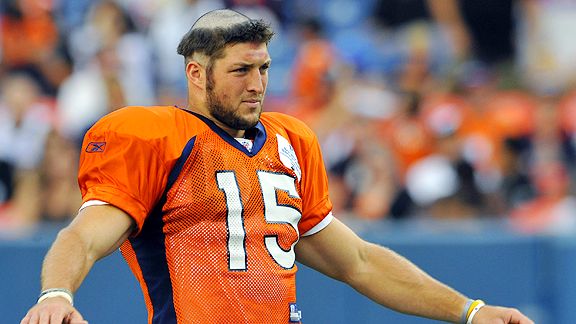
Tim Tebow Replaces Brett Favre As Media's NFL Deity


Becoming the poster child for the current version of the "All-American Boy" almost never happened for the big kid with the goofy smile and "Aw shucks" attitude. His mom was ill while pregnant with him and doctors urged her to abort a child that could be stillborn.

Ignoring medical advice, she carried out a pregnancy that gave the media someone to talk about at every turn on the hype highway. Tim Tebow has more reasons for them to like him besides cheating death before even being born.

Home-schooled by a family with Christian beliefs, Tebow soon incurred some controversy as a home-schooled student when he played football for a nearby high school. Though he started out playing linebacker and tight end, he soon became Florida's Player of the Year twice and his legend began to grow by playing a game on a broken leg.

ESPN began following him at this time and even did a show featuring Tebow and labeled him "The Chosen One". A top recruit, he decided to attend the University of Florida.

The media kept following him, this time in greater numbers. Not only did they have Tebow confess he was a virgin, they printed and recorded the question and answer that had nothing to do with football. The purpose of the question was to add to the mystique that was often found on an ESPN broadcast somewhere seemingly daily.

All of this publicity came despite the fact he was a backup, something that would come about again in five years. Tebow played as a freshman, and even played a key role in helping the Gators win the 2006 National Championship.

He started from his sophomore year on and became the first home-schooled athlete to win the Heisman Trophy Award. Tebow was also the first underclassman ever to win the award.

Though he was never able to tie Archie Griffin's record of winning the Heisman twice, he did lead Florida to another championship in 2008 and won the Maxwell Award twice. Many media members would be so bold to call Tebow the greatest college football player ever.

Yet critics would say that he would never have success as a quarterback in the NFL. Tebow ran the position kind of like a mix of a throw-back player and fullback in college, opting to run over defenders and toss jump passes more often than any other contemporary quarterback.

The Denver Broncos did not care to listen to the critics. They traded up in the 2009 Draft to use the 25th overall selection to grab Tebow. While many in the media had been wondering incessantly throughout the draft why Tebow hadn't been drafted yet, critics expected him to keep falling to possibly even the third round.

Now a Bronco, the cameras keep a few feet away constantly recording every Tebow move. The most popular reserve in the NFL, his jersey was a hot-selling item that set records. It had been the top-selling jersey every month since he was drafted for many months.

While spotted in six games in the beginning of his career, the Broncos lost their starting quarterback and were forced to start Tebow for three games. He became the first quarterback in NFL history to run for a touchdown in each of his first three career starts.

While his passing numbers were far from gaudy, they were certainly better than the critics expected. The 82.1 quarterback rating he had as a rookie was impressive for a kid no one thought would ever be an effective professional quarterback.

Now in his second season, the hype highway has intensified with more bodies and pressure in the way. His name is mentioned constantly on television and the Internet is strewn with tons of articles discussing if this is the year Tebow begins his career as a starter.

The problem is that last years starter, Kyle Ortin, has outperformed Tebow in camp by a pretty wide margin. Tebow's fans will say practice is unimportant, that the play on the field during a game matters most.

In the Broncos first 2011 preseason game, Orton was not sharp in his few plays. Tebow was sharp with one incompletion against backup defenders on the Dallas Cowboys. Still, Tebow's head coach John Fox called the youngster a work in progress who made a few bad reads.

With his unconventional release and style of play, Tebow is a unique player. Some think his style best works as a spot player. One reporter compared Tebow to 1984 Heisman winner Doug Flutie.

Flutie, about eight inches shorter than Tebow, lasted 11 rounds before being drafted. After a season in the United States Football League, Flutie joined the NFL as the USFL folded.

He soon found himself on the field playing, but the results were not as hoped. Flutie then bolted for the Canadian Football League and became a star. He played in the CFL for eight years and won three titles. He was also named the CFL's Most Outstanding Player six times.

Flutie then returned to the NFL in 1998 and became a Pro Bowler. He played to the age of 43 and became the first NFL player in 65 years to convert a successful drop kick.

While a trip to the CFL is an unlikely route for Tebow, it may take some time before the Broncos are ready to let him lead the team. But his teammates will tell you Tebow displays a an obvious burning desire to win.

With his religious beliefs, humble attitude, and desire to fulfill his childhood dream to becoming a great NFL quarterback, the media has bought in full force. There have been stories of him quoted as saying his Broncos starting job was “grabbed back away” when Orton was not traded recently.

But the negative press rolls off his back like water on a duck, leaving him unscathed. Well
insulated with a huge fanbase, the loyalty of the press will stay persistent no matter how much of Tebow's 2011 season is spent on the bench.

It appears Tebow can do no wrong to a group of writers, which reminds some of Brett Favre. Favre, who retired last year after 20 years as a player, still gets brought up in stories for a possible return this year.

While Favre won one Super Bowl and set several records as a player, he also left the game with the most fumbles, times sacked, and interceptions thrown in an era of football where the NFL constantly bent the rule in a quarterbacks favor to ensure success.

Tebow hasn't thrown a teammate under the bus yet for holding out while being the highest paid player in team history like Favre did. Nor are there any reports of purported sexual harassment either.

Yet there are similarities that extend beyond the fact both men play quarterback. Favre also lived under the media microscope and was trumpeted as the greatest player ever innumerous times.

Favre could do no wrong himself, even if reports of wrong doing were running rampant. He was given a pass at every turn and ESPN dropped his name seemingly every ten minutes on all broadcasts for many years.

With him now away from the game, the mantle has been filled by the kid who has had a media shadow since he was 17-years old. Tebow handles the things well, but has also lamented the constant process of being interviewed repeatedly and practically daily.

He will be only 24-years old soon, but the target is set firmly on his back. Opponents have stated they will try to hit Tebow with all of their abilities. That pressure alone would buckle most, let alone the constant attention he receives from a large group of reporters following him.

While appearing bashful at being given the throne Favre reigned for so many years, Tebow appears to understand the perks that go with it. Whether all of this hype gets him on the field with a successful career remains to be seen, but the media will make sure we witness every second of it.

Sunday, July 24, 2011

NFL's Best Pass Receiving Running Backs Of Every Team

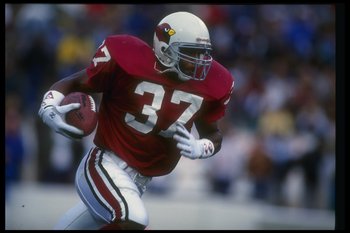
Arizona Cardinals : Larry Centers


Centers was drafted in the fifth round of the 1990 draft by the Phoenix Cardinals. He was used strictly as a part time kick returner as a rookie, returning 16 kickoffs. He matched that total again the next year, and also returned the only five punts of his career.

The Cardinals began using him as a third down back in 1992, and he had 50 receptions and the first two touchdowns of his career. He continued increasing his receiving totals each year, culminating with 101 receptions in 1995. It is a NFL record for receptions by a running back, and he was named to his first Pro Bowl.

His 1996 season was probably his best. He had 99 receptions, and set career best marks of 425 rushing yards on 116 attempts while scoring nine times. After catching 123 balls over the next two years, he signed with the Washington Redskins as a free agent for the 1999 season.

Washington used him primarily as a receiver in his two years with them, and he had 150 catches over that time. He then joined the Buffalo Bills in 2001 and had 123 receptions in the two seasons he played for them. He also made his last Pro Bowl in 2001.

Centers then joined the New England Patriots in 2003, and was used sparingly. He caught 19 balls and scored his last touchdown, as the Patriots went on to win Super Bowl XXXVIII. He then retired.

His 827 career receptions are the most by any running back in NFL history, and the second most ever by any non-wide receiver. His 535 receptions with the Cardinals is the second most in franchise history.

Though Larry Centers is known as one of the greatest receiving fullback in NFL history, he was also an excellent blocker who helped paved the way for several 1,000 yard backs.


Atlanta Falcons : William Andrews


Andrews was drafted in the third round of the 1979 draft by the Falcons. He earned a starting job immediately and ran for 1,023 yards along with 39 receptions and five touchdowns.

He piled up 1,308 rushing yards the next year, at a career best clip of 4.9 yards per carry, to go with 51 receptions and five scores. Atlanta reached the playoffs after winning 12 games, but lost in the first round. Andrews was named to his first Pro Bowl that year, and would be return to the Pro Bowl in each of the following three seasons as well.

Andrews led the NFL with 2,036 yards from scrimmage via rushing and receiving in 1981, and was second in all-purpose yards. He had a career best 81 receptions for 735 yards and 12 total touchdowns, along with 1,301 rushing yards.

That season saw him, along with O.J. Anderson, join Hall Of Famers Earl Campbell and Tony Dorsett as the first four running backs in NFL history to rush for over 1,000 yards in each of their first three seasons.

The strike shortened season of 1982 stopped his streak of 1,000 yard seasons. He still was able to average a career best 12 yards on 42 receptions, including an NFL long 86 yard touchdown reception, and run for 573 yards in just nine games.

He was the main offensive weapon for Atlanta in 1983. He carried the ball a whopping 331 times and also caught 59 balls. His 390 touches were the second most in the NFL that year, and is still the 51st most in league history.

Gaining a career best 1,560 yards that still ranks 50th best in NFL history, along with 609 receiving yards, his 2,176 all-purpose yards were second best in the NFL that year, and is still the 51st most in league history for one year. He also scored 11 times.

While he was already a star, he was also considered a player on his way to being inducted in the Pro Football Hall Of Fame. As the Falcons prepared for the 1984 season,

Andrews suffered a devastating knee injury. It was so severe that it kept him off the field for two seasons.

Though he tried to return in 1986, he had to adjust his role to being a blocking back for Gerald Riggs. Though he still averaged a respectable 4.1 yards per carry, he only had 52 carries and five receptions and scored the last touchdown of his career. He then retired.

He still ranks second in team history with 5,986 career rushing yards. His 277 receptions is the most ever by a Falcons running back, and ranks seventh best overall.

Andrews has his jersey retired by the Falcons, and is a member of the teams Ring of Honor. He is also in the Georgia Sports Hall of Fame.

There is no question that William Andrews is the best fullback and pass receiving back in Falcons history.


Baltimore Ravens : Ray Rice


Rice was drafted in the second round of the 2008 draft by the Ravens. His rookie season saw him start four games, but he impressed the coaches enough to be named the full-time starter the next two years.

For a young franchise that has existed since 1996, Rice has already found himself near the top of the Ravens record books in several categories. He is already second in carries and rushing yards on their all-time list.

Yet he is also excellent in the passing game and is a frequent target for quarterback Joe Flacco. He has already made one Pro Bowl, which was in the 2009 season.

His 174 receptions with them is the seventh most in team history and 14 more than Jamal Lewis, who ranks second in running back catches.


Buffalo Bills : Thurman Thomas


Thomas was drafted in the second round of the 1988 draft and won a starting job right away. The 1989 season began streaks of five straight Pro Bowls and eight years of running for at least 1,005 yards.

He led the NFL in yards from scrimmage four consecutive seasons as well. Thomas was named NFL MVP by both the Newspaper Enterprise Association and Pro Football Writers Association in 1991. He was named 1992 Offensive Player of the Year by both the AP and UPI.

While an exciting player when handed the football, Thomas was equally as explosive when attempting to catch a pass. Buffalo could line him up all over the field to put pressure and fear on the opposing defenses. This helped the Bills go to four Super Bowls while he was with the team.

The 1998 year was his last as a starter because a young Antowain Smith began leading the team in most rushing categories. Thomas stayed with the Bills until 1999, then joined the Miami Dolphins for one season in 2000 before retiring.

Thomas is a member of the Pro Football Hall of Fame and NFL 1990s All-Decade Team. He has the most rushing yard in Bills history, even surpassing the legendary O.J. Simpson.

His 456 receptions with them is the third most in team history and 281 more than Simpson, who ranks second in running back catches.


Carolina Panthers : DeShaun Foster


Foster was drafted in the second round of the 2002 draft by the Panthers. His first two seasons with the team were inhibited by injuries, limiting him to 18 total games played.

His rookie year saw the Panthers reach Super Bowl XXXVIII. He backed up Stephen Davis, but still contributed to the team. Foster led the team with 95 yards rushing on 21 carries in the Panthers division playoff overtime win against the Saint Louis Rams.

Foster split carries with Davis the the NFC Championship Game, but sealed the game with a touchdown run to help Carolina defeat the Philadelphia Eagles 14-3. He has just three carries in the Super Bowl, but he took one carry 33 yards for a touchdown in the Panthers 32-29 loss to the New England Patriots.

Despite five starts in 2005, he caught a career high 34 passes and ran for 879 yards. He was elevated to the starting lineup after that. His next two years saw him gain 1,773 yards on the ground while catching 57 passes.

He signed a free agent contract with the San Francisco 49ers in 2008 and spent the year backing up Pro Bowl halfback Frank Gore. He has not played in the NFL since then.

Brad Hoover tops the Panthers running backs receiving list with 145, 19 more than Foster, but it took him five more seasons to get his totals.


Chicago Bears : Walter Payton


Payton was the first round draft pick of the Bears in 1975. Chicago didn't seem to know what they had, so they had him returning kickoffs as a rookie. He was so good at it, Payton led the NFL with a 31.7 return average that year.

When the Bears finally decided to start in on offense, Payton grabbed it and started every game the rest of his career. He would eventually set an NFL record with 170 straight starts.

Chicago leaned on the man simply known as "Sweetness" from that point on. Beginning in 1976, he led the NFL in rushing attempts four straight seasons. This is an NFL record. He also began a run of five straight Pro Bowl appearances.

His 1977 season was his first of five total First Team All-Pro nods. He had 1,852 rushing yards at a 5.5 yards per carry average. Payton had 2,121 yards from scrimmage, averaged 132.3 yards rushing per game, ran for 14 touchdowns and had 16 total. Not only were all career high marks, they led the NFL that year.

He was named the 1977 NFL MVP by the Associated Press, Pro Football Writers Association, and the Newspaper Enterprise Association. He was also named the Offensive Player of the Year by the UPI. He would win the Pro Bowl MVP in 1978.

His streak of six straight years of at least 1,000 yards rushing was halted by the 1982 players strike, which cut the season to just nine games. He resumed that streak for four seasons until it was halted by the 1987 players strike. Payton never rushed for less than 1,222 yards or had 311 carries in a year minus his rookie season and the two strike years.

After carrying the Bears with little help as every opponent just keyed on him play after play, Payton got surrounded by good talent in 1985. The Bears won Super Bowl XX that year.

Payton won the Bert Bell Award and Newspaper Enterprise Association NFL MVP Award that year. He was also named the 1985 Offensive Player of the Year by the UPI.

Sweetness retired after the 1987 season and would have his number retired by the Bears. He is a member of the Pro Football Hall of Fame, both the 1970s and 1980s NFL All-Decade Team, and is on the NFL 75th Anniversary Team.

While 10 NFL records he set have been broken or tied, no one would consider comparing those players who broke them with Payton. He could do it all on the field. Running, catching, blocking, or passing were things he could do with excellence and ease.

He tossed eight touchdowns on 11 passing completions in his career. Payton was even asked to punt once, and he boomed the ball 39 yards.

His 492 receptions with the Bears is the most in team history. He is one of the greatest offensive players to ever play the game.


Cincinnati Bengals : James Brooks


Brooks was drafted in the first round of the 1981 draft by the San Diego Chargers. While he was a steady contributor to the offense his first three years, he mainly came off the bench and starred on special teams.

He led the NFL in all-purpose yards in his first two years, as well as kickoff returns and yardage in 1982. Yet the Chargers traded him to the Bengals before the start of the 1984 season.

Brooks rarely played special teams for Cincinnati because the team found an explosive running back able to score every time he got his hands on a football. He caught a career high 55 passes for five touchdowns in 1985 while running for 929 yards and seven more scores.

His 1986 season may have been his best. It was his first Pro Bowl season as well. Brooks ran for 1,087 yards while leading the NFL with a 5.3 yards per carry average. He also averaged a career best 12.7 yards on 54 receptions.

After the 1987 strike season, Brooks split carries with All-Pro rookie Ickey Woods. The duo ran for 1,997 yards and 23 touchdowns, while catching 50 passes for six more touchdowns. Brooks would go the Pro Bowl for three straight years.

Cincinnati would reach Super Bowl XXII. Brooks, who scored a touchdown in the Bengals AFC Championship win, had just seven touches as the San Francisco 49ers won 20-16 by scoring with 34 seconds left in the game.

Woods got hurt early in 1989, so Brooks was asked to carry the load. He set career highs of 221 carries for 1,239 yards while averaging 5.6 yards per carry. He also caught 37 passes.

After running for 1,004 yards in 1990, he carried the ball less the next year as he caught 40 balls. He then joined the Tampa Bay Buccaneers for two games in 1992 before getting hurt and release. The Cleveland Browns signed him and Brooks played four games for them before retiring.

Brooks was the Bengals all-time leader in rushing yards until Corey Dillon passed him a decade later. He still ranks second in that category, while averaging an impressive 4.8 yards per attempt.

His 297 receptions and 27 touchdowns with the Bengals are the most in team history by a running back, which is 105 more than Archie Griffin and Corey Dillon.


Cleveland Browns : Greg Pruitt


The other half of the Browns famous "Do It Pruitt" backfield. Pruitt was a second round pick in the 1973 draft. Greg made his impact as a return specialist initially.

Pruitt made the Pro Bowl his first two seasons in the NFL on special teams. He did get 540 yards rushing in his second year in part time status, while taking the only kickoff in his career for a touchdown.

He was a starter by 1975, and ran for 1,067 yards. He also caught 44 balls, and scored a career high nine touchdowns total. Pruitt ran for 1,000 yards the next season, while catching 45 passes.

In 1977, Pruitt went to the Pro Bowl again. He ran for 1,086 yards and had 37 receptions. This would be the last year he ran for over 1,000 yards.

He averaged 5.5 yards per carry in 1978, when he gained 960 yards rushing. He got injured, and missed four games. Pruitt was only able to play six games the following year, but rebounded in 1980.

With Mike Pruitt doing the bulk of the running, he was utilized as a receiver. He caught 50 balls, and scored 5 times via the pass. He followed that up with a career high 65 passes caught in 1981.

Pruitt ended up an Oakland Raider the next season, as was used mainly as a punt returner. In 1983, Pruitt went to his final All Pro game after averaging 11.5 yards per return on 58 attempts. He also scored the only punt return of his career, when he took it 97 yards.

He also scored the last two touchdowns rushing the ball that year, when he gained 154 yards on 26 attempts at a rate of 5.9 yards per rushing attempt. The Raiders went on to win Super Bowl XVIII. He played one more season in 1984 before retiring.

His 323 receptions with them is the fifth most in team history and 36 more than Eric Metcalf, who ranks second in running back catches.


Dallas Cowboys : Emmitt Smith


Drafted in the first round of the 1990 draft by the Dallas Cowboys, Smith became the primary ball carrier immediately. He ran for 937 yards and scored 11 times on the ground.

He was named Rookie of the Year for his season after making the first of six consecutive Pro Bowls. He would then start a run of 11 straight seasons of at least 1,021 yards rushing in 1991.

Smith was the National Enterprise Association NFL MVP in both 1992 and 1993. He was named First Team All-Pro four straight years beginning in 1992. He won the Bert Bell Award and Pro Football Writers Association NFL MVP in 1993 after winning the MVP award in Super Bowl XXVIII, the second straight year Dallas won the title.

His finest season came in 1995, a year he set career high marks of 377 carries for 1,773 yards for 25 rushing score and 62 receptions. He also averaged a career best 4.7 yards per carry and ran for 110.8 yards per game.

His performance that year led the Cowboys into Super Bowl XXX after Smith ran for 150 yards and three scores in the NFC Championship Game against the Green Bay Packers. Dallas defeated the Pittsburgh Steelers 27-17 in the Super Bowl behind Smith's two touchdowns, their third title in four years.

He left Dallas after running for 975 yards in 2002, ending his 1,000-yards rushing streak. He joined the Arizona Cardinals and had the worst season of his career in 2003 by running for a career low 256 yards and two scores.

Most experts considered the 35-year old washed up in 2004, especially after so many touches in his previous 14 seasons. Smith proved that theory false by running for 937 yards and nine scores before retiring at the end of the year.

Now inducted into the Pro Football Hall of Fame, as well as being a member of the NFL's 1990s All-Decade Team, Smith has the most rushing yards ever in NFL history. But he did more than just run the ball by being a sound blocker and good receiving option.

His 486 receptions with the Cowboys is the fourth most in team history and 107 more than fellow Hall of Famer Tony Dorsett, who ranks second in running back catches.


Denver Broncos : Floyd Little


Little was drafted in the first round of the 1967 draft by the Broncos. He didn't do a lot on offense in his rookie year, but he did excel on special teams. He averaged 27 yards on a career best 35 kickoff returns and a career high 17 yards on 16 punt returns, returning one a career long 72 yards for a score.

His second season was hist first of four straight Pro Bowl seasons. Though he missed three games that year, he averaged a career high 17.4 yards on 19 receptions and took another punt return for a score.

The 1971 season was the only year he exceeded 1,000 yards rushing by getting 1,133 on a career high 284 carries. Yet his 1973 may have been his best.

Not only did Little run for 12 score, he churned out 979 yards and set career high marks of 41 receptions for 423 yards. He then became the second running option the next two years to Otis Armstrong before retiring after the 1975 season.

He was the Broncos all-time rushing leader in yards gained, attempts, and touchdowns until Terrell Davis passed him over 20 years later. Yet Little's impact is still resounding to this day.

The Broncos were a struggling franchise until his arrival. There was even murmurs of moving the team elsewhere because Denver had spent their AFL days with one .500 record and the rest losing seasons.

The team struggled at first with Little, but he put the team on his back and was one of the more exciting players of his era. He helped Denver post their first winning season in 1973. The franchise has had just seven losing seasons since.

Besides being called one of the best players of his era by several of his his peers, the Hall of Famer has been credited by many as the man who saved the Denver Broncos. He is the first first-round draft choice to ever sign with Denver and is known as "The Franchise".

His 215 receptions with them is the 13th most in team history and eight more than Gerald Willhite, who ranks second in running back catches.


Detroit Lions : James Jones


Drafted in the first round of the 1983 draft, Jones rookie year saw him catch 46 passes and score seven times while serving as an excellent blocking fullback for Pro Bowl halfback Billy Sims as Detroit won their division. They would lose 24-23 in the first round to the San Francisco 49ers.

His second season saw him grab a career best 77 balls and lead the team with 137 carries after Sims suffered a career ending injury in the eighth game of the year. Detroit played three overtime games in their first 10 games and won four games all year.

With Sims gone. Jones became the primary ball carrier. He missed two games because of injury, yet still toted the ball 244 times for 886 yards. He also grabbed 46 passes and scored nine times.

His best year came in 1986, where he set career high marks of 252 carries for 903 yards and nine rushing touchdowns. He caught 52 passes as well.

Jones next two years saw him become more of a blocker, as he carried the ball 96 times each year while catching 63 total passes. Detroit traded him to the Seattle Seahawks for cornerback Terry Taylor before the 1989 season.

After playing just two games in 1989 because of injuries, Jones spent his next three years mostly blocking for Seattle. He was even used as a tight end. Jones retired after the 1992 season.

He had 285 receptions in his six years with Detroit, the second most ever by a Lions running back and it is the eighth most in team history. Hall of Famer Barry Sanders leads all Detroit running backs with 352 receptions.


Green Bay Packers : Ahman Green


Green was a third round draft pick of the Seattle Seahawks in 1998. He spent two years there mostly riding the bench, carrying the ball 61 times total before being traded to the Packers.

Green Bay put him to work immediately as their featured back, and he churned out five consecutive seasons where he gained over 1,000 yards on the ground. He also went to the Pro Bowl four straight years. He also caught 267 passes over those five years, displaying what a complete weapon he was for the team.

No other player gained as many yards in those five seasons than he did. He also was explosive, running for touchdowns from 98 and 90 yards out. He is one of just two players in NFL history to have touchdown runs of 90 yards or more.

After an injury plagued 2006 season that saw him play just five games, Green rebounded the next year with his sixth 1,000 yard season in seven years. He then joined the Houston Texans for two injury riddled years before rejoining he Packers in 2009 to add depth to a depleted backfield.

Though he played just eight games as a reserve, he gained enough yards to become the Packers all-time leader in rushing yards and carries. No Packers halfback has appeared in more Pro Bowls that his four.

He played for the Omaha Nighthawks in the United Football League in 2010. He tried to join the Montreal Alouettes of the Canadian Football League in 2011, but was cut after the first practice.

A lot was made of the fact Green fumbled 34 times as a Packer, but he only fumbled one more time with 40 more carries than Hall of Famer Jim Taylor. Taylor is considered by many the greatest fullback in Packers history. Ahman Green may very well be the best halfback the team ever had.

His 350 receptions with them is the seventh most in team history and 30 more than William Henderson, who ranks second in running back catches.


Houston Texans : Domanick Williams


The Texans started play in 2002 and Williams is all over their record books. He was drafted in the fourth round of the 2003 draft by Houston.

He quickly earned a starting job as a rookie. He ran for 1,031 yards and caught 47 balls. He was used even more the next season, setting career high marks of 302 carries for 1.188 yards, 68 receptions, and 14 total touchdowns.

Williams was having an excellent 2005 season with 919 rushing yards and 36 receptions after 10 games. He had run for 57 yards and a touchdown, while catching three balls for 53 yards, in the 11th game when he incurred a devastating knee injury.

He sat out the next season, but was released before the 2007 year. He retired as the Texans leader in virtually every category for a running back.

His 154 receptions with them is the fifth most in team history and 57 more than Steve Slaton, who ranks second in running back catches.


Indianapolis Colts : Don McCauley


McCauley was drafted in the first round of the 1971 draft by the Colts, where he spent most of his rookie season contributing on special teams. He carried the ball a career high 178 times the next year while taking one of his 45 career kickoff returns 93 yards for a touchdown.

After running the ball 144 times in 1973, McCauley never carried the ball more than 83 times again the rest of his career. His main duties came on third down.

While excellent at picking up the blitz, McCauley also displayed a soft pair of hands. His best year may have come in 1979, where he caught 55 passes for 575 yards. After 70 receptions over the next two years, he retired at the end of the 1981 season.

Edgerrin James had 356 receptions with the Colts, which is most in team history by a running back and 23 more than McCauley. Hall of Famers Lenny Moore and Marshall Faulk, along with Lydell Mitchell, also must be mentioned.


Jacksonville Jaguars : Fred Taylor


Taylor was drafted in the first round of the 1998 draft by the Jaguars. He was put to work right away and scored a career high 14 rushing touchdowns on 1,233 rushing yards. He also caught 44 passes and scored a career best three times.

Despite such a great year, he was overlooked by many and Randy Moss would win the Rookie of the Year Award even though Taylor had arguably a better season. Being overlooked would become a theme for Taylor.

After a year cut short by injuries in 1999, Taylor led the NFL with an average of 107.6 yards rushing per game in 2000. He also scored 14 times on 1,399 yards and 36 receptions.

Taylor's 2001 season was cut short to two games in 2001, but he rebounded well. He ran for at least 1,146 yards in five of the next six seasons. He also remained a steady threat in the passing game for Jacksonville.

Every football fan knew Taylor was an elite running back, and had been in his 10 years as a player. Yet he was always overlooked when it came to the Pro Bowl. Whether it was the lack of media attention or lack of knowledge by generally most NFL fans, Taylor continued to be a standout in relative obscurity.

That all changed in 2003 when he made his first Pro Bowl. He played one more season for the Jaguars before joining the New England Patriots in 2009. He has played just 13 games in two seasons for them, usually splitting carries with several other running backs.

Taylor is the Jaguars all-time leading in rushing yards, attempts, yards per game, and rushing scores. He is probably the most underrated player of his era.

His 286 receptions with them is the third most in team history and 51 more than Maurice Jones-Drew, who ranks second in running back catches.


Kansas City Chiefs : Kimble Anders


Anders signed with the Chiefs as an undrafted free agent rookie in 1991. He spent his first two years mostly blocking and playing special teams.

He earned a starting job in 1993 and never carried the ball in a season more than 79 times in his career. He was a bruising blocker who also displayed soft hands when running a pass route.

Anders got recognized as one of the top fullbacks in the game in 1995 by being named to the Pro Bowl. Though he had just 58 rushing attempts that year, he averaged a very impressive 6.9 yards per carry while catching 55 passes as well.

After making the Pro Bowl the next year, he went back for the final time in 1997 after averaging five yards on a career best 79 carries while snagging 59 passes. After catching a career high 64 balls the next year, he got hurt early in 1999.

Anders had already piled up 181 yards on 32 carries when he was injured in the second game of the season. After coming back in 2000, he started just seven games and then retired.

His 369 receptions with them is the sixth most in team history and 81 more than Ed Podolak, who ranks second in running back catches.


Miami Dolphins : Tony Nathan


Drafted in the third round of the 1979 draft by the Dolphins, Nathan spent his rookie season mostly playing special teams.He returned 45 kickoffs for 1,016 yards and returned 28 punts for 306 yards.

Both are career highs, as is the 86-yard punt return he took for a touchdown. He was named First Team All-Pro for his performance that season.

Nathan did return 23 punts the next year, but spent the rest of his time on offense. After starting six games and grabbing 57 passes and a career best five scores, he had perhaps his finest season in 1981.

After leading the NFL with a 5.3 yards per carry average, after grinding out a career best 782 yards and catching 50 passes, he shone brightly in the Dolphins first round playoff game. The game is simply known as "The Epic In Miami".

Played in 80% humidity, the Dolphins squared off against the San Diego Chargers in a see-saw affair. After the Chargers bolted out to a 24-0 lead in the first quarter, the Dolphins put up 17 points in the second quarter.

Nathan scored on a 25-yard hook and lateral play to close the gap within seven. Duriel Harris caught a pass and then pitched it to a streaking Nathan, who took it the rest of the way.

After Miami tied up the game, Nathan rumbled 12 yards to give the Dolphins the lead. San Diego would eventually win late in overtime. Nathan led the Dolphins with 114 yards on nine receptions and 48 rushing yards.

The 1982 season was shorted to nine games because of a strike, yet Miami reached the playoffs. In a rematch with San Diego, Nathan ran for 83 yards and threw a 20 yard pass as Miami won 34-13.

The Dolphins lost Super Bowl XVII to the Washington Redskins as Miami quarterbacks were able to complete just four passes all game. They would return to Super Bowl XIX just two seasons later.

Nathan led Miami with 76 yards rushing in their 31-10 divisional playoff win over the Seattle Seahawks, which included a 14 yard touchdown run to open the scoring. He followed that up with eight catches for 114 yards and 64 yards rushing, including another rushing score, to help Miami win the AFC Championship.

While the San Francisco 49ers trounced the Dolphins 38-16 in Super Bowl XIX, Nathan led Miami with 10 receptions and just 18 yards rushing. He followed that up with a career high 72 receptions in 1985, the most ever by a Dolphins running back until Terry Kirby passed him by three receptions in 1993.

He spent his next two years as a reserve who came on the field during pass plays. Nathan retired after the 1987 season.

His 383 receptions with them is the sixth most in team history and 162 more than Jim Kiick, who ranks second in running back catches.


Minnesota Vikings : Rickey Young


Young was drafted in the seventh round of the 1975 draft by the San Diego Chargers. In college at Jackson State University, he shared the ball with Hall of Famer Walter Payton and Eddie Payton while Hall of Famer Jackie Slater blocked.

Young soon earned the starting job with the Chargers as a rookie. He quickly established himself as one of the most well-rounded backs in the game.

San Diego traded him to the Vikings for Pro Bowl guard Ed White just before the 1978 season. While he shared carries with Pro Bowl fullback Chuck Foreman , Young led the NFL with 88 receptions.

Young led the Vikings with 708 rushing yards and 72 receptions in 1979. He made some excellent catches for an aging Vikings team trying to rebuild after dominating the NFC during the 1970's.

He carried the ball less after that, as 1979 first-round draft pick Ted Brown became the feature back. The duo combined for 126 receptions in 1980, with Young snagging 64 of the passes.

After 43 receptions the next year, he lost his starting job to 1982 first-round draft pick Darrin Nelson. He retired after the 1983 season.

Ted Brown's 339 receptions is the most in team history, just ahead of the great Chuck Foreman by five catches, but Young had 292 catches in just six years and his 88 receptions was an NFL record for running backs at the time.


New England Patriots : Kevin Faulk


Faulk was the Patriots second round pick in 1999. He started occasionally at running back and even returned punts, but he spent a better part of his first four years as a third-down back and kick returner.

New England won Super Bowl XXXVI in 2001. Faulk's main contributions that year came on special teams and the 30 passes he caught that season.

In 2002, he took two kickoff returns for touchdowns. Faulk would be asked to return 45 kickoffs the rest of his career because his value on third down was much too valuable for New England. Faulk became the only Patriot to score multiple touchdowns in rushing, receiving, and kick returns.

He started eight games in 2003 and ran for a career high 638 yards while catching 48 passes. He helped the Patriots win Super Bowl XXXIV that year. His two-point conversion off of a direct snap helped the Patriots defeat the Carolina Panthers 32-29 in Super Bowl. XXXVIII.

He resumed his duties as the third-down specialist in 2004. New England would go on to repeat as champions by defeating the Philadelphia Eagles 24-21 in Super Bowl XXXIX.

The 2008 season may have been his finest. He averaged 6.1 yards on 81 rushing attempts and caught a career best 58 passes. He was hurt in the second game of the 2010 season, ending his year.

He is a member of the Patriots 50th Anniversary Team and holds team records in all-purpose yards, kickoff returns, kickoff return yards, and receptions by a running back.

Faulk's 424 receptions is 214 more than the next Patriots running back, Sam "The Bam" Cunningham. He intends to keep playing to add to his totals.


New Orleans Saints : Dalton Hilliard


Hilliard was drafted by the Saints in the second round of the 1986 season. He spent most of his career as a spot starter and third down specialist.

His finest year came in 1990, which was his lone Pro Bowl season. He led the NFL with 18 rushing and receiving touchdowns after running for a career best 1,262 yards on 344 carries and 13 scores. He also caught a career high 52 passes for 514 yards and five scores.

After getting hurt and missing 10 games the next year, Hilliard went back to being a third-down specialist and spot starter. He caught 98 balls over his last two years before retiring after the 1993 season.

He is a member of the Saints Hall of Fame. He ranks second all-time in Saints history in rushing touchdowns and attempts, as well as third in rushing yards. He leads all Saints running backs in receiving yards and touchdowns.

Reggie Bush has 294 catches so far, 45 more than Hilliard. It is the most ever by a Saints running back and the fifth most in franchise history.


New York Giants : Frank Gifford


Gifford was selected by the Giants in the first round of the 1952 draft. He spent his rookie season helping the team out as a reserve on offense, defense, and special teams. He picked off one pass and threw a touchdown pass.

He became a bigger part of the offense in his second year, but he still played defense as well. Gifford picked off a pass and took it 62 yards for a touchdown. New York also liked him passing the ball. He threw a touchdown pass in each of the next seven seasons.

Gifford made his first Pro Bowl in 1953, an honor he would earn until the 1959 season. While being an electric runner, he was an intelligent receiver who could go deep at any time. He wa also known for tossing the ball to open teammates when the opponents least suspected it.

Beginning in 1955, Gifford was named First Team All-Pro in four of the next five seasons. His best year was in 1956, where he was named NFL MVP.

Gifford toted the ball for a career high 819 yards while averaging 5.2 yards per carry. He also snagged a career best 51 passes, and his 1,422 yards from scrimmage led the NFL.

His performance that season helped the Giants reach the title game. He led all players with 131 receiving that day, as he grabbed four passes and scored once in the Giants 47-7 trouncing of the Chicago Bears.

The Giants team was stacked with future Hall of Famers like Gifford, Emlen Tunnel, Andy Robustelli, Roosevelt Brown, Alex Webster, and Sam Huff. Two assistant coaches, Vince Lombardi and Tom Landry, would also be inducted in Canton years later.

Gifford would later become the 1958 Pro Bowl MVP in front of a Pro Bowl record attendance of 72,250 fans. He is the first Giants player ever to win the award, an award only two Giants have won since.

The 1960 season was his last as a running back. Gifford's season ended in the eighth game when Philadelphia Eagles Hall of Fame middle linebacker Chuck Bednarik blindsided an unsuspecting Gifford on a crossing-route pass. The hit was so harsh, Gifford did not return to the NFL until 1962.

Upon his return, the Giants switched him to wide receiver. He averaged a career best 20.4 yards on 39 receptions that year, showing he was back. Gifford was still asked to run and throw the ball on occasion as well.

He went to the 1963 Pro Bowl after grabbing 42 pass and seven touchdowns. He played one more season before retiring for good to become a broadcast journalist.

His number has been retired by the Giants and he is a member of the NFL's 1950s All-Decade Team and Pro Football Hall of Fame.

No other Giants running back has been to more Pro Bowls or been named First Team All-Pro more than Gifford. His 367 career receptions still rank as the seventh most in team history.

The 257 receptions he had as a running back is the second most ever by a Giant, and Gifford's 25 touchdown catches as a running back is the most ever in team history.

Tiki Barber's 586 receptions is the second most in franchise history. Joe Morrison, who played fullback, halfback, and flanker, also deserves mention.


New York Jets : Freeman McNeil


The Jets used their first-round pick in 1981 to select McNeil. He missed five games in his rookie year and started six games total.

Now the Jets feature back in 1982, McNeil led the NFL with 786 yards rushing at a league-leading 5.2 yards per carry average. He played in nine games because the season lost seven games due to a players strike.

He was named First Team All-Pro and went to the Pro Bowl. McNeil did throw a touchdown pass the next season, but missed seven games because of injury.

McNeil did return to the Pro Bowl in 1984 despite missing four games. He ran for 1,070 yards. His next year was his best, as well as being his last year as a Pro Bowler.

Despite missing two games, he ran for 1,331 yards. He missed four games in 1986, but still caught a career best 49 passes. He missed seven games the next year.

McNeil's 1988 season was the only one of his career where he started every game in a season. He ran for 944 yards and a career best six scores. It was his last season as the Jets primary ball carrier.

Though he spent four more years with the team, he never had more than 99 carries. He retired after the 1992 season as the Jets all-time leader in rushing yards. He now ranks second.

Curtis Martin's 367 receptions are 72 more than McNeil and is the seventh most in Jets history. Yet he averaged just 6.6 yards a catch and scored five times.

McNeil averaged 10 yards a reception and scored 12 times, while never having a season in his career where he averaged less than four yards per carry.


Oakland Raiders : Clem Daniels


Daniels was an undrafted free agent rookie who signed with the Dallas Texans of the American Football League in 1960. He spent that year backing up Rookie of the Year Abner Hayes. He was also used on defense and intercepted three passes.

Daniels was traded to the Raiders the next year and carried the ball just 31 times.
Oakland liked what they saw though, so he was elevated to the starting lineup in 1962 and scored a career-best seven rushing touchdowns off 761 yards.

In 1963, Daniels had perhaps the greatest season by a Raiders running back, where he made the first of four consecutive Pro Bowls and was named first-team All-Pro. He led the AFL with 1,099 rushing yards, 1,784 yards from scrimmage and 78.4 rushing yards per game while averaging a career-best 5.1 yards per carry.

Daniels also led the AFL with a whopping 22.8 yards per catch average on 30 receptions, which is still a Raiders record for running backs with 30 receptions or more.

Though he never ran for more than 1,000 yards again, Daniels ran for more than 800 yards in each of the next three seasons and matched his career-high of seven rushing touchdowns in 1966. He was named first-team All-Pro that year as well.

His 1967 season was cut short to nine games, though he did churn out 575 rushing yards. The Raiders won the AFL title that year. It was Daniels last year with the Raiders, as he joined the San Francisco 49ers the next year and carried the ball just 12 times in nine games before retiring.

His 22.8 yards per catch average in 1963 has only been surpassed by Warren Wells, Mervyn Hernandez, Cliff Branch and James Jett as the best ever by a Raider with at least 30 receptions. All four played wide receiver.

Daniels ranks third in Raiders history in rushing attempts and yards, as well as sixth in rushing touchdowns. His 58.7 rushing yards per game is third behind Bo Jackson and Hall of Famer Marcus Allen.

While he finished his career with the most rushing yards ever in AFL history, what made Daniels even more exceptional was his way to beat opponents several ways. He is a member of the AFL's All-Time team.

His 201 receptions are the third-most ever by a Raiders running back, and he averaged an excellent 16.4 yards per catch, an unheard of average for a running back. His 24 touchdown catches are the most ever by a Raiders running back, and he completed four of nine passes for 143 yards.

Daniels 4.5 yards per carry average and explosive receiving ability show that he was a threat every time he touched the ball. He is certainly one of the greatest players the Raiders ever had play for them.

Hall of Famer Marcus Allen's 446 receptions are the fourth most in franchise history.


Philadelphia Eagles : Keith Byars


Byars was drafted by the Eagles in the first round of the 1986 draft. He spent his first two seasons starting occasionally, though he did carry the ball for a career high 177 attempts and 577 yards as a rookie.

By 1988, Byars became Pro Bowl quarterback Randall Cunningham's safety net. If the scrambling Cunningham found no receivers open and had no place to run, he could depend on Byars to find a soft spot in the defense to complete a pass.

While his rushing attempts lessened each year, he caught 339 balls over five years. He was a good enough blocker to even line up at tight end several times.

Byars left the Eagles after the 1992 season to join the Miami Dolphins. He made his only Pro Bowl in 1993 after collecting 61 catches. He played with the Dolphins into the fourth game of the 1996 season, where he was released.

The New England Patriots signed him for the final 10 games of the season. His excellent blocking ability had him soon in the starting lineup and he also caught 27 passes.

The Patriots would reach Super Bowl XXXI that year. Byars caught four balls in the divisional playoff game, including a 35-yard touchdown pass. He had four more receptions in the AFC Championship Game.

While the Patriots lost the Super Bowl, Byars did grab four balls and score once. After starting half of the next season, he rejoined head coach Bill Parcells, who had left the Patriots after the Super Bowl loss, with the New York Jets in 1998.

Byars started in nine of the 13 games he appeared in, catching 26 passes. The three games he missed were the only games he failed to suit up in his entire 14-year career. He retired at the end of the season.

His 371 receptions with them is the fifth most in Eagles history and 96 more than Duce Staley, who ranks second in running back catches.


Pittsburgh Steelers : Merril Hoge


Hoge was a 10th round draft pick of the Steelers in 1987. He rarely saw the field during his rookie season, but did manage to snag a touchdown pass.

Hoge started half of 1988, and piled up 705 rushing yards and 50 receptions for 487 yards. He also scored six times.

Firmly entrenched as the starting fullback, he scored eight rushing touchdowns in 1989 and was named to the All-Madden Team.

In 1990, Hoge ran for a career-high 772 yards and scored a career-best 10 touchdowns.

During the 1992 season, Hoge suffered a severe concussion. He ended up with the Chicago Bears in 1994, but retired following that season due to the effects of several concussions.

In his seven seasons as a Steeler, he led the team in rushing four times. Hoge also caught 241 passes for them.

Merril Hoge is the only Steeler, other than Hall of Famer Franco Harris, to run for 100 yards in consecutive playoff games.

Hall of Famer Franco Harris had 306 receptions, the most by a Steelers running back and the sixth most in franchise history.


Saint Louis Rams : Marshall Faulk

Faulk was the second person chosen overall by the Indianapolis Colts in the first round of the 1994 draft. He was named NFL Offensive Rookie of the Year by the Associated Press and AFC Rookie of the Year by the UPI after running for 1,282 yards, catching 52 passes, and scoring 12 times.

He finished up the season by winning the Pro Bowl MVP. Faulk almost duplicated his rookie year in 1995, earning his second Pro Bowl nod. He struggled in 1996 by averaging a career low three yards per carry, yet he still grabbed 56 passes.

After a fantastic 1998 season where he led the NFL with 2,227 total yards after 82 receptions and a career high 324 carries, Faulk was traded to the Rams because he reportedly was considering holding out for a better contract.

He got his contract, the biggest in Rams history at the time, and rewarded them by leading the NFL with a career best 2,429 yards from scrimmage. He caught a career high 87 passes and gained 1,087 yards. He also ran for 1,381 yards while leading the NFL with a 5.5 yards per carry average.

Faulk's all-purpose yards were an NFL record until 2009, and he is joined by Roger Craig as the only players to ever gain over 1,000 yards rushing and receiving in the same season. He was named the NFL Offensive Player of the Year, an award he won the next two seasons as well.

His performance led the Rams to Super Bowl XXXIV. Though he was shut down in the ground attack, Faulk caught five passes for 90 yards in the Rams 23-16 win over the Tennessee Titans.

Faulk led the Rams in receiving again in 2000. He became the first running back ever to lead his team in receptions four straight years. He had five consecutive seasons of at least 80 receptions.

He also led the NFL with a career high 18 rushing touchdowns and a 5.4 yards per carry average. He caught eight touchdowns, giving him a then-NFL record 26 total touchdowns. He was named NFL MVP by both the Associated Press and Pro Football Writers Association.

Faulk scored an NFL leading 21 times in 2001, where he caught a career best nine touchdowns. He also led the NFL a third straight season in yards per carry average, gaining a career best 1,382 yards, and leading the NFL with 98.7 yards rushing per game.

He won the Bert Bell Award and Pro Football Writers Association NFL MVP Award. Faulk also won his third straight Daniel F. Reeves Memorial Award, where Rams players and coaches choose the team's most valuable player.

Faulk made his five straight Pro Bowl in 2002 despite failing to run for over 1,000 yards for the first time since 1996. His four-year streak of over 2,000 yards from scrimmage also ended.

He missed seven games over the next two years, but was still effective for Saint Louis. The 2005 season was marred by a coaching change after five games, and Faulk lost his starting job to Steven Jackson. He still managed 44 receptions.

Announcing he needed knee surgery, Faulk sat out the 2006 season and said he hoped to return. This did not occur, as the Rams retired his jersey in 2007. Faulk would be inducted into the Pro Football Hall of Fame in 2011.

He has the most receiving yards by a running back in NFL history, as well as the second most receptions and touchdowns caught by a running back

Faulk's 470 receptions with Saint Louis are the fourth most in Rams history and 143 more than Steven Jackson, who has the second most catches by a running back in team history.


San Diego Chargers : LaDainian Tomlinson


Tomlinson was the first round draft pick of the San Diego Chargers in 2001. He became he workhorse of the Chargers immediately.

In his first seven seasons, he never has less than 313 rushing attempts, 1,110 rushing yards, 51 receptions, or 10 touchdowns. He went to the Pro Bowl five times and was named First Team All-Pro three times.

Tomlinson led the NFL in yards from scrimmage one, rushing yards twice, and rushing touchdowns thrice. He was honored at the NFL MVP in 2006 by both the Associated Press and Pro Football Writers Association.

He was as much a part of the Chargers passing attack and he was the running game. Tomlinson had a career high 100 receptions in 2004. Yet the Chargers determined Tomlinson was slowing down and released him after the 2009 season.

The New York Jets signed him in 2010 to split touches with Shonn Greene. He piled up 914 yards and 52 receptions while averaging a health 4.2 yards per carry.

His 530 receptions, the third most in Chargers history, is 152 more that Ronnie Harmon, who has the second most receptions ever by a Chargers running back.


San Francisco 49ers : Roger Craig


Craig was drafted by the Niners in the second round of the 1983 draft, the 49th player chosen overall.

He was named the starting fullback in his rookie year, a position he would have his first four seasons, and showed a nose for the end zone by scoring twelve times. He also led the team with 725 rushing yards.

Craig scored 10 times the next year, and the 49ers would go on to win Super Bowl XIX. Craig scored three times in that game, the first player to have ever accomplished that feat.

He had the best year of his career in 1985, becoming the first player to ever gain a thousand yards in both rushing and receiving. Marshall Faulk is the only other player who has done this since.

Craig also became the first running back in NFL history to lead the league in receiving, when he caught 92 balls. He also scored a career-high 15 touchdowns, and averaged a career best 4.9 yards per carry.

He was named to his first Pro Bowl that season. After catching 81 passes, running for 830 yards, and scoring seven times the next year, the 49ers moved Craig to halfback in 1987.

He responded by being named to the Pro Bowl. This is a feat he would attain the next two years as well, becoming the first player to ever go to a Pro Bowl as a fullback and halfback. Only Stephen Davis has duplicated by this since.

His 1988 season saw him rush for a career-high 1,502 yards, catching 76 passes, and scoring 10 times. Craig was named the Newspaper Enterprise Association NFL MVP, the Associated Press NFL Offensive Player Of The Year, the UPI NFC Player Of The Year, and First Team All-Pro that year.

San Francisco would end the season by winning Super Bowl XXIII.

Craig ran for over a thousand yards for the final time of his career in 1989, getting 1,054 yards. The 49ers won the Super Bowl a second straight season, and Craig scored a touchdown in the game.

He was injured in 1990 and missed five games. The 49ers were trying to get back to a third straight Super Bowl, and were beating the New York Giants by a point as time was running out in the fourth quarter. Craig fumbled, and the Giants recovered. New York soon kicked a game winning field goal as time expired.

It was his last play as a 49er, as they would release him. He signed with the Oakland Raiders for the 1991 season. After starting in thirteen games, and scoring once on 590 rushing yards, the Raiders cut him.

He signed with the Minnesota Vikings and played two years with them as a backup, starting three times total. He scored six touchdowns over that time, and retired at the conclusion of the 1993 season.

Craig's 1,686 carries is the most in team history, nineteen more than Hall Of Famer Joe "Jet" Perry. His 7,064 rushing yards is the second most, 1,525 yards behind Perry, and his 50 rushing touchdowns are the second most, 18 behind Perry.

His 508 receptions are the most by any RB in Niners history, and the third most overall in team history.

Roger Craig may be a borderline Hall Of Fame candidate to some, but he is one of the finest players to have ever worn a 49ers jersey.


Seattle Seahawks : John L. Williams


Williams was a first round draft pick of the Seahawks in 1986, and was the 15th player chosen overall. Though the Seattle offense featured Pro Bowl running back Curt Warner, Williams offered them a versatile dimension the team was lacking.

He was starting right away, running for 538 yards and catching 33 passes in his rookie year. It was the only season of his career that he failed to score. He piled up 500 yards the next year, despite missing four games due to injury. He had career longs on a 48 yard run and 75 yards reception.

The 1988 season may have been his best. He gained a career high 877 yards rushing at a 4.6 yards per carry average, and had 651 yards on 58 receptions. His 1,528 yards from scrimmage that year was a career high total, as was the seven touchdowns he scored that year.

He scored seven times again the next year, and he also a career high 76 receptions. He had 71 catches the next year, gaining a career high 699 yards. He also rushed for 714 yards, and was given his first Pro Bowl nod.

The 1991 season was his second and last Pro Bowl season. He gained 741 yards and had 61 receptions. He was never the same running threat again after that year, but maintained his excellence in the passing attack.

After 132 receptions and six touchdowns over the next two years, he joined the Pittsburgh Steelers for the 1994 season. He was used mainly as a pass receiver by the Steelers in his two years, catching 51 balls his first year with the team. He showed signs of slowing down in 1995, having career lows of 24 receptions and 110 rushing yards.

The Steelers made it to Super Bowl XXX that year. Williams had scored on a run in their first round playoff victory over the Buffalo Bills. Pittsburgh lost in the Super Bowl, and Williams retired at the conclusion of the game.

He leads all Seahawks running backs with 471 receptions for 4,151 yards receptions and also 123 games played. His 76 catches in 1989 is the most ever by a Seattle running back, and he owns the top three slots for receiving years by a running back. His six touchdown reception in 1989 is the most ever by a Seahawks running back.

He currently ranks third on the franchise list in receptions, fourth in rushing yards, and sixth in receiving yards.

John L. Williams is not only the best pass catching back in Seahawks history, he may be the most complete running back who ever played for them. He easily is the best fullback they ever had.


Tampa Bay Buccaneers : James Wilder


Wilder was the Bucs second round draft pick in 1981 and was moved to fullback for the first three years of his career. After leading the team in rushing and receiving in his second and third seasons, they moved him to halfback.

He led the NFL with 407 carries, the first player ever with 400 carries, in 1984, gaining 1,544 yards, scoring 13 times, and catching a career best 85 passes. His 2,229 combined yards was second in the league and 15 yards behind Hall of Fame running back Eric Dickerson.

It still is a team record, and it was the sixth best total in NFL history at the time. It still ranks 42nd, and Wilder was named to his only Pro Bowl, the first Buccaneer running back ever to attain this honor, for his efforts.

The following season saw him run for 1,300 yards, catch 53 balls, and score ten times. It would be his last 1,000 yard season, because he gained 704 yards and grabbed 43 passes in 1986 after missing four games because of injury.

Tampa Bay moved him back to fullback in 1987, and he once again led the team in rushing yards and receptions. After missing nine games the next year due to injuries, Wilder was a backup in 1989.

He started the 1990 year with the Washington Redskins, but went unused and was released after one game. The Detroit Lions picked him up, but rarely used him. He retired at the conclusion of the season.

Not only are his two 1,000-yard seasons the highest totals in franchise history, he is the Buccaneers all-time leader in rushing attempts and yards.

James Wilder is not only the most productive running back in Buccaneer history, but he is the most versatile. Though he had two exceptional seasons still firmly entrenched in the teams record books, he gave the team nine excellent years where he mostly carried the offense by himself.


His 430 receptions still is a franchise most, over 100 more than wide receiver Mark Carrier in second place. It is 124 more than Warrick Dunn, who has the second most ever by a Buccaneers running back.


Tennessee Titans : Eddie George


The Houston Oilers used their first-round draft pick in 1996 to select George and began feeding him the ball right away. He won the Rookie of the Year Award after toting the ball 335 times for 1,368 yards and eight scores.

The Oilers moved to Tennessee after the season and would rename themselves the "Titans" in 1999. George spent these years being the bell cow of the offense.

He made the first of four consecutive Pro Bowls in 1997 and never had fewer than 312 carries in his eight years with the team. He failed to gain 1,000 yards rushing just once for the team.

George helped the Titans reach Super Bowl XXXIV in 1999. He ran for 354 yards and a score, along with eight receptions, to carry the Titans in three playoff wins.

Though George had 95 yards rushing , two receptions, and two touchdowns in the Super Bowl, they lost 23-16.

His 2000 season was probably his best. It was his last Pro Bowl year and the only season he was named First Team All-Pro.

George carried the ball 405 times that year. It is still the fifth most carries in NFL history. He gained a career high 1,509 yards and ran for a career best 14 scores. He also caught a career high 50 passes.

He left Tennessee after the 2003 season having started in 128 straight games. He joined Hall of Famer Jim Brown as the only running backs to reach 10,000 rushing yards with at least 100 consecutive starts to begin their careers.

Joining the Dallas Cowboys in 2004, he was less effective and lost his starting job after eight games. He also missed the only three games of his career, which ended at the conclusion of the season.

His 259 receptions is 75 more than Lorenzo White, who has the second most ever by a Titans running back.


Washington Redskins : Larry Brown


Brown was drafted in the eighth round of the 1969 draft by the Washington Redskins. What happened next is a well known story by football historians.

Hall of Fame Vince Lombardi, in his first season with the Redskins and dying of cancer, noticed the rookie was not getting off the snap quickly. Instead, Brown seemed to reacting after the ball was hiked.

Lombardi ordered Brown to undergo a hearing test, where is was found he was partially deaf in his left ear. A hearing device was installed in Brown's helmet, allowing the rookie to fire out on the snap count with the rest of the team.

It also allowed him to have a Pro Bowl season as a rookie after running for 888 yards and catching 34 passes. He finished behind Dallas Cowboys halfback Calvin Hill, a future teammate of Brown's, for Rookie of the Year honors. Hill gained 54 more rushing yards but had 14 less receptions.

Lombardi died before the start of the 1970 season, so Bill Austin took over. Brown ran for 1,125 and caught 37 passes. Yet Washington finished 6-8 and Austin was replaced by Hall of Famer George Allen.

Brown's first year under Allen saw him dinged up and missing one game. Even though he caught a career low 16 balls, Brown still churned out 948 yards on the ground.

Washington would make the playoffs for the first time since 1945. It set the stage for the finest year of his career in 1972.

Not only did Brown win the NFL MVP Award, he won the Bert Bell Award, the NFL Offensive Player of the Year Award, and the UPI NFC Player of the Year Award.

He was honored with his second First Team All-Pro nod and fourth straight Pro Bowl. It would be the last time in his career he would achieve either honor.

Setting career high totals 0f 285 carries for 1,216 yards and eight scores, averaging a career best 101.3 rushing yards per game. Brown grabbed 32 passes and scored four times while averaging a very impressive 14.8 yards per catch.

He took one pass a career long 89 yards for a score. Brown also piled up a career high 1,689 yards from scrimmage. His performance that year led the Redskins to an 11-3 division winning record. It was the first division title in 27 years for the franchise.

After churning out 101 rushing yards in the Redskins first postseason win since 1943, he gained 88 yards in Washington's 26-3 NFC Championship victory over the Dallas Cowboys.

Reaching the franchises first NFL title game since 1945, Washington lost to the perfect Miami Dolphins 14-7 in Super Bowl V. Brown led the team with 72 rushing yards and five receptions, but the "No Name Defense" prevailed against the "Over The Hill Gang" in a defensive struggle.

Though he failed to reach the Pro Bowl in 1973, Brown was still very effective and led the Redskins to the playoffs again. He scored a career best 14 times by catching a career high 40 passes and running for 860 yards.

Averaging 12.6 yards per catch, he scored a career best six times off of receptions while matching his career high total of eight rushing touchdowns. Then injuries began to derail his career.

He missed three games in 1974, but still helped Washington reach the playoffs again by averaging 10.5 yards on 37 receptions and leading the team in rushing for a sixth straight season.

Though he caught 42 passes the next two seasons, his injuries inhibited his carries to just 117 carries. He retired at the end of the 1976 season.

Larry Brown was more than a fierce runner. He was an exceptional blocker as well. He was the Redskins all-time rushing leader in virtually every category until Hall of Famer John Riggins passed him.

His 238 catches and 20 touchdown receptions are the most ever by a Redskins running back. His 10.4 yards per catch average is also impressive.

Washington has had many fine receiving backs like Clarence Harmon, Mike Thomas, Kelvin Bryant, and Brian Mitchell . It also should be noted Hall of Famer Charley Taylor had well over 100 receptions at an impressive clip of over 15 yards per catch in just over two seasons before switching to wide receiver.