Arizona Cardinals : Larry Centers 
Centers was drafted in the fifth round of the 1990 draft by the Phoenix Cardinals. He was used strictly as a part time kick returner as a rookie, returning 16 kickoffs. He matched that total again the next year, and also returned the only five punts of his career.
The Cardinals began using him as a third down back in 1992, and he had 50 receptions and the first two touchdowns of his career. He continued increasing his receiving totals each year, culminating with 101 receptions in 1995. It is a NFL record for receptions by a running back, and he was named to his first Pro Bowl.
His 1996 season was probably his best. He had 99 receptions, and set career best marks of 425 rushing yards on 116 attempts while scoring nine times. After catching 123 balls over the next two years, he signed with the Washington Redskins as a free agent for the 1999 season.
Washington used him primarily as a receiver in his two years with them, and he had 150 catches over that time. He then joined the Buffalo Bills in 2001 and had 123 receptions in the two seasons he played for them. He also made his last Pro Bowl in 2001.
Centers then joined the New England Patriots in 2003, and was used sparingly. He caught 19 balls and scored his last touchdown, as the Patriots went on to win Super Bowl XXXVIII. He then retired.
His 827 career receptions are the most by any running back in NFL history, and the second most ever by any non-wide receiver. His 535 receptions with the Cardinals is the second most in franchise history.
Though Larry Centers is known as one of the greatest receiving fullback in NFL history, he was also an excellent blocker who helped paved the way for several 1,000 yard backs.
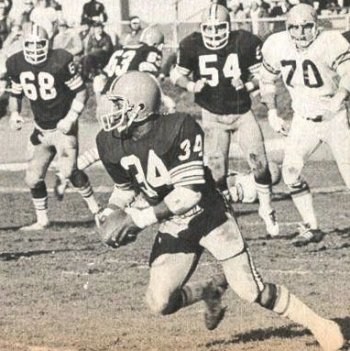
Atlanta Falcons : William Andrews
Andrews was drafted in the third round of the 1979 draft by the Falcons. He earned a starting job immediately and ran for 1,023 yards along with 39 receptions and five touchdowns.
He piled up 1,308 rushing yards the next year, at a career best clip of 4.9 yards per carry, to go with 51 receptions and five scores. Atlanta reached the playoffs after winning 12 games, but lost in the first round. Andrews was named to his first Pro Bowl that year, and would be return to the Pro Bowl in each of the following three seasons as well.
Andrews led the NFL with 2,036 yards from scrimmage via rushing and receiving in 1981, and was second in all-purpose yards. He had a career best 81 receptions for 735 yards and 12 total touchdowns, along with 1,301 rushing yards.
That season saw him, along with O.J. Anderson, join Hall Of Famers Earl Campbell and Tony Dorsett as the first four running backs in NFL history to rush for over 1,000 yards in each of their first three seasons.
The strike shortened season of 1982 stopped his streak of 1,000 yard seasons. He still was able to average a career best 12 yards on 42 receptions, including an NFL long 86 yard touchdown reception, and run for 573 yards in just nine games.
He was the main offensive weapon for Atlanta in 1983. He carried the ball a whopping 331 times and also caught 59 balls. His 390 touches were the second most in the NFL that year, and is still the 51st most in league history.
Gaining a career best 1,560 yards that still ranks 50th best in NFL history, along with 609 receiving yards, his 2,176 all-purpose yards were second best in the NFL that year, and is still the 51st most in league history for one year. He also scored 11 times.
While he was already a star, he was also considered a player on his way to being inducted in the Pro Football Hall Of Fame. As the Falcons prepared for the 1984 season,
Andrews suffered a devastating knee injury. It was so severe that it kept him off the field for two seasons.
Though he tried to return in 1986, he had to adjust his role to being a blocking back for Gerald Riggs. Though he still averaged a respectable 4.1 yards per carry, he only had 52 carries and five receptions and scored the last touchdown of his career. He then retired.
He still ranks second in team history with 5,986 career rushing yards. His 277 receptions is the most ever by a Falcons running back, and ranks seventh best overall.
Andrews has his jersey retired by the Falcons, and is a member of the teams Ring of Honor. He is also in the Georgia Sports Hall of Fame.
There is no question that William Andrews is the best fullback and pass receiving back in Falcons history.
Baltimore Ravens : Ray Rice
Rice was drafted in the second round of the 2008 draft by the Ravens. His rookie season saw him start four games, but he impressed the coaches enough to be named the full-time starter the next two years.
For a young franchise that has existed since 1996, Rice has already found himself near the top of the Ravens record books in several categories. He is already second in carries and rushing yards on their all-time list.
Yet he is also excellent in the passing game and is a frequent target for quarterback Joe Flacco. He has already made one Pro Bowl, which was in the 2009 season.
His 174 receptions with them is the seventh most in team history and 14 more than Jamal Lewis, who ranks second in running back catches.
Buffalo Bills : Thurman Thomas
Thomas was drafted in the second round of the 1988 draft and won a starting job right away. The 1989 season began streaks of five straight Pro Bowls and eight years of running for at least 1,005 yards.
He led the NFL in yards from scrimmage four consecutive seasons as well. Thomas was named NFL MVP by both the Newspaper Enterprise Association and Pro Football Writers Association in 1991. He was named 1992 Offensive Player of the Year by both the AP and UPI.
While an exciting player when handed the football, Thomas was equally as explosive when attempting to catch a pass. Buffalo could line him up all over the field to put pressure and fear on the opposing defenses. This helped the Bills go to four Super Bowls while he was with the team.
The 1998 year was his last as a starter because a young Antowain Smith began leading the team in most rushing categories. Thomas stayed with the Bills until 1999, then joined the Miami Dolphins for one season in 2000 before retiring.
Thomas is a member of the Pro Football Hall of Fame and NFL 1990s All-Decade Team. He has the most rushing yard in Bills history, even surpassing the legendary O.J. Simpson.
His 456 receptions with them is the third most in team history and 281 more than Simpson, who ranks second in running back catches.
Carolina Panthers : DeShaun Foster
Foster was drafted in the second round of the 2002 draft by the Panthers. His first two seasons with the team were inhibited by injuries, limiting him to 18 total games played.
His rookie year saw the Panthers reach Super Bowl XXXVIII. He backed up Stephen Davis, but still contributed to the team. Foster led the team with 95 yards rushing on 21 carries in the Panthers division playoff overtime win against the Saint Louis Rams.
Foster split carries with Davis the the NFC Championship Game, but sealed the game with a touchdown run to help Carolina defeat the Philadelphia Eagles 14-3. He has just three carries in the Super Bowl, but he took one carry 33 yards for a touchdown in the Panthers 32-29 loss to the New England Patriots.
Despite five starts in 2005, he caught a career high 34 passes and ran for 879 yards. He was elevated to the starting lineup after that. His next two years saw him gain 1,773 yards on the ground while catching 57 passes.
He signed a free agent contract with the San Francisco 49ers in 2008 and spent the year backing up Pro Bowl halfback Frank Gore. He has not played in the NFL since then.
Brad Hoover tops the Panthers running backs receiving list with 145, 19 more than Foster, but it took him five more seasons to get his totals.
Chicago Bears : Walter Payton
Payton was the first round draft pick of the Bears in 1975. Chicago didn't seem to know what they had, so they had him returning kickoffs as a rookie. He was so good at it, Payton led the NFL with a 31.7 return average that year.
When the Bears finally decided to start in on offense, Payton grabbed it and started every game the rest of his career. He would eventually set an NFL record with 170 straight starts.
Chicago leaned on the man simply known as "Sweetness" from that point on. Beginning in 1976, he led the NFL in rushing attempts four straight seasons. This is an NFL record. He also began a run of five straight Pro Bowl appearances.
His 1977 season was his first of five total First Team All-Pro nods. He had 1,852 rushing yards at a 5.5 yards per carry average. Payton had 2,121 yards from scrimmage, averaged 132.3 yards rushing per game, ran for 14 touchdowns and had 16 total. Not only were all career high marks, they led the NFL that year.
He was named the 1977 NFL MVP by the Associated Press, Pro Football Writers Association, and the Newspaper Enterprise Association. He was also named the Offensive Player of the Year by the UPI. He would win the Pro Bowl MVP in 1978.
His streak of six straight years of at least 1,000 yards rushing was halted by the 1982 players strike, which cut the season to just nine games. He resumed that streak for four seasons until it was halted by the 1987 players strike. Payton never rushed for less than 1,222 yards or had 311 carries in a year minus his rookie season and the two strike years.
After carrying the Bears with little help as every opponent just keyed on him play after play, Payton got surrounded by good talent in 1985. The Bears won Super Bowl XX that year.
Payton won the Bert Bell Award and Newspaper Enterprise Association NFL MVP Award that year. He was also named the 1985 Offensive Player of the Year by the UPI.
Sweetness retired after the 1987 season and would have his number retired by the Bears. He is a member of the Pro Football Hall of Fame, both the 1970s and 1980s NFL All-Decade Team, and is on the NFL 75th Anniversary Team.
While 10 NFL records he set have been broken or tied, no one would consider comparing those players who broke them with Payton. He could do it all on the field. Running, catching, blocking, or passing were things he could do with excellence and ease.
He tossed eight touchdowns on 11 passing completions in his career. Payton was even asked to punt once, and he boomed the ball 39 yards.
His 492 receptions with the Bears is the most in team history. He is one of the greatest offensive players to ever play the game.
Cincinnati Bengals : James Brooks
Brooks was drafted in the first round of the 1981 draft by the San Diego Chargers. While he was a steady contributor to the offense his first three years, he mainly came off the bench and starred on special teams.
He led the NFL in all-purpose yards in his first two years, as well as kickoff returns and yardage in 1982. Yet the Chargers traded him to the Bengals before the start of the 1984 season.
Brooks rarely played special teams for Cincinnati because the team found an explosive running back able to score every time he got his hands on a football. He caught a career high 55 passes for five touchdowns in 1985 while running for 929 yards and seven more scores.
His 1986 season may have been his best. It was his first Pro Bowl season as well. Brooks ran for 1,087 yards while leading the NFL with a 5.3 yards per carry average. He also averaged a career best 12.7 yards on 54 receptions.
After the 1987 strike season, Brooks split carries with All-Pro rookie Ickey Woods. The duo ran for 1,997 yards and 23 touchdowns, while catching 50 passes for six more touchdowns. Brooks would go the Pro Bowl for three straight years.
Cincinnati would reach Super Bowl XXII. Brooks, who scored a touchdown in the Bengals AFC Championship win, had just seven touches as the San Francisco 49ers won 20-16 by scoring with 34 seconds left in the game.
Woods got hurt early in 1989, so Brooks was asked to carry the load. He set career highs of 221 carries for 1,239 yards while averaging 5.6 yards per carry. He also caught 37 passes.
After running for 1,004 yards in 1990, he carried the ball less the next year as he caught 40 balls. He then joined the Tampa Bay Buccaneers for two games in 1992 before getting hurt and release. The Cleveland Browns signed him and Brooks played four games for them before retiring.
Brooks was the Bengals all-time leader in rushing yards until Corey Dillon passed him a decade later. He still ranks second in that category, while averaging an impressive 4.8 yards per attempt.
His 297 receptions and 27 touchdowns with the Bengals are the most in team history by a running back, which is 105 more than Archie Griffin and Corey Dillon.
Cleveland Browns : Greg Pruitt 
The other half of the Browns famous "Do It Pruitt" backfield. Pruitt was a second round pick in the 1973 draft. Greg made his impact as a return specialist initially.
Pruitt made the Pro Bowl his first two seasons in the NFL on special teams. He did get 540 yards rushing in his second year in part time status, while taking the only kickoff in his career for a touchdown.
He was a starter by 1975, and ran for 1,067 yards. He also caught 44 balls, and scored a career high nine touchdowns total. Pruitt ran for 1,000 yards the next season, while catching 45 passes.
In 1977, Pruitt went to the Pro Bowl again. He ran for 1,086 yards and had 37 receptions. This would be the last year he ran for over 1,000 yards.
He averaged 5.5 yards per carry in 1978, when he gained 960 yards rushing. He got injured, and missed four games. Pruitt was only able to play six games the following year, but rebounded in 1980.
With Mike Pruitt doing the bulk of the running, he was utilized as a receiver. He caught 50 balls, and scored 5 times via the pass. He followed that up with a career high 65 passes caught in 1981.
Pruitt ended up an Oakland Raider the next season, as was used mainly as a punt returner. In 1983, Pruitt went to his final All Pro game after averaging 11.5 yards per return on 58 attempts. He also scored the only punt return of his career, when he took it 97 yards.
He also scored the last two touchdowns rushing the ball that year, when he gained 154 yards on 26 attempts at a rate of 5.9 yards per rushing attempt. The Raiders went on to win Super Bowl XVIII. He played one more season in 1984 before retiring.
His 323 receptions with them is the fifth most in team history and 36 more than Eric Metcalf, who ranks second in running back catches.
Dallas Cowboys : Emmitt Smith
Drafted in the first round of the 1990 draft by the Dallas Cowboys, Smith became the primary ball carrier immediately. He ran for 937 yards and scored 11 times on the ground.
He was named Rookie of the Year for his season after making the first of six consecutive Pro Bowls. He would then start a run of 11 straight seasons of at least 1,021 yards rushing in 1991.
Smith was the National Enterprise Association NFL MVP in both 1992 and 1993. He was named First Team All-Pro four straight years beginning in 1992. He won the Bert Bell Award and Pro Football Writers Association NFL MVP in 1993 after winning the MVP award in Super Bowl XXVIII, the second straight year Dallas won the title.
His finest season came in 1995, a year he set career high marks of 377 carries for 1,773 yards for 25 rushing score and 62 receptions. He also averaged a career best 4.7 yards per carry and ran for 110.8 yards per game.
His performance that year led the Cowboys into Super Bowl XXX after Smith ran for 150 yards and three scores in the NFC Championship Game against the Green Bay Packers. Dallas defeated the Pittsburgh Steelers 27-17 in the Super Bowl behind Smith's two touchdowns, their third title in four years.
He left Dallas after running for 975 yards in 2002, ending his 1,000-yards rushing streak. He joined the Arizona Cardinals and had the worst season of his career in 2003 by running for a career low 256 yards and two scores.
Most experts considered the 35-year old washed up in 2004, especially after so many touches in his previous 14 seasons. Smith proved that theory false by running for 937 yards and nine scores before retiring at the end of the year.
Now inducted into the Pro Football Hall of Fame, as well as being a member of the NFL's 1990s All-Decade Team, Smith has the most rushing yards ever in NFL history. But he did more than just run the ball by being a sound blocker and good receiving option.
His 486 receptions with the Cowboys is the fourth most in team history and 107 more than fellow Hall of Famer Tony Dorsett, who ranks second in running back catches.
Denver Broncos : Floyd Little
Little was drafted in the first round of the 1967 draft by the Broncos. He didn't do a lot on offense in his rookie year, but he did excel on special teams. He averaged 27 yards on a career best 35 kickoff returns and a career high 17 yards on 16 punt returns, returning one a career long 72 yards for a score.
His second season was hist first of four straight Pro Bowl seasons. Though he missed three games that year, he averaged a career high 17.4 yards on 19 receptions and took another punt return for a score.
The 1971 season was the only year he exceeded 1,000 yards rushing by getting 1,133 on a career high 284 carries. Yet his 1973 may have been his best.
Not only did Little run for 12 score, he churned out 979 yards and set career high marks of 41 receptions for 423 yards. He then became the second running option the next two years to Otis Armstrong before retiring after the 1975 season.
He was the Broncos all-time rushing leader in yards gained, attempts, and touchdowns until Terrell Davis passed him over 20 years later. Yet Little's impact is still resounding to this day.
The Broncos were a struggling franchise until his arrival. There was even murmurs of moving the team elsewhere because Denver had spent their AFL days with one .500 record and the rest losing seasons.
The team struggled at first with Little, but he put the team on his back and was one of the more exciting players of his era. He helped Denver post their first winning season in 1973. The franchise has had just seven losing seasons since.
Besides being called one of the best players of his era by several of his his peers, the Hall of Famer has been credited by many as the man who saved the Denver Broncos. He is the first first-round draft choice to ever sign with Denver and is known as "The Franchise".
His 215 receptions with them is the 13th most in team history and eight more than Gerald Willhite, who ranks second in running back catches.
Detroit Lions : James Jones
Drafted in the first round of the 1983 draft, Jones rookie year saw him catch 46 passes and score seven times while serving as an excellent blocking fullback for Pro Bowl halfback Billy Sims as Detroit won their division. They would lose 24-23 in the first round to the San Francisco 49ers.
His second season saw him grab a career best 77 balls and lead the team with 137 carries after Sims suffered a career ending injury in the eighth game of the year. Detroit played three overtime games in their first 10 games and won four games all year.
With Sims gone. Jones became the primary ball carrier. He missed two games because of injury, yet still toted the ball 244 times for 886 yards. He also grabbed 46 passes and scored nine times.
His best year came in 1986, where he set career high marks of 252 carries for 903 yards and nine rushing touchdowns. He caught 52 passes as well.
Jones next two years saw him become more of a blocker, as he carried the ball 96 times each year while catching 63 total passes. Detroit traded him to the Seattle Seahawks for cornerback Terry Taylor before the 1989 season.
After playing just two games in 1989 because of injuries, Jones spent his next three years mostly blocking for Seattle. He was even used as a tight end. Jones retired after the 1992 season.
He had 285 receptions in his six years with Detroit, the second most ever by a Lions running back and it is the eighth most in team history. Hall of Famer Barry Sanders leads all Detroit running backs with 352 receptions.
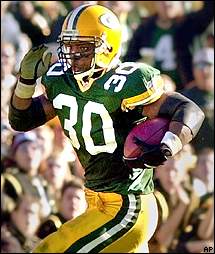
Green Bay Packers : Ahman Green
Green was a third round draft pick of the Seattle Seahawks in 1998. He spent two years there mostly riding the bench, carrying the ball 61 times total before being traded to the Packers.
Green Bay put him to work immediately as their featured back, and he churned out five consecutive seasons where he gained over 1,000 yards on the ground. He also went to the Pro Bowl four straight years. He also caught 267 passes over those five years, displaying what a complete weapon he was for the team.
No other player gained as many yards in those five seasons than he did. He also was explosive, running for touchdowns from 98 and 90 yards out. He is one of just two players in NFL history to have touchdown runs of 90 yards or more.
After an injury plagued 2006 season that saw him play just five games, Green rebounded the next year with his sixth 1,000 yard season in seven years. He then joined the Houston Texans for two injury riddled years before rejoining he Packers in 2009 to add depth to a depleted backfield.
Though he played just eight games as a reserve, he gained enough yards to become the Packers all-time leader in rushing yards and carries. No Packers halfback has appeared in more Pro Bowls that his four.
He played for the Omaha Nighthawks in the United Football League in 2010. He tried to join the Montreal Alouettes of the Canadian Football League in 2011, but was cut after the first practice.
A lot was made of the fact Green fumbled 34 times as a Packer, but he only fumbled one more time with 40 more carries than Hall of Famer Jim Taylor. Taylor is considered by many the greatest fullback in Packers history. Ahman Green may very well be the best halfback the team ever had.
His 350 receptions with them is the seventh most in team history and 30 more than William Henderson, who ranks second in running back catches.
Houston Texans : Domanick Williams
The Texans started play in 2002 and Williams is all over their record books. He was drafted in the fourth round of the 2003 draft by Houston.
He quickly earned a starting job as a rookie. He ran for 1,031 yards and caught 47 balls. He was used even more the next season, setting career high marks of 302 carries for 1.188 yards, 68 receptions, and 14 total touchdowns.
Williams was having an excellent 2005 season with 919 rushing yards and 36 receptions after 10 games. He had run for 57 yards and a touchdown, while catching three balls for 53 yards, in the 11th game when he incurred a devastating knee injury.
He sat out the next season, but was released before the 2007 year. He retired as the Texans leader in virtually every category for a running back.
His 154 receptions with them is the fifth most in team history and 57 more than Steve Slaton, who ranks second in running back catches.
Indianapolis Colts : Don McCauley
McCauley was drafted in the first round of the 1971 draft by the Colts, where he spent most of his rookie season contributing on special teams. He carried the ball a career high 178 times the next year while taking one of his 45 career kickoff returns 93 yards for a touchdown.
After running the ball 144 times in 1973, McCauley never carried the ball more than 83 times again the rest of his career. His main duties came on third down.
While excellent at picking up the blitz, McCauley also displayed a soft pair of hands. His best year may have come in 1979, where he caught 55 passes for 575 yards. After 70 receptions over the next two years, he retired at the end of the 1981 season.
Edgerrin James had 356 receptions with the Colts, which is most in team history by a running back and 23 more than McCauley. Hall of Famers Lenny Moore and Marshall Faulk, along with Lydell Mitchell, also must be mentioned.
Jacksonville Jaguars : Fred Taylor
Taylor was drafted in the first round of the 1998 draft by the Jaguars. He was put to work right away and scored a career high 14 rushing touchdowns on 1,233 rushing yards. He also caught 44 passes and scored a career best three times.
Despite such a great year, he was overlooked by many and Randy Moss would win the Rookie of the Year Award even though Taylor had arguably a better season. Being overlooked would become a theme for Taylor.
After a year cut short by injuries in 1999, Taylor led the NFL with an average of 107.6 yards rushing per game in 2000. He also scored 14 times on 1,399 yards and 36 receptions.
Taylor's 2001 season was cut short to two games in 2001, but he rebounded well. He ran for at least 1,146 yards in five of the next six seasons. He also remained a steady threat in the passing game for Jacksonville.
Every football fan knew Taylor was an elite running back, and had been in his 10 years as a player. Yet he was always overlooked when it came to the Pro Bowl. Whether it was the lack of media attention or lack of knowledge by generally most NFL fans, Taylor continued to be a standout in relative obscurity.
That all changed in 2003 when he made his first Pro Bowl. He played one more season for the Jaguars before joining the New England Patriots in 2009. He has played just 13 games in two seasons for them, usually splitting carries with several other running backs.
Taylor is the Jaguars all-time leading in rushing yards, attempts, yards per game, and rushing scores. He is probably the most underrated player of his era.
His 286 receptions with them is the third most in team history and 51 more than Maurice Jones-Drew, who ranks second in running back catches.
Kansas City Chiefs : Kimble Anders
Anders signed with the Chiefs as an undrafted free agent rookie in 1991. He spent his first two years mostly blocking and playing special teams.
He earned a starting job in 1993 and never carried the ball in a season more than 79 times in his career. He was a bruising blocker who also displayed soft hands when running a pass route.
Anders got recognized as one of the top fullbacks in the game in 1995 by being named to the Pro Bowl. Though he had just 58 rushing attempts that year, he averaged a very impressive 6.9 yards per carry while catching 55 passes as well.
After making the Pro Bowl the next year, he went back for the final time in 1997 after averaging five yards on a career best 79 carries while snagging 59 passes. After catching a career high 64 balls the next year, he got hurt early in 1999.
Anders had already piled up 181 yards on 32 carries when he was injured in the second game of the season. After coming back in 2000, he started just seven games and then retired.
His 369 receptions with them is the sixth most in team history and 81 more than Ed Podolak, who ranks second in running back catches.
Miami Dolphins : Tony Nathan
Drafted in the third round of the 1979 draft by the Dolphins, Nathan spent his rookie season mostly playing special teams.He returned 45 kickoffs for 1,016 yards and returned 28 punts for 306 yards.
Both are career highs, as is the 86-yard punt return he took for a touchdown. He was named First Team All-Pro for his performance that season.
Nathan did return 23 punts the next year, but spent the rest of his time on offense. After starting six games and grabbing 57 passes and a career best five scores, he had perhaps his finest season in 1981.
After leading the NFL with a 5.3 yards per carry average, after grinding out a career best 782 yards and catching 50 passes, he shone brightly in the Dolphins first round playoff game. The game is simply known as "The Epic In Miami".
Played in 80% humidity, the Dolphins squared off against the San Diego Chargers in a see-saw affair. After the Chargers bolted out to a 24-0 lead in the first quarter, the Dolphins put up 17 points in the second quarter.
Nathan scored on a 25-yard hook and lateral play to close the gap within seven. Duriel Harris caught a pass and then pitched it to a streaking Nathan, who took it the rest of the way.
After Miami tied up the game, Nathan rumbled 12 yards to give the Dolphins the lead. San Diego would eventually win late in overtime. Nathan led the Dolphins with 114 yards on nine receptions and 48 rushing yards.
The 1982 season was shorted to nine games because of a strike, yet Miami reached the playoffs. In a rematch with San Diego, Nathan ran for 83 yards and threw a 20 yard pass as Miami won 34-13.
The Dolphins lost Super Bowl XVII to the Washington Redskins as Miami quarterbacks were able to complete just four passes all game. They would return to Super Bowl XIX just two seasons later.
Nathan led Miami with 76 yards rushing in their 31-10 divisional playoff win over the Seattle Seahawks, which included a 14 yard touchdown run to open the scoring. He followed that up with eight catches for 114 yards and 64 yards rushing, including another rushing score, to help Miami win the AFC Championship.
While the San Francisco 49ers trounced the Dolphins 38-16 in Super Bowl XIX, Nathan led Miami with 10 receptions and just 18 yards rushing. He followed that up with a career high 72 receptions in 1985, the most ever by a Dolphins running back until Terry Kirby passed him by three receptions in 1993.
He spent his next two years as a reserve who came on the field during pass plays. Nathan retired after the 1987 season.
His 383 receptions with them is the sixth most in team history and 162 more than Jim Kiick, who ranks second in running back catches.
Minnesota Vikings : Rickey Young
Young was drafted in the seventh round of the 1975 draft by the San Diego Chargers. In college at Jackson State University, he shared the ball with Hall of Famer Walter Payton and Eddie Payton while Hall of Famer Jackie Slater blocked.
Young soon earned the starting job with the Chargers as a rookie. He quickly established himself as one of the most well-rounded backs in the game.
San Diego traded him to the Vikings for Pro Bowl guard Ed White just before the 1978 season. While he shared carries with Pro Bowl fullback Chuck Foreman , Young led the NFL with 88 receptions.
Young led the Vikings with 708 rushing yards and 72 receptions in 1979. He made some excellent catches for an aging Vikings team trying to rebuild after dominating the NFC during the 1970's.
He carried the ball less after that, as 1979 first-round draft pick Ted Brown became the feature back. The duo combined for 126 receptions in 1980, with Young snagging 64 of the passes.
After 43 receptions the next year, he lost his starting job to 1982 first-round draft pick Darrin Nelson. He retired after the 1983 season.
Ted Brown's 339 receptions is the most in team history, just ahead of the great Chuck Foreman by five catches, but Young had 292 catches in just six years and his 88 receptions was an NFL record for running backs at the time.
New England Patriots : Kevin Faulk
Faulk was the Patriots second round pick in 1999. He started occasionally at running back and even returned punts, but he spent a better part of his first four years as a third-down back and kick returner.
New England won Super Bowl XXXVI in 2001. Faulk's main contributions that year came on special teams and the 30 passes he caught that season.
In 2002, he took two kickoff returns for touchdowns. Faulk would be asked to return 45 kickoffs the rest of his career because his value on third down was much too valuable for New England. Faulk became the only Patriot to score multiple touchdowns in rushing, receiving, and kick returns.
He started eight games in 2003 and ran for a career high 638 yards while catching 48 passes. He helped the Patriots win Super Bowl XXXIV that year. His two-point conversion off of a direct snap helped the Patriots defeat the Carolina Panthers 32-29 in Super Bowl. XXXVIII.
He resumed his duties as the third-down specialist in 2004. New England would go on to repeat as champions by defeating the Philadelphia Eagles 24-21 in Super Bowl XXXIX.
The 2008 season may have been his finest. He averaged 6.1 yards on 81 rushing attempts and caught a career best 58 passes. He was hurt in the second game of the 2010 season, ending his year.
He is a member of the Patriots 50th Anniversary Team and holds team records in all-purpose yards, kickoff returns, kickoff return yards, and receptions by a running back.
Faulk's 424 receptions is 214 more than the next Patriots running back, Sam "The Bam" Cunningham. He intends to keep playing to add to his totals.
New Orleans Saints : Dalton Hilliard 
Hilliard was drafted by the Saints in the second round of the 1986 season. He spent most of his career as a spot starter and third down specialist.
His finest year came in 1990, which was his lone Pro Bowl season. He led the NFL with 18 rushing and receiving touchdowns after running for a career best 1,262 yards on 344 carries and 13 scores. He also caught a career high 52 passes for 514 yards and five scores.
After getting hurt and missing 10 games the next year, Hilliard went back to being a third-down specialist and spot starter. He caught 98 balls over his last two years before retiring after the 1993 season.
He is a member of the Saints Hall of Fame. He ranks second all-time in Saints history in rushing touchdowns and attempts, as well as third in rushing yards. He leads all Saints running backs in receiving yards and touchdowns.
Reggie Bush has 294 catches so far, 45 more than Hilliard. It is the most ever by a Saints running back and the fifth most in franchise history.
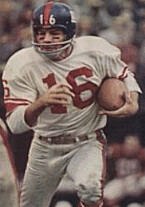
New York Giants : Frank Gifford 
Gifford was selected by the Giants in the first round of the 1952 draft. He spent his rookie season helping the team out as a reserve on offense, defense, and special teams. He picked off one pass and threw a touchdown pass.
He became a bigger part of the offense in his second year, but he still played defense as well. Gifford picked off a pass and took it 62 yards for a touchdown. New York also liked him passing the ball. He threw a touchdown pass in each of the next seven seasons.
Gifford made his first Pro Bowl in 1953, an honor he would earn until the 1959 season. While being an electric runner, he was an intelligent receiver who could go deep at any time. He wa also known for tossing the ball to open teammates when the opponents least suspected it.
Beginning in 1955, Gifford was named First Team All-Pro in four of the next five seasons. His best year was in 1956, where he was named NFL MVP.
Gifford toted the ball for a career high 819 yards while averaging 5.2 yards per carry. He also snagged a career best 51 passes, and his 1,422 yards from scrimmage led the NFL.
His performance that season helped the Giants reach the title game. He led all players with 131 receiving that day, as he grabbed four passes and scored once in the Giants 47-7 trouncing of the Chicago Bears.
The Giants team was stacked with future Hall of Famers like Gifford, Emlen Tunnel, Andy Robustelli, Roosevelt Brown, Alex Webster, and Sam Huff. Two assistant coaches, Vince Lombardi and Tom Landry, would also be inducted in Canton years later.
Gifford would later become the 1958 Pro Bowl MVP in front of a Pro Bowl record attendance of 72,250 fans. He is the first Giants player ever to win the award, an award only two Giants have won since.
The 1960 season was his last as a running back. Gifford's season ended in the eighth game when Philadelphia Eagles Hall of Fame middle linebacker Chuck Bednarik blindsided an unsuspecting Gifford on a crossing-route pass. The hit was so harsh, Gifford did not return to the NFL until 1962.
Upon his return, the Giants switched him to wide receiver. He averaged a career best 20.4 yards on 39 receptions that year, showing he was back. Gifford was still asked to run and throw the ball on occasion as well.
He went to the 1963 Pro Bowl after grabbing 42 pass and seven touchdowns. He played one more season before retiring for good to become a broadcast journalist.
His number has been retired by the Giants and he is a member of the NFL's 1950s All-Decade Team and Pro Football Hall of Fame.
No other Giants running back has been to more Pro Bowls or been named First Team All-Pro more than Gifford. His 367 career receptions still rank as the seventh most in team history.
The 257 receptions he had as a running back is the second most ever by a Giant, and Gifford's 25 touchdown catches as a running back is the most ever in team history.
Tiki Barber's 586 receptions is the second most in franchise history. Joe Morrison, who played fullback, halfback, and flanker, also deserves mention.
New York Jets : Freeman McNeil
The Jets used their first-round pick in 1981 to select McNeil. He missed five games in his rookie year and started six games total.
Now the Jets feature back in 1982, McNeil led the NFL with 786 yards rushing at a league-leading 5.2 yards per carry average. He played in nine games because the season lost seven games due to a players strike.
He was named First Team All-Pro and went to the Pro Bowl. McNeil did throw a touchdown pass the next season, but missed seven games because of injury.
McNeil did return to the Pro Bowl in 1984 despite missing four games. He ran for 1,070 yards. His next year was his best, as well as being his last year as a Pro Bowler.
Despite missing two games, he ran for 1,331 yards. He missed four games in 1986, but still caught a career best 49 passes. He missed seven games the next year.
McNeil's 1988 season was the only one of his career where he started every game in a season. He ran for 944 yards and a career best six scores. It was his last season as the Jets primary ball carrier.
Though he spent four more years with the team, he never had more than 99 carries. He retired after the 1992 season as the Jets all-time leader in rushing yards. He now ranks second.
Curtis Martin's 367 receptions are 72 more than McNeil and is the seventh most in Jets history. Yet he averaged just 6.6 yards a catch and scored five times.
McNeil averaged 10 yards a reception and scored 12 times, while never having a season in his career where he averaged less than four yards per carry.
Oakland Raiders : Clem Daniels 
Daniels was an undrafted free agent rookie who signed with the Dallas Texans of the American Football League in 1960. He spent that year backing up Rookie of the Year Abner Hayes. He was also used on defense and intercepted three passes.
Daniels was traded to the Raiders the next year and carried the ball just 31 times.
Oakland liked what they saw though, so he was elevated to the starting lineup in 1962 and scored a career-best seven rushing touchdowns off 761 yards.
In 1963, Daniels had perhaps the greatest season by a Raiders running back, where he made the first of four consecutive Pro Bowls and was named first-team All-Pro. He led the AFL with 1,099 rushing yards, 1,784 yards from scrimmage and 78.4 rushing yards per game while averaging a career-best 5.1 yards per carry.
Daniels also led the AFL with a whopping 22.8 yards per catch average on 30 receptions, which is still a Raiders record for running backs with 30 receptions or more.
Though he never ran for more than 1,000 yards again, Daniels ran for more than 800 yards in each of the next three seasons and matched his career-high of seven rushing touchdowns in 1966. He was named first-team All-Pro that year as well.
His 1967 season was cut short to nine games, though he did churn out 575 rushing yards. The Raiders won the AFL title that year. It was Daniels last year with the Raiders, as he joined the San Francisco 49ers the next year and carried the ball just 12 times in nine games before retiring.
His 22.8 yards per catch average in 1963 has only been surpassed by Warren Wells, Mervyn Hernandez, Cliff Branch and James Jett as the best ever by a Raider with at least 30 receptions. All four played wide receiver.
Daniels ranks third in Raiders history in rushing attempts and yards, as well as sixth in rushing touchdowns. His 58.7 rushing yards per game is third behind Bo Jackson and Hall of Famer Marcus Allen.
While he finished his career with the most rushing yards ever in AFL history, what made Daniels even more exceptional was his way to beat opponents several ways. He is a member of the AFL's All-Time team.
His 201 receptions are the third-most ever by a Raiders running back, and he averaged an excellent 16.4 yards per catch, an unheard of average for a running back. His 24 touchdown catches are the most ever by a Raiders running back, and he completed four of nine passes for 143 yards.
Daniels 4.5 yards per carry average and explosive receiving ability show that he was a threat every time he touched the ball. He is certainly one of the greatest players the Raiders ever had play for them.
Hall of Famer Marcus Allen's 446 receptions are the fourth most in franchise history.
Philadelphia Eagles : Keith Byars 
Byars was drafted by the Eagles in the first round of the 1986 draft. He spent his first two seasons starting occasionally, though he did carry the ball for a career high 177 attempts and 577 yards as a rookie.
By 1988, Byars became Pro Bowl quarterback Randall Cunningham's safety net. If the scrambling Cunningham found no receivers open and had no place to run, he could depend on Byars to find a soft spot in the defense to complete a pass.
While his rushing attempts lessened each year, he caught 339 balls over five years. He was a good enough blocker to even line up at tight end several times.
Byars left the Eagles after the 1992 season to join the Miami Dolphins. He made his only Pro Bowl in 1993 after collecting 61 catches. He played with the Dolphins into the fourth game of the 1996 season, where he was released.
The New England Patriots signed him for the final 10 games of the season. His excellent blocking ability had him soon in the starting lineup and he also caught 27 passes.
The Patriots would reach Super Bowl XXXI that year. Byars caught four balls in the divisional playoff game, including a 35-yard touchdown pass. He had four more receptions in the AFC Championship Game.
While the Patriots lost the Super Bowl, Byars did grab four balls and score once. After starting half of the next season, he rejoined head coach Bill Parcells, who had left the Patriots after the Super Bowl loss, with the New York Jets in 1998.
Byars started in nine of the 13 games he appeared in, catching 26 passes. The three games he missed were the only games he failed to suit up in his entire 14-year career. He retired at the end of the season.
His 371 receptions with them is the fifth most in Eagles history and 96 more than Duce Staley, who ranks second in running back catches.
Pittsburgh Steelers : Merril Hoge 
Hoge was a 10th round draft pick of the Steelers in 1987. He rarely saw the field during his rookie season, but did manage to snag a touchdown pass.
Hoge started half of 1988, and piled up 705 rushing yards and 50 receptions for 487 yards. He also scored six times.
Firmly entrenched as the starting fullback, he scored eight rushing touchdowns in 1989 and was named to the All-Madden Team.
In 1990, Hoge ran for a career-high 772 yards and scored a career-best 10 touchdowns.
During the 1992 season, Hoge suffered a severe concussion. He ended up with the Chicago Bears in 1994, but retired following that season due to the effects of several concussions.
In his seven seasons as a Steeler, he led the team in rushing four times. Hoge also caught 241 passes for them.
Merril Hoge is the only Steeler, other than Hall of Famer Franco Harris, to run for 100 yards in consecutive playoff games.
Hall of Famer Franco Harris had 306 receptions, the most by a Steelers running back and the sixth most in franchise history.
Saint Louis Rams : Marshall Faulk 
Faulk was the second person chosen overall by the Indianapolis Colts in the first round of the 1994 draft. He was named NFL Offensive Rookie of the Year by the Associated Press and AFC Rookie of the Year by the UPI after running for 1,282 yards, catching 52 passes, and scoring 12 times.
He finished up the season by winning the Pro Bowl MVP. Faulk almost duplicated his rookie year in 1995, earning his second Pro Bowl nod. He struggled in 1996 by averaging a career low three yards per carry, yet he still grabbed 56 passes.
After a fantastic 1998 season where he led the NFL with 2,227 total yards after 82 receptions and a career high 324 carries, Faulk was traded to the Rams because he reportedly was considering holding out for a better contract.
He got his contract, the biggest in Rams history at the time, and rewarded them by leading the NFL with a career best 2,429 yards from scrimmage. He caught a career high 87 passes and gained 1,087 yards. He also ran for 1,381 yards while leading the NFL with a 5.5 yards per carry average.
Faulk's all-purpose yards were an NFL record until 2009, and he is joined by Roger Craig as the only players to ever gain over 1,000 yards rushing and receiving in the same season. He was named the NFL Offensive Player of the Year, an award he won the next two seasons as well.
His performance led the Rams to Super Bowl XXXIV. Though he was shut down in the ground attack, Faulk caught five passes for 90 yards in the Rams 23-16 win over the Tennessee Titans.
Faulk led the Rams in receiving again in 2000. He became the first running back ever to lead his team in receptions four straight years. He had five consecutive seasons of at least 80 receptions.
He also led the NFL with a career high 18 rushing touchdowns and a 5.4 yards per carry average. He caught eight touchdowns, giving him a then-NFL record 26 total touchdowns. He was named NFL MVP by both the Associated Press and Pro Football Writers Association.
Faulk scored an NFL leading 21 times in 2001, where he caught a career best nine touchdowns. He also led the NFL a third straight season in yards per carry average, gaining a career best 1,382 yards, and leading the NFL with 98.7 yards rushing per game.
He won the Bert Bell Award and Pro Football Writers Association NFL MVP Award. Faulk also won his third straight Daniel F. Reeves Memorial Award, where Rams players and coaches choose the team's most valuable player.
Faulk made his five straight Pro Bowl in 2002 despite failing to run for over 1,000 yards for the first time since 1996. His four-year streak of over 2,000 yards from scrimmage also ended.
He missed seven games over the next two years, but was still effective for Saint Louis. The 2005 season was marred by a coaching change after five games, and Faulk lost his starting job to Steven Jackson. He still managed 44 receptions.
Announcing he needed knee surgery, Faulk sat out the 2006 season and said he hoped to return. This did not occur, as the Rams retired his jersey in 2007. Faulk would be inducted into the Pro Football Hall of Fame in 2011.
He has the most receiving yards by a running back in NFL history, as well as the second most receptions and touchdowns caught by a running back
Faulk's 470 receptions with Saint Louis are the fourth most in Rams history and 143 more than Steven Jackson, who has the second most catches by a running back in team history.
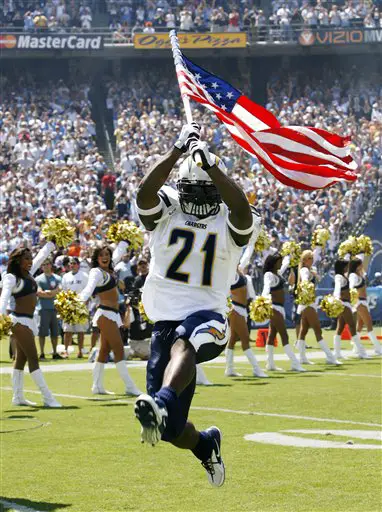
San Diego Chargers : LaDainian Tomlinson 
Tomlinson was the first round draft pick of the San Diego Chargers in 2001. He became he workhorse of the Chargers immediately.
In his first seven seasons, he never has less than 313 rushing attempts, 1,110 rushing yards, 51 receptions, or 10 touchdowns. He went to the Pro Bowl five times and was named First Team All-Pro three times.
Tomlinson led the NFL in yards from scrimmage one, rushing yards twice, and rushing touchdowns thrice. He was honored at the NFL MVP in 2006 by both the Associated Press and Pro Football Writers Association.
He was as much a part of the Chargers passing attack and he was the running game. Tomlinson had a career high 100 receptions in 2004. Yet the Chargers determined Tomlinson was slowing down and released him after the 2009 season.
The New York Jets signed him in 2010 to split touches with Shonn Greene. He piled up 914 yards and 52 receptions while averaging a health 4.2 yards per carry.
His 530 receptions, the third most in Chargers history, is 152 more that Ronnie Harmon, who has the second most receptions ever by a Chargers running back.
San Francisco 49ers : Roger Craig
Craig was drafted by the Niners in the second round of the 1983 draft, the 49th player chosen overall.
He was named the starting fullback in his rookie year, a position he would have his first four seasons, and showed a nose for the end zone by scoring twelve times. He also led the team with 725 rushing yards.
Craig scored 10 times the next year, and the 49ers would go on to win Super Bowl XIX. Craig scored three times in that game, the first player to have ever accomplished that feat.
He had the best year of his career in 1985, becoming the first player to ever gain a thousand yards in both rushing and receiving. Marshall Faulk is the only other player who has done this since.
Craig also became the first running back in NFL history to lead the league in receiving, when he caught 92 balls. He also scored a career-high 15 touchdowns, and averaged a career best 4.9 yards per carry.
He was named to his first Pro Bowl that season. After catching 81 passes, running for 830 yards, and scoring seven times the next year, the 49ers moved Craig to halfback in 1987.
He responded by being named to the Pro Bowl. This is a feat he would attain the next two years as well, becoming the first player to ever go to a Pro Bowl as a fullback and halfback. Only Stephen Davis has duplicated by this since.
His 1988 season saw him rush for a career-high 1,502 yards, catching 76 passes, and scoring 10 times. Craig was named the Newspaper Enterprise Association NFL MVP, the Associated Press NFL Offensive Player Of The Year, the UPI NFC Player Of The Year, and First Team All-Pro that year.
San Francisco would end the season by winning Super Bowl XXIII.
Craig ran for over a thousand yards for the final time of his career in 1989, getting 1,054 yards. The 49ers won the Super Bowl a second straight season, and Craig scored a touchdown in the game.
He was injured in 1990 and missed five games. The 49ers were trying to get back to a third straight Super Bowl, and were beating the New York Giants by a point as time was running out in the fourth quarter. Craig fumbled, and the Giants recovered. New York soon kicked a game winning field goal as time expired.
It was his last play as a 49er, as they would release him. He signed with the Oakland Raiders for the 1991 season. After starting in thirteen games, and scoring once on 590 rushing yards, the Raiders cut him.
He signed with the Minnesota Vikings and played two years with them as a backup, starting three times total. He scored six touchdowns over that time, and retired at the conclusion of the 1993 season.
Craig's 1,686 carries is the most in team history, nineteen more than Hall Of Famer Joe "Jet" Perry. His 7,064 rushing yards is the second most, 1,525 yards behind Perry, and his 50 rushing touchdowns are the second most, 18 behind Perry.
His 508 receptions are the most by any RB in Niners history, and the third most overall in team history.
Roger Craig may be a borderline Hall Of Fame candidate to some, but he is one of the finest players to have ever worn a 49ers jersey.
Seattle Seahawks : John L. Williams
Williams was a first round draft pick of the Seahawks in 1986, and was the 15th player chosen overall. Though the Seattle offense featured Pro Bowl running back Curt Warner, Williams offered them a versatile dimension the team was lacking.
He was starting right away, running for 538 yards and catching 33 passes in his rookie year. It was the only season of his career that he failed to score. He piled up 500 yards the next year, despite missing four games due to injury. He had career longs on a 48 yard run and 75 yards reception.
The 1988 season may have been his best. He gained a career high 877 yards rushing at a 4.6 yards per carry average, and had 651 yards on 58 receptions. His 1,528 yards from scrimmage that year was a career high total, as was the seven touchdowns he scored that year.
He scored seven times again the next year, and he also a career high 76 receptions. He had 71 catches the next year, gaining a career high 699 yards. He also rushed for 714 yards, and was given his first Pro Bowl nod.
The 1991 season was his second and last Pro Bowl season. He gained 741 yards and had 61 receptions. He was never the same running threat again after that year, but maintained his excellence in the passing attack.
After 132 receptions and six touchdowns over the next two years, he joined the Pittsburgh Steelers for the 1994 season. He was used mainly as a pass receiver by the Steelers in his two years, catching 51 balls his first year with the team. He showed signs of slowing down in 1995, having career lows of 24 receptions and 110 rushing yards.
The Steelers made it to Super Bowl XXX that year. Williams had scored on a run in their first round playoff victory over the Buffalo Bills. Pittsburgh lost in the Super Bowl, and Williams retired at the conclusion of the game.
He leads all Seahawks running backs with 471 receptions for 4,151 yards receptions and also 123 games played. His 76 catches in 1989 is the most ever by a Seattle running back, and he owns the top three slots for receiving years by a running back. His six touchdown reception in 1989 is the most ever by a Seahawks running back.
He currently ranks third on the franchise list in receptions, fourth in rushing yards, and sixth in receiving yards.
John L. Williams is not only the best pass catching back in Seahawks history, he may be the most complete running back who ever played for them. He easily is the best fullback they ever had.
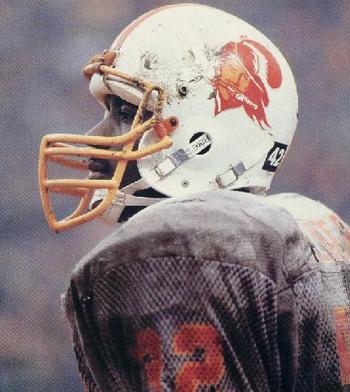
Tampa Bay Buccaneers : James Wilder
Wilder was the Bucs second round draft pick in 1981 and was moved to fullback for the first three years of his career. After leading the team in rushing and receiving in his second and third seasons, they moved him to halfback.
He led the NFL with 407 carries, the first player ever with 400 carries, in 1984, gaining 1,544 yards, scoring 13 times, and catching a career best 85 passes. His 2,229 combined yards was second in the league and 15 yards behind Hall of Fame running back Eric Dickerson.
It still is a team record, and it was the sixth best total in NFL history at the time. It still ranks 42nd, and Wilder was named to his only Pro Bowl, the first Buccaneer running back ever to attain this honor, for his efforts.
The following season saw him run for 1,300 yards, catch 53 balls, and score ten times. It would be his last 1,000 yard season, because he gained 704 yards and grabbed 43 passes in 1986 after missing four games because of injury.
Tampa Bay moved him back to fullback in 1987, and he once again led the team in rushing yards and receptions. After missing nine games the next year due to injuries, Wilder was a backup in 1989.
He started the 1990 year with the Washington Redskins, but went unused and was released after one game. The Detroit Lions picked him up, but rarely used him. He retired at the conclusion of the season.
Not only are his two 1,000-yard seasons the highest totals in franchise history, he is the Buccaneers all-time leader in rushing attempts and yards.
James Wilder is not only the most productive running back in Buccaneer history, but he is the most versatile. Though he had two exceptional seasons still firmly entrenched in the teams record books, he gave the team nine excellent years where he mostly carried the offense by himself.
His 430 receptions still is a franchise most, over 100 more than wide receiver Mark Carrier in second place. It is 124 more than Warrick Dunn, who has the second most ever by a Buccaneers running back.
Tennessee Titans : Eddie George
The Houston Oilers used their first-round draft pick in 1996 to select George and began feeding him the ball right away. He won the Rookie of the Year Award after toting the ball 335 times for 1,368 yards and eight scores.
The Oilers moved to Tennessee after the season and would rename themselves the "Titans" in 1999. George spent these years being the bell cow of the offense.
He made the first of four consecutive Pro Bowls in 1997 and never had fewer than 312 carries in his eight years with the team. He failed to gain 1,000 yards rushing just once for the team.
George helped the Titans reach Super Bowl XXXIV in 1999. He ran for 354 yards and a score, along with eight receptions, to carry the Titans in three playoff wins.
Though George had 95 yards rushing , two receptions, and two touchdowns in the Super Bowl, they lost 23-16.
His 2000 season was probably his best. It was his last Pro Bowl year and the only season he was named First Team All-Pro.
George carried the ball 405 times that year. It is still the fifth most carries in NFL history. He gained a career high 1,509 yards and ran for a career best 14 scores. He also caught a career high 50 passes.
He left Tennessee after the 2003 season having started in 128 straight games. He joined Hall of Famer Jim Brown as the only running backs to reach 10,000 rushing yards with at least 100 consecutive starts to begin their careers.
Joining the Dallas Cowboys in 2004, he was less effective and lost his starting job after eight games. He also missed the only three games of his career, which ended at the conclusion of the season.
His 259 receptions is 75 more than Lorenzo White, who has the second most ever by a Titans running back.
Washington Redskins : Larry Brown
Brown was drafted in the eighth round of the 1969 draft by the Washington Redskins. What happened next is a well known story by football historians.
Hall of Fame Vince Lombardi, in his first season with the Redskins and dying of cancer, noticed the rookie was not getting off the snap quickly. Instead, Brown seemed to reacting after the ball was hiked.
Lombardi ordered Brown to undergo a hearing test, where is was found he was partially deaf in his left ear. A hearing device was installed in Brown's helmet, allowing the rookie to fire out on the snap count with the rest of the team.
It also allowed him to have a Pro Bowl season as a rookie after running for 888 yards and catching 34 passes. He finished behind Dallas Cowboys halfback Calvin Hill, a future teammate of Brown's, for Rookie of the Year honors. Hill gained 54 more rushing yards but had 14 less receptions.
Lombardi died before the start of the 1970 season, so Bill Austin took over. Brown ran for 1,125 and caught 37 passes. Yet Washington finished 6-8 and Austin was replaced by Hall of Famer George Allen.
Brown's first year under Allen saw him dinged up and missing one game. Even though he caught a career low 16 balls, Brown still churned out 948 yards on the ground.
Washington would make the playoffs for the first time since 1945. It set the stage for the finest year of his career in 1972.
Not only did Brown win the NFL MVP Award, he won the Bert Bell Award, the NFL Offensive Player of the Year Award, and the UPI NFC Player of the Year Award.
He was honored with his second First Team All-Pro nod and fourth straight Pro Bowl. It would be the last time in his career he would achieve either honor.
Setting career high totals 0f 285 carries for 1,216 yards and eight scores, averaging a career best 101.3 rushing yards per game. Brown grabbed 32 passes and scored four times while averaging a very impressive 14.8 yards per catch.
He took one pass a career long 89 yards for a score. Brown also piled up a career high 1,689 yards from scrimmage. His performance that year led the Redskins to an 11-3 division winning record. It was the first division title in 27 years for the franchise.
After churning out 101 rushing yards in the Redskins first postseason win since 1943, he gained 88 yards in Washington's 26-3 NFC Championship victory over the Dallas Cowboys.
Reaching the franchises first NFL title game since 1945, Washington lost to the perfect Miami Dolphins 14-7 in Super Bowl V. Brown led the team with 72 rushing yards and five receptions, but the "No Name Defense" prevailed against the "Over The Hill Gang" in a defensive struggle.
Though he failed to reach the Pro Bowl in 1973, Brown was still very effective and led the Redskins to the playoffs again. He scored a career best 14 times by catching a career high 40 passes and running for 860 yards.
Averaging 12.6 yards per catch, he scored a career best six times off of receptions while matching his career high total of eight rushing touchdowns. Then injuries began to derail his career.
He missed three games in 1974, but still helped Washington reach the playoffs again by averaging 10.5 yards on 37 receptions and leading the team in rushing for a sixth straight season.
Though he caught 42 passes the next two seasons, his injuries inhibited his carries to just 117 carries. He retired at the end of the 1976 season.
Larry Brown was more than a fierce runner. He was an exceptional blocker as well. He was the Redskins all-time rushing leader in virtually every category until Hall of Famer John Riggins passed him.
His 238 catches and 20 touchdown receptions are the most ever by a Redskins running back. His 10.4 yards per catch average is also impressive.
Washington has had many fine receiving backs like Clarence Harmon, Mike Thomas, Kelvin Bryant, and Brian Mitchell . It also should be noted Hall of Famer Charley Taylor had well over 100 receptions at an impressive clip of over 15 yards per catch in just over two seasons before switching to wide receiver.