Showing posts with label New York Yankees. Show all posts

Friday, October 14, 2011

Philadelphia Eagles Prove Money Doesn't Buy NFL Love


The Philadelphia Eagles face the Washington Redskins this Sunday in a game that can only be described as an encounter where their 2011 season is on the line. If this team has any Super Bowl aspirations, a fifth defeat could cripple their dreams.

Philadelphia is fighting history this weekend as well. If they finish the weekend at 1-5, the team must realize only the 1970 Cincinnati Bengals reached the playoffs after starting a season as poorly.

That Bengals team started the season 1-6 before rattling off seven straight wins behind Pro Bowl players like Lemar Parrish and Bob Trumpy. They would lose the first playoff appearance in franchise history against the eventual champion Baltimore Colts.

The offense has yet to really click for the Eagles yet this season. While ranking third best in the NFL in total yards gained, they have been struggling to consistently score touchdowns and rank 11th in total points scored. The offensive line, an issue that mostly has haunted head coach Andy Reid since he took the job in 1999.

It has to burn Reid's heart at this issue. He has won 60 percent of the 197 regular season games with Philadelphia, which makes him the winningest head coach in franchise history, but blocking is an area he is supposed to be an expert in.

Reid played offensive tackle in college, then got into coaching immediately upon graduating after his 1981 senior season. He coached the offensive line until the end of the 1996 season. His Eagles teams have produced just five Pro Bowl blockers since he took the helm, with only one that Reid drafted and developed, not something the head coach probably foresaw.

Philadelphia looked smart last year by trading quarterback Donovan McNabb and going with Michael Vick in his place. Vick, though known for a mobility that made him the NFL's top rushing yards leader by a quarterback in league history last week, has taken a tremendous pounding in 2011 because of Philadelphia's offensive line woes.

Vick has battled injuries and missed time this year, something the Eagles thought they had a contingency plan for by signing free agent Vince Young. Young has been to the Pro Bowl quarterback twice since being drafted in 2006, but he was not healthy enough to play when Vick went down.

Blocking isn't the only reason Vick has suffered. Though he is still learning how to be a pocket-passer, Vick has a propensity to hang onto the ball too long and take many unnecessary sacks.

The Eagles rushing attack is led by an excellent 5.8 yards per carry average from halfback LeSean McCoy, yet the Eagles still are ineffective in short yardage situations where a powerful running game between the tackles is needed. None of Reid's teams have ever excelled in this critical area.

If the offensive trenches weren't enough of an issue for Reid, his defensive lines haven't been much better in his Eagles career. Philadelphia has had a habit of getting tiny pass rushers who were weak against the run, often contributing to the reason Reid has yet to win a Super Bowl despite 119 regular season victories and nine playoff appearances in his previous 12 years.

Jeff Lurie has been a great owner since buying the Eagles in 1994. He is known for his loyalty as much as the generosity he has displayed to charitable causes. Reid's coaching staffs have shown a solid continuity for the most part, which can be seen with defensive coordinator Juan Castillo.

Castillo has been with the Eagles since 1995, holding jobs in many areas. After coaching the offensive line since 1998, he moved over to defense this year. Critics are not only pointing to Philadelphia's poor run defense, others are looking at a secondary that has yet to meet expectations.

After spending a ton of money to sign free agent cornerback Nnamde Asomugha, as well as trading for Pro Bowl cornerback Dominique Rodgers-Cromartie, Lurie bit the financial bullet by retaining the services of Pro Bowl cornerback Asante Samuel. Not only has the secondary given up way too many touchdowns on so few passing attempts, ranking 30th in that category, the group is not creating turnovers.

The Eagles tried to address the long-standing issue in their trenches by signing two high profile free agents in Jason Babin and Cullen Jenkins. While the duo has already racked up a combined 12 of the teams 16 total sacks, they are also a reason the team ranks 30th in rushing yards allowed and last in rushing yards per attempt up the middle of the defense.

The team took a gamble this year by going with a bunch of underwhelming or unproven linebackers this season, and are losing big so far. Not only has the group mostly stunk in run support, they have been even worse in pass defense.

The fact the Eagles safeties haven't played great hasn't helped either. Kurt Coleman has struggled at free safety, which hurts more due to the fact Nate Allen has yet to play as well as he did in his 2010 rookie year.

Despite Lurie shilling out millions to Vick, Young, Asomugha, Babin, Bryant, Steve Smith, Ronnie Brown, and others, the results have yet to be met by a group trying to get acclimated with each other on the fly in a season truncated because of a players strike. Yet history shows pouring money into players does not equate to championships.

Whether it is the 2010 Miami Heat, the Ted Stepien Era with the Cleveland Cavaliers, or even the 2011 Boston Red Sox, the examples are plentiful. Sometimes the angle of spending a lot of money works, as George Steinbrenner showed by winning seven titles in his 37 years of owning the New York Yankees.

The season is not yet lost for the Eagles, especially if they defeat a division rival that Reid has triumphed over 15 times in 24 attempts. The Redskins, who are coming off their bye week, need this game to stay on top of the NFC East while trying to increase their lead with their second division win in as many attempts.

Washington will probably attempt to run the ball down the Eagles throats with their trio of excellent running backs. If they succeed, Philadelphia could see their 2011 season begin to end as the game clock expires.

The City of Brotherly Love is starving for a football title in the NFL, having not seen their team win a championship since 1960. They are known as passionate fans, so a let down by their beloved Eagles may lead to a large insurgence of fans calling for the firing of Reid.

With their season on line, let alone the Eagles careers of guys like Reid and Castillo, the team has their backs against the proverbial wall and must begin to come out swing like Philly legend Rocky Balboa. Hopefully their thrust will not be fictional like Rocky was.


Yooooooooooo! For doze of yous dat forgots about me, I iz 7thStoneFromTheSun, da distant cuzin of 3rdStoneFromTheSun Yo, I did suck las weak in my procrastinashuns. I went 7-6, and I now iz 46-31 overall.

Lets get too it!


Saint Louis Rams @ Green Bay Packers

OK, I know a lots of yous mugs tought da Rams mite go two da playoffs dis yeer. But dey will now bee 0-5, sumfin not many saw cummin.

Packers 37 Rams 21


Jacksonville Jaguars @ Pittsburgh Steelers

Da Jags never shuld have gone da cheep route and dumped quarterback David Garrard, cuz it iz cleer Blaine Gabbert aint reddy. Da Steelers will expose dat truth even more.

Steelers 23 Jaguars 7


Philadelphia Eagles @ Washington Redskins

As 3rd says, dem Igglez have spent like a billion dollars and iz 1-4. I'm picking da Skins running game hear, but dont bee shocked if suckass Rex Grossman trows da game away two Philly.

Redskins 27 Eagles 24


San Francisco 49ers @ Detroit Lions
Game of the Week


Yo, dis aint 1950 so dont rub yer eyes in disbelief. Dis iz da game of da weak! Both teems got good defenses and quarterbacks picked furst in dere drafts. I tink it mite cum down too who runs da ball best, if dat iz a hint.

But Yo! Who hear saw dese teems a combined 9-1 cummin into dis game?

Lions 23 49ers 21


Carolina Panthers @ Atlanta Falcons

I'm not in love wit Matt Ryan or da Falcons pass defense so far dis yeer, but they can win if dey run da damn ball. Cuz Carolina sure as fuck don't.

Falcons 30 Panthers 28


Indianapolis Colts @ Cincinnati Bengals

Da Colts blow chunks yo. Dey couldnt even beet da shitty Chiefs. Put dem down at 0-7.

Bengals 34 Colts 17


Buffalo Bills @ New York Giants

Eli Manning cemented his spot as one da most overrated players ever las week. Da Bills are a helluva lot better den da Seahawks, and dey will go downstate and leave 5-1.

Bills 34 Giants 24


Houston Texans @ Baltimore Ravens

Derrick Mason just joined da Texans, who iz strugglin all of da sudden, and iz facing a teem he spent six seasuns wif. Da Ravens will enjoy da fact star linebacker Mario Williams wont play for Houston again dis yeer.

Ravens 27 Texans 20


Cleveland Browns @ Oakland Raiders

Just keep winning baby! R.I.P. Al Davis

Raiders 31 Browns 23


Dallas Cowboys @ New England Patriots

Tony Romo mite trow four 400 yards against dis crappy Pats secondary, but his teem has no answers for Tom Brady.

Patriots 37 Cowboys 28


New Orleans Saints @ Tampa Bay Buccaneers

Just when it looked like da Bucs was turning da corner, they laid a egg of shit las week. Dis alloud da Saints two sit on top of da NFC South. New Orleans iz ranked 28th in yards given up per rushing attempt, but rank fourth best in rushing attempts against dem cuz teems are trowing so much trying to play catch up.

Saints quarterback Drew Brees should enjoy facin a dissappointin Buccaneers defense, whose seasun mite be on da line hear.

Saints 34 Buccaneers 23


Minnesota Vikings @ Chicago Bears

Get out da No Doz Sunday nite. Dat iz if you dont like smash mouth football in da Black and Blue division. Da Bears knead dis cuz da Packers and Lions are starting to run away in da race for da NFC North title.

Bears 24 Vikings 17


Miami Dolphins @ New York Jets

Dis piece of crap MNF game iz a perfect reasun da New York City media kneads to shut da fuck up about dere overrated talent and why we knead to start ignoring dese boobs. Capeesh?

Da Jets suck! Mark Sanchez sucks dirty donkey balls and dat Jets defense looks old. Rex Ryan has been gettin his fat mouth closed a lot dis yeer so far. I dunno if he iz puttin his foot in his mouth or his wife's, but he should STFU until he has a reesun to talk.

Da Dolphins basically got Matt Moore and Sage Rosenfels as dere quarterbacks, which aint awesum. Both is sound reserves at best, but we will sea. I tink Miami better run rookie halfback Daniel Thomas 25 times against dat suspect Jets defense.

But da Jets will put 8 in a box cuz dey dont respect da Dolphins quarterbacks, which iz da rite move.

Jets 23 Dolphins 14


Power Rankings

1. Green Bay Packers
2. Detroit Lions
3. Baltimore Ravens
4. Buffalo Bills
5. San Francisco 49ers
6. New Orleans Saints
7. San Diego Chargers
8. New England Patriots
9. Pittsburgh Steelers
10. Washington Redskins
11. Tennessee Titans
12. Atlanta Falcons
13. Oakland Raiders
14. Houston Texans
15. Tampa Bay Buccaneers
16. Chicago Bears
17. New York Giants
18. New York Jets
19. Dallas Cowboys
20. Philadelphia Eagles
21. Cincinnati Bengals
22. Seattle Seahawks
23. Minnesota Vikings
24. Arizona Cardinals
25. Miami Dolphins
26. Carolina Panthers
27. Jacksonville Jaguars
28. Cleveland Browns
29. Saint Louis Rams
30. Denver Broncos
31. Kanas City Chiefs
32. Indianapolis Colts


OK, I iz outta dis peace! I iz gunna lay down wif dis hunny I met at da bar and have her feed me grapes as I watch da games.

As dey say in Ol' Messico = A.M.F.

Tuesday, October 26, 2010

America Needs The Miami Heat To Lose The NBA Championship


Arrogant. Lazy. Weak minded. Cop out. Traitor. Ignorant. Spoiled. Prima donna. False idol. Overrated.

These are just a few expressions millions of people across Earth have used to describe LeBron James after he egotistically announced he was "taking his talents" to the Miami Heat on July 9, 2010.

Critics immediately pointed to how he bailed on the Cleveland Cavaliers to band together with All-Stars like Dwayne Wade and Chris Bosh to form a Miami Heat team expected to compete for NBA championships for several years to come. While some criticism came in unclassy form, like from Cavaliers owner Dan Gilbert attacking the manner of James departure, others pointed out the obvious.

Michael Jordan, who James claims is his idol, said he would not have contacted his rivals to play with him. "I wanted to defeat those guys." Jordan stated.

Earvin "Magic" Johnson concurred those sentiments, and Charles Barkely has stated James departure of Cleveland has forever tarnished his image to the point he will never be mentioned in the same breath of the upper echelon NBA legends by his path and how he handled it.

"He grew up close to Cleveland. He put the city in the forefront by his mere presence. Now Cleveland is back to just being Cleveland again. He owed the city and organization the first word of his decision instead of the way he ultimately did it."

Barkely point of telling Cleveland first, instead of broadcasting "The Decision", has resounding truth. Some thought, since James is just 25-years old, he should have stayed in Cleveland and signed a short-term contract to try to bring the franchise their first title.

The Cavaliers bent over backwards trying to surround James with talent the past few years. Men like Antawn Jamison and Shaquille O'Neal were just a few All-Star players the Cav's grossly overpaid to desperately build talent around him in hopes of attaining a championship.

James responded to those dedicated efforts by saying, I'm going to take my talents to South Beach and join the Miami Heat. I feel like it's going to give me the best opportunity to win and to win for multiple years. I want to be able to win championships and I feel like I can compete down there."

When the backlash of his perceived cowardice led to many in Cleveland burning his jersey, destroying any reminder of his time there, and other outrageous methods to show disgust, James reportedly imtimated bigotry over the color of his skin was the real factor for the outcry. Sports writers like J.A. Adande and Jason Whitlock disagreed, pointing out his callous actions towards Cleveland, and "an excuse to avoid dealing with his own bad decision."

Now he is in Miami, where Wade already helped carry a team to a title in 2006. Wade is the heart and soul of the Heat, and his body has taken a pounding trying to win. Bosh, a shooting guard stuck in a 6'10" frame, also joined Miami after years of failing to get the Toronto Raptors anywhere significant.

Miami faces the same problem many NBA teams do these days. They have power forwards as their best post option, and the question of where consistent rebounding will come from is a quandary they will face all year. Dexter Pittman is a 290-lbs rookie who dropped almost 100 pounds in college. Miami will hope he can help, or if journeyman Jamaal Magloire can find a time machine to take him back to 2003.

Otherwise the Heat will depend on Wade to get the rebounds and take the clutch shots, much like he has been doing the past few seasons. That or James will have to adjust his game to banging in the blocks and passing more than shooting, if his ego allows it.

There was a time the New York Yankees could just buy a roster by overpaying for top-tier talent to get a title in Major League Baseball. It worked in 2009, but the formula has generally fallen short of expectations. The Dallas Cowboys have been trying the same thing in the NFL to no success, and most likely saw their 2010 season ruined by another loss recently.

The Miami Heat is another one of those bad examples of trying to buy a ring. The easy path as opposed to building something special. One of the big reasons why Jordan and Johnson are so adored and respected in NBA lore is how they built their once lowly teams into champions and upper echelon teams throughout their careers. They earned their rings without it being bought for them by hiring superstars from other teams.

Oscar Robertson says James needs to win a ring to define his career, like he did when he went to the Milwaukee Bucks in 1970, and considers James one of the best players in NBA history regardless of his switching teams.

"I can't say that's a bad thing. It's an opportunity these kids have today." Jordan said.

An opportunity perhaps not to respect full heartedly. Though it will take sweat to win, it will maybe almost anticlimatic if Miami actually does win it all. There will be few pins and needles from fans watching them get there, and the term "front runner" will come to mind.

Society today expects it handed to them, preferring to rest on laurels set by predecessors. It is an egotistical approach that has garnered more wrath than envy from the rest of the planet. The term 'achievement' no longer holds the same definition to the modern genre as it once did.

If Miami falls short during James stay, the city of Cleveland will not smile alone. There is a reason he is ranked sixth on a "Most Disliked Athlete" list put together recently. Some view him a follower with the false label as leader. Others find him uneducated, immature, and clueless.

Examples range from his having a video of his being dunked on confiscated by handlers per his instructions, his refusal to sign a petition regarding genocide in Sudan, or his belittling Stephon Marbury as a player by saying his cheap shoe was an indication of his worth. Marbury sold a shoe for $15 so kids could afford it, as opposed to the shoes James represents that get sold by Nike for $160 and get built by sweat shop slaves with less than $2 of materials.

But this is what LeBron James is some. An image with little substance nor depth. Much like how the Miami Heat roster appears to the naked eye. So root on the dime store squad, because it is bought and paid for. That is "The Decision" the leagues corporate headquarters desires, while the rest of the planet will quietly wait for failure.

A failure James tired of and is now clearly ready to join the ranks of champion so that in a few months all can hail the king finally.

Wednesday, October 20, 2010

ALCS Game 4: New York Yankees Cannot Cheat Their Way To Victory This Time


In 1996, a snot-nosed brat named Jeffrey Mair reached his hand into the field of play during the American League Championship Series. He grabbed a ball destined to be caught by Baltimore Orioles outfielder Tony Tarasco, thus allowing it to be called a home run hit by Derek Jeter because right field umpire Rich Garcia was out of position and uncertain of what exactly happened.

Instead of being ejected from Yankee Stadium, or vilified by the press, he was called a hero. Soon he was on televised talk shows and being given seats behind the Yankees dugout. The mayor even gave him a key to the city, telling the youth of New York City that cheating was heroic, acceptable, and rewarding.

The Yankees have spent most of the 2010 ALCS getting their butts kicked by the Texas Rangers. If not for a bullpen meltdown for an inning in Game One, the Rangers would have closed the series with a sweep tonight after their 10-3 win.

The Yankees and their fans are only like by them, but they are still respected because the team has won more World Series titles than any other team. Fans feel entitled by all this success, so actions considered barbaric by the rest of civilization are deemed acceptable by them.

In the second inning of Game Four, New York's Robinson Cano popped a lazy fly ball in right field. In the bandbox known as the new Yankee Stadium, lazy fly balls often reach the wall. This was the case of Cano's pop up. Rangers right fielder Nelson Cruz easily got to the wall in plenty of time, then timed his jump.

He encountered the ghost of Mair, because a group of idiotic fans figured they were Patrick Ewing and decided to block Cruz from having a shot at the ball. Again, the right field umpire was out of position, but now Major League Baseball has reply.

A replay that clearly showed interference, but it did not matter because the umpire's ruling made the use of replay is not allowed on such judgement call for some reason. Though replay is still being fine tuned by baseball, this play has given them an obvious impetus to refine this rule.

Now with Texas on the verge of knocking out a Yankees team most predicted to win it all, the Rangers need to realize they are still stuck in the Big Apple. A rotten apple of enabling media urging on fans to cheat for their team to keep tradition alive.

A tradition seen on National TV the past two games where 80 percent of Yankees Stadium was empty well before the game ended because these famous fans show themselves to be more fair-weathered than loyal. Leaving the field early cheats the team, but that seems to be the new Yankee Way thanks to their hero Jeffrey Mair.

Monday, October 4, 2010

Major League Baseball 2010 Postseason Awards Predictions


American League MVP

Some people will want Texas Rangers outfielder Josh Hamilton, but he missed too many games for me.

Others may choose Miguel Cabrera of the Detroit Tigers, who was stellar all year and is also worthy.


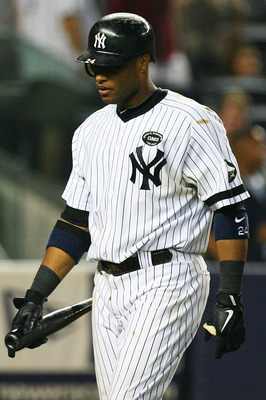
My choice is Robinson Cano of the New York Yankees.

He has a solid glove and put up excellent numbers with the bat.

When fans rattle off Yankees, he might not even be amongst the first mentioned, but the Yankees would be nowhere this year without him.


National League MVP


Albert Pujols, of the Saint Louis Cardinals, might be the best player in baseball. He certainly made a strong case to win his fourth MVP Award in six years.

The Colorado Rockies have Carlos Gonzales and Troy Tulowitzki to boast with good reason.

Adrian Gonzales of the San Diego Padres also deserves mention.

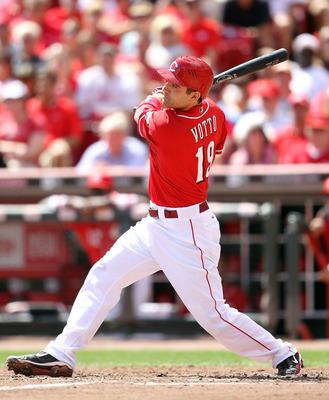
The Cincinnati Reds were not picked by many to compete for a pennant, much less win their division.

Joey Votto was simply great this year, and consistently kept the Reds on top. He even teased the Triple Crown for awhile. He is my choice.


American League Cy Young


David Price, of the Tampa Bay Rays, deserves big mention.

John Lester, of the Boston Red Sox, deserves some as well.

I see this coming down between two guys.

"King" Felix Hernandez would not upset me if he won, despite a 13-12 record. The man was simply incredible this year.

However, I am picking C.C. Sabathia of the New York Yankees.

Did I flip a coin? Maybe.

I just see C.C. as a distant MVP contender and the glue of the Yankees rotation.


National League Cy Young


Adam Wainwright, of the Saint Louis Cardinals, is the only other guy I see getting quite a few first place votes.

Tim Hudson, of the Atlanta Braves, had a very good and underrated season that deserves mention.

Roy "Doc" Halladay, of the Philadelphia Phillies, should walk away with it.


American League Rookie Of The Year


Austin Jackson, of the Detroit Tigers, will get a lot of votes and is worthy.

Wade Davis, of the Tampa Bay Rays, will get some votes too.

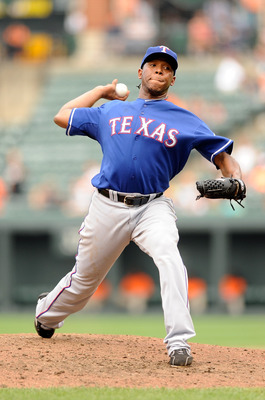
Neftali Feliz, of the Texas Rangers, is my pick. His 39 saves and OPS are too hard to ignore.


National League Rookie Of The Year


Outfielder Jason Hayward, of the Atlanta Braves, will get a lot of votes in what should be a close race to the finish.

The Saint Louis Cardinals Jaime Garcia will also get votes in a fantastic N.L. rookie class.

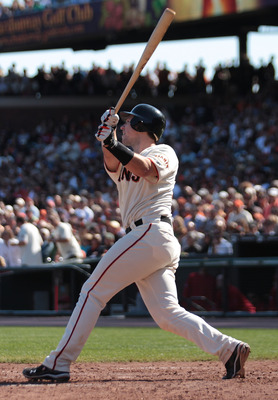
Buster Posey, a catcher for the San Francisco Giants, is my pick. His offensive numbers are pretty much equal to Heyward's, but with a lot less at bats.


American League Manager Of The Year


Terry Francona, of the Boston Red Sox, got a very injured and old team a lot of wins somehow.

Buck Showalter, of the Baltimore Orioles, took a floundering team and got them to play 10 games above .500 after his hiring.

The Texas Rangers Ron Washington also deserves mention.

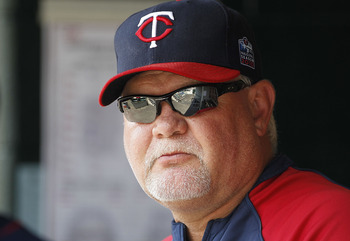
My pick is Ron Gardenhire of the Minnesota Twins. I'd love to see what this guy could do with an expensive clubhouse like the Yankees.


National League Manager Of The Year


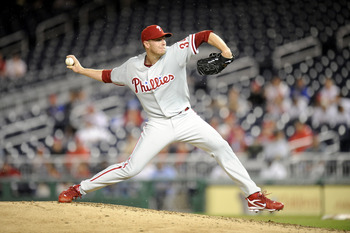
I REALLY hope the underrated Charlie Manuel of the Philadelphia Phillies gets votes. He had an injured lineup for 117 games, yet the Phillies blew the doors off their division and are many peoples favorites to be champions.

Dusty Baker, of the Cincinnati Reds, did a great job as well this year.

But what Bud Black did with the San Diego Padres is amazing. They almost had a dream season without a whole lot of talent.

Thursday, September 30, 2010

Baltimore Orioles Need Experience And Brian Roberts In 2011


The Oriole Way


It had been missing in Baltimore since Peter Angelos bought the club in 1993. Angelos, named one of the five worst owners in all of sports by Sports Illustrated in 2009, quickly destroyed the team by trading away young players the team developed in exchange for old, expensive players nearing the end of their careers.


Things got so bad in Baltimore that even the old and expensive players decided to go elsewhere when they hit free agency. The Orioles then began a much too long run living in the basement of their division.


In 2007, Angelos hired Andy McPhail as the teams general manager and President of Baseball Operations. McPhail's father, Lee, was a general manager and club president of the Orioles from 1958 - 1965, and is one of the chief architects of the Oriole Way.


The Oriole Way is a simple philosophy of building your club through excellent drafts and a sound farm system. Lee McPhail, the oldest living Hall of Famer currently, came up with this as the farm system director of the New York Yankees from 1949 - 1958, as the Yankees won seven World Series in his time with them.


Baltimore began to show the promise of youth served in 2009, led by Adam Jones, Matt Wieters, Felix Pie, Brad Bergesen, David Hernandez, and All-Star Nick Markakis. They also had two-time All-Star Brian Roberts signed to a contract until 2014.


With young hurlers Brian Matusz, Chris Tillman, Brad Bergesen, and Jake Arrieta expecting to help veterans like Kevin Millwood, Mike Gonzales, and Jeremy Guthrie this season, the Orioles expected to build off the promise left from the season before.


Things did not work that way, as injuries soon dismantled the team along with underachievement. Roberts was only able to suit up for 59 games while Millwood, the expected ace of the staff, and Gonzales, the expected closer, played well under expectations.


Now Buck Showalter is the manager, having been hired July 30th because the club felt like a shake up might light a fire under the roster.

The team has gone nine games above .500 since then, and Showalter, who owns a .516 winning percentage in 1,769 games, promises more changes in what may be his fourth and final managerial job.


As the Orioles head home to host the Detroit Tigers for the final four games of their 2010 season, let us review the current rosters chances of sticking with the club next season.


Infielders


Brian Roberts : The Orioles really missed him in the leadoff spot this year. All of Baltimore hopes this doubles-hitting machine returns to full health next year.


Ty Wiggington : Wiggy got off to a fast start and made his first All-Star team. He tapered off as the year progressed and his contract has expired. He may return.


Julio Lugo : Once sought after in baseball, he doesn't field well and did not hit this year. Adios.


Robert Andino : A veteran utility player who doesn't hit much. A doubtful return.


Cesar Izturis : A veteran journeyman shortstop who won a Gold Glove in 2004 and was an All-Star the next year. He doesn't hit much and his contact has expired. He might not return.


Josh Bell : Baltimore got this 24-year old switch hitter from the Dodgers in 2009 for closer George Sherrill. The team is high on him, so next year will be a better gauge of his talents.


Brandon Snyder : Baltimore's first round pick in 2005, this 23-year old first baseman got only 17 at-bats over eight games this year. He will be given a chance to win the job in Spring training.


Catchers


Matt Wieters : He has shown steady improvement since his debut in August, 2010. A face of the team.


Jake Fox : A utility player without much of a bat. Long shot to return, but his versatility makes it possible.


Craig Tatum : He is a defensive specialist who spells Weiters, and batted .273. He sticks unless they upgrade.


Outfielders


Adam Jones : A Gold Glove center fielder, he is one of the faces of the franchise.


Nick Markakis : The best player on the team, and a major cornerstone of the franchise.


Felix Pie : He frustrated the Chicago Cubs, who waited on him to put all five of his tools together consistently. Injured much of this year, he still shows flashes. Time may be running out on Pie, who will be 26 next year. If he doesn't pick it up, it may be his last as an Oriole.


Luke Scott : He is frequently mentioned as trade bait, but he is the teams best power source and led them with 27 homers. He should stay on.


Corey Patterson : A journeyman with good speed and an erratic bat. He was solid as an extra outfielder this year, so he has a chance to return.


Nolan Reimold : After a solid rookie year, he suffered a sophomore slump this season and spent most of it in the minors. Baltimore would love him to return to his 2009 form. We'll see.


Pitchers


Kevin Millwood : Had a frustrating season, losing 16 games. His ERA was well over five, but he ate up 190 innings and was a huge victim of non-run support. He might be better off at the end of the rotation as opposed to being on top like this year. He returns unless beaten out in Spring training.


Jeremy Guthrie : He probably works best as a third or fourth starter, but he led the team in innings pitched, wins, and had the best ERA (3.98) amongst starters. He returns.


Brad Bergesen : Only 25-years old, he led the team with two complete games. He returns.


Chris Tillman : His Triple-A success has yet to translate in the bigs. He needs to step it up.


David Hernandez : Found himself in the pen, going 8-8 with two saves and a 4.31 ERA. He likely returns.


Brian Matusz : Went 9-12 on 31 starts in his rookie year. Counted on as the future ace.


Jake Arrieta : Went 6-6 in 18 starts in his rookie season. Will get a good shot next year.


Alfredo Simon : Leads the club with 17 saves, but blew four and fell out of favor. Long shot to return.


Matt Albers : He leads the team with 61 appearances. He probably stays.


Mark Hendrickson : The veteran 6'9" journeyman is a soft tosser who can start or come out the pen. The former second round pick of the Philadelphia 76ers will be 37 next year, so his return is tenuous.


Jim Johnson : "Nails" does well in the set-up role, but was bad as a closer. He stays.


Michael Gonzales : He will be 33-years next season, and in the last year of a two-year $12 million contract. He gave Baltimore one of his career 55 saves this year, but he might stick one last year.


Troy Patton : They got him for Miguel Tejada in 2007, and the lefty appeared in one game this year. A long shot perhaps.


Pedro Viola : A lefty with two appearances and 1.1 innings of work after being claimed off waivers in April. A long shot at best.


Koji Uehara : He went from an oft-injured starter to closer. He blew just two save opportunities and converted 10. The soon-to-be 36-year old might find a spot in the bullpen.


Rick VandenHurk : They traded veteran lefty Will Olman for him and the veteran swingman has not been impressive in his seven game. A long shot who may stick to justify the deal made to get him.


Free Agents In 2011 For Baltimore To Look At And Consider :


Huston Street : He battled nagging injuries this year, but still has 20 saves right now. He also has 149 in his career and is only 27. He would help a lot.


Jorge De la Rosa : Another Colorado Rockies pitcher who battled injuries this season. Still only 30-years old, this lefty could help.


Joe Blanton : He eats innings and has AL experience. His price tag might be too high, so the four-years older and underrated Javier Vazquez could be an option.


Carl Crawford : He will be a hot commodity because he is 29, very fast, has a good bat and glove. May be out of the Orioles price range.

Tuesday, September 7, 2010

Little Men Are Big In The NFL


There is an influx of little men in the 2010 NFL season expected to make significant impact. Darren Sproles of the San Diego Chargers has been making an impact with his team since 2005. He excels on special teams, but also makes a contribution on offense as well as a 5'6" running back.


Dexter McCluster is said to stand 5'8" , though some say he is shorter, and weighs 170 pounds. He was drafted in the second round by the Kansas City Chiefs in 2010. Though he is listed as a kick returner, running back, and wide receiver, the Chiefs are expected to use him in a variety of ways.


Brandon Banks reportedly stands 5'7" and weighs just 149 pounds. He joined the Washington Redskins as an undrafted free agent rookie this year, and has done well returning punts. He scored on an electric 77-yard return, but has a propensity to fumble. He coughed up the ball three times in preseason.


Trindon Holliday tips the scales at 5'5" and 165 pounds. He was drafted in the sixth round of the 2010 draft by the Houston Texans. Considered one of the fastest men ever in college football, he hurt his thumb in the preseason and will miss the rest of the year.


This recent influx of tiny players is nothing new for the league, but has been seen less and less over the past few decades. The 1980's had Joe Morris, Stump Mitchell and Lionel "Train"James, three smaller running backs. Morris was listed at 5'7" and played with the New York Giants from 1982 to 1988. He went to the Pro Bowl twice, ran for over 1,000 yards three times, and led the NFL with 21 touchdown runs in 1985. He ran for a career best 1,516 yards the next year, helping the Giants get to Super Bowl XXI. He scored once in the New York victory over the Denver Broncos. He attempted to play for the Cleveland Browns in 1991, then retired.


His younger brother Jamie, also listed at 5'7", played three years in the NFL. He once carried the ball a whopping 45 times for 152 yards in a game for the Washington Redskins during the 1988 season. It is still an NFL record for the most carries in a single game.


The Redskins loved to use small running backs in that era. Reggie Brooks stood 5'8", and gained 1,063 yards during his 1993 rookie year. Keith Griffin also stood 5'8", and was an important reserve who helped the team capture Super Bowl XXII.


James, like Sproles, stood 5'6" and played for the San Diego Chargers from 1984 to 1988. He led the NFL in kickoff returns and yards as a rookie before playing his way into the starting lineup the next year. He led the league with a then NFL record 2,535 all purpose yards. He had 1,027 yards receiving, which was then a record for a running back, on 86 catches. He once gained 345 yards in a single games as well.


Mitchell, who played with the Saint Louis Cardinals from 1981 to 1989, was said to have been shorter than his listed height of 5'9". He led the NFL in kickoff return yards as a rookie, and became a 1,000 yard running back five years later after averaging a NFL best 5.5 yards per carry.


Buddy Young is easily the most famous small player in pro football history, standing just 5'4" and weighing 175 pound. He join the New York Yankees of the All American Football Conference, the precursor to the NFL Colts franchise, in 1947.


Known as "The Bronze Bullet", Young was considered one of the greatest football players of that era. He was an All-American in his freshman year at the University of Illinois after equalling several of Red Grange's school records, including touchdowns scored in a single season. Like many players, he then had to joined the military to serve because of World War 2 after his freshman season.


When he fulfilled his obligations in 1946, he spurned offers to turn pro and returned to Illinois. Young then helped them win the Big Ten Championship and Rose Bowl. He was also an All-American in track. He is a member of the College Football Hall of Fame.


Young was a trailblazer, being one of a few African-American players to play professional football then. He joined the Yankees and formed one of the more electrifying backfield tandems in pro football with Spec Sanders and gained a career best 712 yards on 116 carries, a 6.1 yards per carry average, as a rookie playing fullback. Young was also a superb return specialist. In his first year, he scored a touchdown on both a punt return and kickoff return. He was fifth in the AAFC in total yards, and was named Second Team All-AAFC that season.


The Yankees became the New York Yanks in 1950, then became the Dallas Texans in 1952, and he stayed with the team even though bigotry in Texas was so bad that season the team had to play many of their home games in Hershey, Pennsylvania and Akron, Ohio. He still led the NFL with 23 kick returns for 643 yards for a team that failed to win a single game.


The Texans became the Baltimore Colts the next year, and Young was still with the team. He returned 11 kicks for 378 yards, a career high 34.4 yards per return average, and scored on a 104 yard return. It was the second longest return in NFL history at the time, and is still the 13th longest ever.


He made his lone Pro Bowl squad in 1954. His last season as a player was in 1955. He then retired and became the first Colt to have his jersey retired. He continued to break new ground after retirement. Young became the first African-American to be hired as an executive by the NFL, and later was named Director of Player Relations.


Buddy Young was a tough man who preferred to play without a face mask and hardly any pads. He was the fastest player in the FL at one time, and once tied the 60-yard indoor dash record of 6.1 seconds. He even beat a race horse in a 100 yard dash while with the Colts.


The shortest player in NFL history was Jack "Soapy" Shapiro of the the 1929 Staten Island Stapletons. He stood five foot and a half inch, weighing just 119 pounds. Though he is officially recognized to have played blocking back in one game, records in those days were poorly kept. Shapiro clams he was with the team three regular season games and two exhibition games, playing in three games total.


There have been diminutive quarterbacks that excelled in the NFL. Eddie LeBaron supposedly stood 5'9", but reportedly was closer to 5'7", and weighed 168 pounds. The tenth round draft choice lasted 11 seasons in the NFL, making the Pro Bowl four times.


Davey O'Brien stood 5'7", weighing 151 pounds, and was drafted in the first round by the Philadelphia Eagles in 1939 after winning the Heisman Trophy. He made the Pro Bowl as a rookie before suddenly retired to work for the Federal Bureau of Investigation. He is a member of the College Football Hall of Fame and there is an award named after him that is annually given to the best quarterback in college football.


Doug Flutie was the 1984 Heisman Trophy winner. Because he appeared to be shorter than his listed height of 5'9", the Los Angeles Rams drafted him in the 11th round. Flutie opted to play a season in the United States Football League before giving the NFL a try. He started with the Chicago Bears, who had traded for his rights, but did not last eve two years with them before being moved to the New England Patriots. After winning eight of 13 starts over three years, he was released.


Finding no job offers he liked in the NFL, he went to the Canadian Football League and played with three teams over eight years. After winning three CFL championships, and setting numerous records, he returned to the NFL for eight more seasons and was named to the Pro Bowl once. He converted the first successful drop kick in over 65 years during the 2006 season.


There are countless other stories of small men who were superb in the NFL. In 2009, there were 27 players listed at 5'8" or shorter on rosters. Men like Darrell Green and Barry Sanders were Hall of Famers from the 1990's, while others like Maurice Jones-Drew, Ray Rice, Kevin Faulk, Jim Leonhard, and Bob Sanders star in the game today.


The expression that the size of the heart overcomes the size of the body is modeled by these people. With the inevitable growth of the human race each generation that is shown by the fact that a man rarely under 300 pounds plays in the NFL trenches anymore, these little guys give hope to the ordinary man who still hangs onto childhood dreams of having the ability to play the game.


They keep us grounded as they soar in the eyes of appreciation. For it is these David's that walk in the land of Goliath not needing a sling shot to win.

Saturday, April 17, 2010

The Baltimore Orioles Will Never Win With Peter Angelos


The Oriole Way

Peter Angelos, the Baltimore Orioles owner, has no idea what that means. It is a term every baseball fan in Charm City is well aware of, and a methodology that Angelos has seemed bent on destroying since he bought the ball club in 1993.

The Oriole Way had been very successful before he bought the club. For over three decades, from the 1960's to the 1980's, the Orioles had the highest winning percentage in all of sports, and the winningest team in all of baseball. They won six American League Pennants and three World Series over that time.

The first, and so far only, right move Angelos made to benefit the ball club in a positive manner occurred in 2007 when he hired Andy MacPhail as the teams General Manager and President of Baseball Operations.

MacPhail, a veteran baseball man, had oversaw the Minnesota Twins to two World Series titles when he was the teams General Manager from 1985 to 1994. He was named The Sporting News Major League Baseball Executive of the Year in 1991. He then left to join the Chicago Cubs, staying with them until 2006, but was unable to duplicate his previous successes.

His joining the Orioles is almost like a homecoming for him. His dad is former American League President Lee MacPhail, who is actually the man who started The Oriole Way as General Manager of the team until 1965. The American League Championship Most Valuable Player Award is named after him, and he is the oldest living member of the Baseball Hall of Fame.

Andy's grandfather is Larry MacPhail, the man who brought Major League Baseball innovations like night baseball, broadcasting regular season games, and teams flying from city to city to play baseball. He was even a racetrack president in Bowie, Maryland. Larry and Lee are the only father and son inducted into the Baseball Hall of Fame.

Andy has been following the similar blueprint of his father. The team is chock full of young talent that is very raw and attempting to learn on the fly. Though the team is losing more than it is winning at present time, most baseball experts agree the team has the talent to contend in a few years.

Cal Ripken Jr. is more than Major League Baseball's Iron Man, having played the most consecutive games in the history of all professional sports, he is also a Orioles Hall of Famer who truly knows what The Oriole Way means in every sense.

Not only did he stay with the franchise for over twenty years, his father spent 36 years with the team and his younger brother spent over seven years with them. Cal Ripken Sr. was once a manager of the Orioles, and both of his sons played under him. This is the only time that this has ever occurred in Major League Baseball history.

Since retiring as a player, the Ripken sons have been have served as ambassadors to baseball across the globe and bought a minor league baseball team close to Baltimore that is within the Orioles system. He has kept a keen interest on his beloved Orioles, and is trying to help develop players to bring the organization championships again.

He recently approached Angelos to offer his services to talk to some of the young Orioles stars, hoping to offer a mentorship in hopes to "finish off their development." He did not ask for a specific role, he only wanted to do what he was taught in The Oriole Way. To give back.

Angelos, widely considered the worst owner in Major League Baseball and one of the worst in all of professional sports, flatly refused the generous offer from a legend trying to help a team that has lost ten of the 11 games they have played this season thus far.

His reason was as moronic as his legacy of ownership. He did not want Ripken to receive any credit once the team became successful. What Angelos did yet again was put his ego ahead of his team or the Orioles fans who help keep his team from going under by paying money seeing a product not being afforded every opportunity possible to win.

Orioles fans since the 1990's have been pleading for Angelos to sell the team to someone who actually cares about the team, but the lawyer refuses to listen to his clients. Though he refutes the claim as to the reason why he turned away Ripken Jr., most fans believe the initial reports because the mans ego has caused the team to fall on hard times pretty much upon his arrival as owner.

Former Orioles owners like Jerold Hoffberger and Edward Bennett Williams never would have turned away perhaps the most famous Oriole of them all. They would welcome the wisdom of team legends to keep The Oriole Way strong.

With men like Ripken Jr., Jim Palmer, Frank and Brooks Robinson, Eddie Murray and others still alive, it would only be a move of intelligent design to ask these Hall of Famers to give back to the team whatever they desire. An intelligence Peter Angelos has never had, and the reason the Orioles will never be anything as long as he is associated with them.

Monday, April 12, 2010

The San Francisco Giants Spit On Tradition

The San Francisco Giants president Larry Baer just announced recently retired Rich Aurilia will be honored by retiring his No. 35 jersey and giving him a spot on the Giants' Wall of Fame outside the ballpark.

Every Giants fan must have said, "Huh"?

Aurilia was a good player, but hardly a legendary institution in San Francisco. He was with the team for 12 of his 15 seasons as a player. His best season was in 2001, while with the Giants. He earned his only All-Star selection and won his only Silver Slugger after setting career best marks of 206 hits, 37 home runs, scored 114 runs, five triples, and batter .324.

He got to see Barry Bonds hit 73 home runs that year on drugs, so who is to say Rich didn't pop a few of BALCO Barry's special vitamins in his mouth that year? With extra outfielder Marvin Bernard, a teammate on that team, recently admitting he was on steroids that year, it is more than fair to look at Aurilia's one big season of his career with scrutiny.

That is the legacy Barry Bonds left baseball with.

Though he never came close to those numbers again, Aurilia did set a record by hitting five home runs in the Giants 2002 post season. It helped them get to the World Series, where the Giants lost.


He ended his career with a batting average of .275 with 186 home runs and 756 runs batted in. He had 143 home runs and 574 runs batted with 1,226 hits in 12 years for the Giants.

Solid numbers, but is it a career worthy to have his number immortalized next to Hall of Famers like Christy Mathewson, John McGraw, Bill Terry, Mel Ott, Carl Hubbell, Willie Mays, Juan Marichal, Orlando Cepeda, Gaylord Perry, Willie McCovey, and even Jackie Robinson?

No.

If Aurilia is worthy by the Giants newly lowered standards, it makes one think who else should get this honor since they are perhaps more deserving.


Alvin Dark


You want to see how the Giants treat their greats? Look no further to Alvin Dark. In 1969, he was voted the greatest shortstop in franchise history.

Initially drafted by the football Philadelphia Eagles, of the NFL, in the third round of the 1945 draft, he elected to serve his country in World War Two, then decided to play baseball upon his return.

The Giants grabbed the 1948 Rookie of the Year from the Boston Braves at the end of the 1949 season, a year after leading them to an improbable World Series appearance. He stayed with the Giants as a player until 1956. He was a key component of their 1954 Word Series winning team, finishing fifth in the leagues MVP voting that year, and was a three time All-Star in 1951, '52, and '54. He also won the first Lou Gehrig Memorial Award in 1955, given to the player who best exemplified Gehrig's character and integrity both on and off the field.

He returned to the Giants in 1961 as a manager, piloting them to the 1962 World Series. After losing in seven games to the New York Yankees, he was misquoted by a reporter with a disparaging comment against black and Latino players. Willie Mays and Jackie Robinson quickly came to Dark's rescue, refuting the reporters story. He was still fired after that season.

Dark resurfaced across the San Francisco Bay in 1974 as the skipper of the Oakland Athletics. The A's would go on to win the World Series that year.

In seven years as a Giants player, he hit 98 home runs and drove in 429 runs on 1,101 hits. Very comparable numbers to Aurilia, minus the fact he played five less seasons and got a World Series title. After all of this, the Giants haven't even put Dark on their Wall of Fame, let alone retired his jersey.

When you see the Giants current Wall of Fame, which is full of mediocre players like Aurilia, it is bewildering that Dark is missing from it. Disgraceful, really.


Jo-Jo Moore


Yet another Giants great not even on the teams Wall of Fame, despite being ninth on the franchise hit list with 1,615.

He spent his entire 12 years as a player with the Giants, finishing with a .298 career batting average. He also helped them win the 1933 World Series, as well as appear in two others. He hit over .300 five times, and never struck out more than 37 times in a season. He was an All-Star six times.

If Rich Aurilia had a career worthy of having the Giants retire his number, then what about the vastly superior career of Jo-Jo Moore?


Larry Doyle


The greatest second baseman in Giants history is also not on the teams Wall of Fame. In 13 years with the club, he smacked 1,751 hits. It is the eight most in team history.

He helped the Giants win three pennants, and was named the MVP of the 1912 season. He is also the first man to ever hit a ball out of the Polo Grounds.

Doyle led the majors in hits twice, doubles, triples and batting average once. His 25 triples in 1911 is the seventh most for a season in MLB history.


Travis Jackson


Another Giants legend not on the Wall of Fame. 15 seasons and 1,768 hits. "Stonewall" is in Cooperstown as a member of the Baseball Hall of Fame, but this apparently is not good enough to be recognized by the team.


Jack Clark


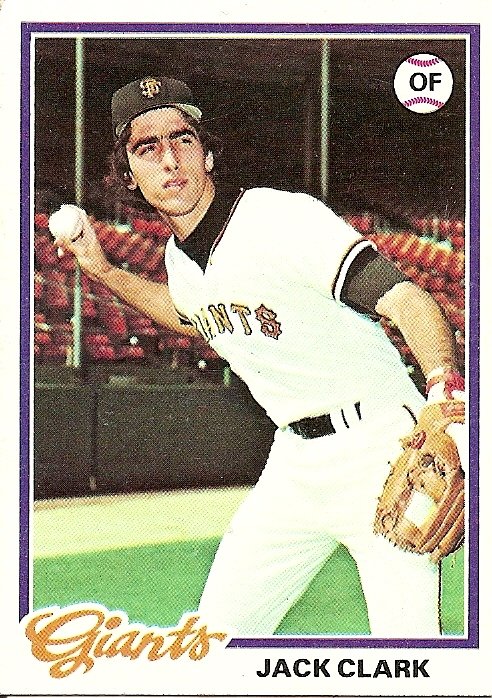
"Jack the Ripper" spent ten years in the Giants uniform, getting 1,034 hits, 163 homers, and 595 RBI's and two All-Star games with them. Good enough to get the first ever recipient of the Willie Mac Award on the teams Wall of Fame, yet apparently his career with them apparently doesn't equal Aurilia's as far as getting his jersey retired.


Will Clark


The "Thrill" spent eight years with the Giants, collecting 1,278 hits, 176 dingers, and 709 ribbies. He also was a five time All Star, won a Gold Glove, two Silver Sluggers, a Golden Spikes, and was the 1989 NLCS MVP for them. Good enough for the Giants Wall of Fame, but apparently he falls short of getting his number retired by them.


Robby Thompson


Robby spent 11 years in a Giants jersey. He got 1,187 hits, 119 homers, and 458 RBI's. He also won a Gold Glove and Silver Slugger once, and went to the All-Star game twice. He also won the teams Willie Mac Award in 1991, honoring spirit and leadership. Good enough for the Giants Wall of Fame, yet deemed not as good a career as Aurilia to get his number retired.


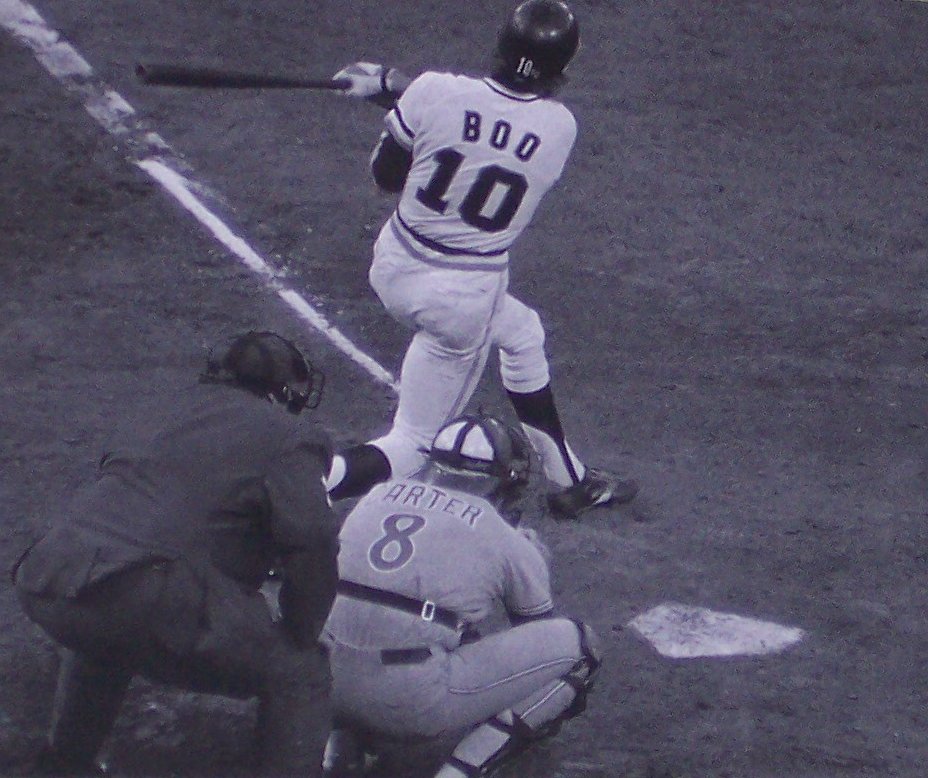
How about Johnny LeMaster? He was with the Giants from 1975 to 1985. He retired after the 1987 season with a 222 batting average, 22 home runs and 229 runs batted in. One of his homers came off an inside the park job in his first career at bat, which is a MLB record. He was often booed by Giants fans, so he once wore a jersey replacing his last name on the back of the jersey with "BOO".


Some say Aurilia's organizational ties are the real reason he is getting this honor from the Giants. He has become a broadcaster. Well, if this is all it takes to get this honor, then the Giants may as well as retire the numbers of two other former players who now broadcast games for them.


Duane Kuiper batted .255 over four years for the Giants. He is the only MLB player to hit two bases-loaded triples in a game, and he once went 3,379 at bats before he hit the only home run of his career.

He broadcasts games with ex-Giants pitcher Mike Krukow. Krukow went 20-9 in 1986, finishing third in the Cy Young Award. In the 1987 NLCS, he went nine innings, giving up just two runs in the win. It was his only post season experience. He also hit three of his five career home runs for the Giants.

He won 66 games over seven years for the Giants, and is on the teams Wall of Fame.

Certainly the Giants should consider retiring his jersey if they are going to retire the jersey of Rich Aurilia.


There can be a longer list of former Giants who had careers comparable, yet will not get any honor or recognition by the franchise. The ownership group led by Sue Burns and Bill Neukom need to step in and stop Baer. They cannot allow this farce to take place.

The Giants need to better embrace their entire history, one that is full of much better baseball players than Rich Aurilia.

Tuesday, May 26, 2009

The All Time New York Yankees

For those of you looking for Ruth, Mantle, Jeter, ect....you have found the wrong story.

The article is a tribute to the FOOTBALL Yankees.

This franchise, like many in its time, had a journey that is fascinating and historical.

The first incarnation of the Yankees was founded in 1926 in the first incarnation of the American Football League. This AFL was founded by Hall Of Famer Red Grange's agent C.C. Pyle.

Pyle and Grange started the AFL for a few reasons.

The main reason is because the NFL refused Pyle's request to join the seven year old NFL, a move vehemently opposed by New York Giants owner Tim Mara.

Another big reason was due to a salary dispute between the Chicago Bears and Grange.

Grange had signed a contract with the Bears in 1925 for $100,000, a huge contract for that era. He took the Bears on a barnstorming tour, playing 19 games in 67 days. This moment is often credited for getting the NFL off of the ground and legitimized.

The other reason was how the 1925 NFL season ended, which left a bitter aftertaste for many of their fans.

The Pottsville Maroons were initially named champions after defeating the Chicago Cardinals. The Cardinals then scheduled some faux games, trouncing opponents that were mostly disbanded franchises.

After the Maroons played an exhibition game on the home field of the Frankford Yellow Jackets, the Yellow Jackets protested to NFL commissioner Joe Carr. Carr suspended the Maroons and fined them, then awarded the championship to the Cardinals. The Cardinals refused the award.

The AFL lasted one year, but has some noteworthy moments. One of the charter members of the NFL, the Rock Island Indepenents, joined their league for that season. Another team was called the Los Angeles Wildcats, a traveling team based out of Chicago and owned by Pyle and Grange.

The team, also called the Pacific Wildcats, was named after its star George "Wildcat" Wilson, and had Hall Of Famer Ray Flaherty. Wilson would later go on to lead the Providence Steam Roller to their lone NFL championship in the 1928 season.

Flaherty would join the Yankees in 1927, and stayed until they folded the next year. He then joined the Giants in 1928 and played for them for eight seasons, helping them win a championship in 1934.

Most of the AFL teams folded before Thanksgiving, leaving just four actually still playing football. One team, the Brooklyn Horseman, merged with the Brooklyn Lions of the NFL after playing just four games.

The Lions folded after their lone season in 1926 themselves, but the team was never officially withdrawn from the league. Mara bought the rights, then leased the franchise to Pyle so the Yankees could join the NFL.

The Yankees and Giants would share Yankee Stadium, but the Yankees were essentially a road team. They were only able to play four actual home games before they were forced to fold after the 1928 season, after the agreement between the two teams ended.

The AFL tried to come back in 1936, and another version of the Yankees was born. Both the team and league were not successful, and both folded after the 1937 season.

In 1940, the AFL tried again. The Yankees also tried again. They named themselves the Americans in the beginning of 1941 after a switch in ownership, but the league folded because of World War II.

The 1940 Yankees owner tried to bring back the franchise as a traveling team in 1941, with just four members of the original team. They folded after losing all six of their games.

Another new incarnation of the Yankees came back in 1946, and also played in Yankee Stadium. This Yankees team was part of the All American Football Conference. The Yankees were very popular at that time, and featured running back Spec Sanders.

The Yankees would go to the AAFC Championship Game in each of their first two seasons, but would lose both times to the Cleveland Browns.

The 1947 team also saw Buddy Young join the team. Known as "The Bronze Bullet", Young was considered one of the greatest football players of that era.

Standing just 5'4", Young was an All American in his freshman year at the University of Illinois. He, like many players, then joined the military to serve because of World War 2.

Young also was a trailblazer, being one of a few African American players to play professional football then. After leaving the franchise in 1952, he joined the Baltimore Colts and became the first Colt to ever have his jersey number retired.

Flaherty left the Yankees mid-way in the 1948 season, and would coach the AAFC Chicago Hornets the next season. After that season, the Brooklyn Dodgers of the AAFC folded and merged with the Yankees.

The Yankees would make the playoffs in 1949, but would lose to the San Francisco 49ers in the Division championship game. The AAFC then folded and was absorbed by the NFL.

The Boston Yanks were founded in the NFL in 1944, and stayed there until 1948. The team then moved to New York, renaming themselves the Bulldogs. Many of the AAFC Yankee players would join this team, and the team switched back to their Yanks name in the 1950 season. The team would last in New York until 1951, then announced they were moving to Dallas and be called the Texans.

Due to the prevalent bigotry that was throughout the South at that time, as well as the civil rights movement at that time, the team only lasted seven games in Dallas. They featured two African American stars in Young and George Taliaferro, as well as two future Hall Of Famers in Art Donovan and Gino Marchetti.

Another player on that team was Fritz Von Erich. Von Erich later became a very successful professional wrestler and promoter. His family is also known because five of his sons died young, four of which were professional wrestlers.

The Texans folded after that one season, and was bought by Carroll Rosenbloom. Rosenbloom then started the Baltimore Colts with this franchise, though the NFL does not officially recognize this lineage.

Without further delay, here is your All Time Yankees :
(Unfortunately, Not All Players Pictures Were Found)


QUARTERBACK : Clarence "Ace" Parker

Clarence was an All American at Duke University, and also was an excellent baseball player. He is a member of the Duke University Sports Hall of Fame, North Carolina and Virginia Sports Halls of Fame, Hampton Roads Sports Hall of Fame, College Football Hall of Fame, and the Pro Football Hall Of Fame.

Parker initially tried baseball, and joined the Philadelphia Athletics in 1936. He left the team after the 1938 season due to a lack of success.

Parker was drafted by the NFL Brooklyn Dodgers in 1937, the second quarterback taken in the draft behind Sammy Baugh. Though he only played four games that year, he led the team on passing.

Ace made his first All Pro team the next year, leading the league in passing attempts and yardage. After having a good 1939 season, leading the league in yards gained per pass completion, Ace had his best season as a player in 1940.

He led the NFL with 6 interceptions for 146 yards, and scored a touchdown. They were the first interceptions of his career. Parker also led the NFL in extra points attempted and made, and ran for a career best 306 yards on 86 attempts.

He was named to his last All Pro team, and was named the MVP of the NFL.

Ace had the last interception of his career in 1941, and left the NFL to join the Army because of the war.

He returned to the NFL in 1945, and joined the Boston Yanks. He served mainly as a reserve, then left the team at seasons end.

Parker joined the Yankees for one year in 1946. He helped lead the team to the AAFC Championship game, which they lost. He then retired for good, and became a baseball and football coach at Duke and a player-manager of the Durham Bulls of the Piedmont League in minor league baseball. Twice he was named manager of the year.

Clarence "Ace" Parker is the oldest living member of the Pro Football Hall Of Fame.

George Pease, of the first Yankees team, deserves mention. He led the AFL in touchdown passes, getting seven. He later played in the NFL with the Orange Tornadoes in 1929. He led the team in receiving, touchdowns, punt returns, and punt return yardage. He retired after that season.


RUNNING BACK : Orban "Spec" Sanders

Sanders was the Redskins first round draft pick in the 1942 draft, but went off to serve in the military because of WWII.

Spec came to the Yankees in 1946, and instantly became the face of the franchise, and was a major star of the league. He was named to the All AAFC First Team in his first two years, which is akin to being an All Pro.

He led the AAFC in rushing attempts, rushing yards, rushing yards per game, yards from scrimmage, all-purpose yards, touches, rushing touchdowns, and total touchdowns in his first two seasons.

He led the AAFC with a 103 yard kickoff return for a touchdown, the longest in franchise history, in his rookie year. It is still the 22nd longest return in professional football history.

Spec intercepted two passes that year, and took one for a 50 yard touchdown. It is the only defensive touchdown of his career. He also threw four touchdowns, punted 22 times that year, and caught a career best 17 balls for 259 yards and three TD's.

Spec really exploded in 1947. He had 1,432 yards rushing on 231 attempts, a 6.1 yards per carry average, and ran in a whopping 18 touchdowns. His yards rushed that year would stand as a record for over a decade. He also tossed a career best 14 scores, punted 46 times, and intercepted three balls that year.

Spec also led the AAFC with 22 kickoff returns, and scored on a 92 yard return.

The 1948 season was his last with the Yankees. He led the AAFC in rushing attempts again, and scored nine times via the ground. He also threw five more scores, punted 42 times, and picked off a pass.

Sanders was named the the All AAFC Second Team after that year, but did not play in 1949 because of a knee injury he suffered late in the previous season. He did join the Yanks for the 1950 season.

He led the NFL with 13 interceptions, which is the second most ever, and gained 199 yards. He also punted the ball a career high 71 times, and returned 6 punts for 93 yards. Though he rarely played offense that year, he did complete two of the three passes he attempted for 58 yards.

Spec was named to the NFL All Pro Team that year, then he retired from the game.

Spec Sanders is the Yankees all time leader in rushing attempts and yards, passing attempts, completions, touchdowns, and yards, total yards, total touchdowns, and scoring.


RUNNING BACK : Red Grange

Red is considered, by many, the greatest college football player ever. He is one of only two men to have their jersey retired by Illinois University.

He set several records in college, and was a three time All American. After leading his school to an undefeated season and the 1923 Helms Athletic Foundation national championship, he was dubbed "The Galloping Ghost" by Chicago sportswriter Warren Brown.

After college, Red signed a huge contract to play with the Chicago Bears, and helped make the NFL legitimate. This arrangement lasted one year.

Red, along with his agent C.C. Pyle, decided to start the Yankees and AFL the next year. After the league folded, the Yankees joined the NFL.

Red hurt his knee badly against the Bears that year, and had to miss the rest of the season and the entire 1928 season.

Red returned to Chicago in 1929, and the Bears had two Grange's on their roster from 1929 to 1931. Gardie was Red's older brother and had played with him in college.

Gardie caught three touchdown passes, and kicked two extra points in his career. Though both men were the same height, and Red outweighed Gardie by only seven pounds, most people forget that one of the things that brought Red back to the Bears was the signing of Gardie.

Though the NFL officially credits Red with 569 yards rushing, 16 pass receptions, 31 touchdowns, and ten more passing, it must be noted the stats from that era were poorly compiled.

In fact, the NFL says Red played only five games for the Bears in 1925, but it is known he played at least 19 that year. Then there is the fact Red has no defensive stats, but he was a fine defender. His true statistics may never be known.

What is known is that he was a key member of two Bears teams that won championships.

He is a member of the NFL's 1920's All Decade Team, the College Football Hall Of Fame, and the Pro Football Hall Of Fame.

His impact on the game is immeasurable, and hard to truly summarize.

The best quote, that I saw, was by Halas in an interview with Chris Berman in the late 1970's.

Halas was asked who was the greatest running back he ever saw. Halas said it was Grange. Halas was then asked how many yards would Grange get today. Halas said it would be close to 800 yards.

Berman responded, "Well, 800 yards is just okay."

Halas sat up in his chair and said, "Son, you must remember one thing. Red Grange is 75 years old."


WIDE RECEIVER : Morris Badgro

Badgro was inducted into Canton in 1981, and is the oldest player ever to be inducted. He joined the Yankees in 1927, and stayed with them until the end of that season. Though he was a good defensive player and blocker, he is noted for being a fine receiver.

After he left the Yankees, he went on to play baseball with the Saint Louis Browns for two years. He then decided to play football again, this time joining the Giants. He scored the first touchdown in a NFL Championship game in 1933, and helped the Giants win the 1934 championship. Morris then joined the Brooklyn Dodgers in 1936, and retired after that season.


WIDE RECEIVER : Bruce Alford

Bruce was an eighth round draft choice of the Philadelphia/ Pittsburgh Steagles in the 1943 NFL Draft. The Philadelphia Eagles and Pittsburgh Steelers had combined rosters because of the war.

Alford served in the Army, then joined the Yankees in 1946. He caught 13 balls, and returned one kickoff for 62 yards.

He made his only All Pro Team in 1947. Bruce caught 20 passes, and scored 5 times. Alford also took the only punt return of his career 34 yards for a score. Also, he returned two kickoffs for 90 yards. One of his returns was a 79 yard touchdown. Alford also intercepted the only pass of his career.

Bruce had a career high 32 receptions the next year, gaining 578 yards, and scored three times. Alford followed that up by getting 11 receptions in the 1949 season.

Alford was with the Yanks for the next two years, and grabbed five receptions. He scored the last touchdown of his career in 1950, off of a blocked kick. He retired after the 1951 season as the Yankees all time leader in receptions and reception yardage.


TIGHT END : Jack Russell

Jack was drafted by the Steagles in the third round of the 1943 NFL Draft. Instead of playing, he joined the Army with Alford.

Jack joined the Yankees in 1946, and caught 23 receptions with four touchdowns. He followed that up 20 catches and two TD's the next season, to go with an interception Russell returned 33 yards.

Russell then had a career high six touchdown receptions in 1948. He also had a career best 433 yards on 23 receptions, and intercepted a pass. The 1949 season saw Jack grab seven passes for a score, and intercept the last pass of his career.

Jack joined the Yanks in 1950, and caught ten passes, scoring twice. He also recovered three fumbles, and took one in for a touchdown. He retired after that year.

Jack is the Yankees franchise leader in touchdown receptions, and caught the longest past in franchise history. He is also second in receptions and reception yardage.

Al Rose also deserves mention. He was a member of the 1937 Yankees in the second AFL. He had spent most of his career in the NFL, playing with the Providence Steam Roller and the Packers for for seven seasons.


CENTER : Lou Sossamon

Lou was drafted by the Steagles in the sixth round in 1943, but had to serve in the military. He joined the Yankees in 1946, and soon was an important member of the team.

In 1947, Lou scored a touchdown on a blocked kick, and helped anchor the Yankees line on both sides of the ball. He was named to the All AAFC Second Team after that year.

Sossamon played the 1948 season with the Yankees, then retired.


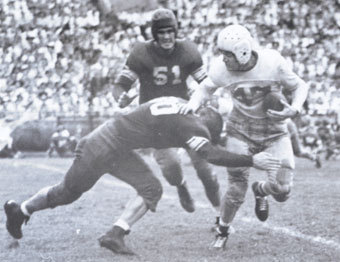
Lou making a tackle!


GUARD : Mike Michalske

The first offensive guard inducted into the Hall Of Fame, and is a member of the NFL 1920's All Decade Team. Michalske joined the AFL Yankees in 1926, and stayed with them until 1928. He then joined the Green Bay Packers the following year, helping them win three straight championships between 1929 to 1931. He retired in 1935, but came back to play one season for the Packers in 1937.

He was called "Iron Mike", because he was noted for his toughness. He was a 60 minute man, and only missed nine games in his career despite playing with an inoperable abdominal hernia. He also wore nine different jersey numbers in his eight years with the Packers, the most ever in franchise history.


GUARD : Alex Drobnitch

Alex was drafted by the Philadelphia Eagles in 1937, but opted to join the Yankees in the second AFL instead. He is the only member of that team to be named an All Star. He went on to play with the Americans and Buffalo Indians of the third AFL, then retired to join the armed forces in the war.

He was an All American at the University of Denver, and was inducted in the inaugural class of the schools athletic Hall Of Fame in 1996.

Les Richter deserves mention, as he was a first round draft pick of the 1952 Yanks. He was in the Army at the time, and never played. The Yanks traded him to the Los Angeles Rams for 11 players, which is a record deal for a single player.


OFFENSIVE TACKLE : Mike McCormack

McCormack played one season for the Yanks in 1951, then joined the Cleveland Browns the next year. He became an important member of a Browns team that won back to back championships between 1954 to 1955. He stayed with the Browns until 1962, then retired.

He later came a successful coach several teams and a GM for the Carolina Panthers. Mike McCormack is a member of the Pro Football Hall Of Fame.


OFFENSIVE TACKLE : Frank "Bruiser" Kinard

Frank was drafted in the third round of the 1936 NFL Draft by the Brooklyn Dodgers. He was already a star player in college, having attended Mississippi University.

There, he was a two time All American player, the first in school history. He is a member of the Ole Miss Athletic Hall of Fame, Mississippi Sports Hall of Fame, Ole Miss Team of the Century, Helms Athletic Foundation Hall of Fame, College Football Hall Of Fame, and Pro Football Hall Of Fame.

Bruiser immediately had an impact on the NFL in his rookie year. He was named All Pro in all seven years with the Dodgers. He then joined the Yankees in 1946, and was named All Pro again. After playing the next year, he retired.

Kinard was a complete player. He kicked extra points, and made 27 out of 30 attempts. He also made the only field goal attempt of his career. Frank also got his hands on the ball in 1943. He caught five balls and scored a touchdown.

He was also excellent as a defensive tackle. In 1941, he returned a fumble for a touchdown. He also intercepted a pass in 1944, and returned it 26 yards.

After he retired, Bruiser returned to Ole Miss to coach football and serve as the Athletic Director until he retired in 1973.


DEFENSIVE TACKLE : Art Donovan

Art was drafted by the Giants in the 22nd round of the 1947 NFL Draft, but opted to stay in college after serving four years with the Marines.

He joined the AAFC Baltimore Colts in 1950, but the team and league folded at the end of the season. He then joined the Yanks for the 1951 season, and stayed with the franchise through several moves.

Now the team was known as the Baltimore Colts, and this is where Art became well known throughout the country. He was named an All Pro five times, and recorded a safety in the 1953 season.

The Colts soon became one of the most popular teams in all of sports, as they would win consecutive champions in the 1958 and 1959 seasons.

Art retired in 1961, and was inducted into Canton just seven years later.


DEFENSIVE TACKLE : Arnie Weinmeister

Arnie joined the Yankees when he was 25 years old, due to military obligations while in college. His impact was immediate, as he was named to the All-AAFC second team. The next year, he was named to the first team, which is akin to being an All Pro.

Arnie then joined the Giants in 1950, and was named to the All Pro team in all four years he played there.

He retired after the 1953 season, and is one of only three men to have been born in Saskatchewan, Canada and play in the NFL. In 1984, he was inducted into Canton.


DEFENSIVE END : Gerald "Red" Maloney

Red started his career with the Providence Steam Roller in the 1925 NFL season. He scored a touchdown off of a fumble recovery, and kicked three field goals and four extra points.

He was named Second Team All NFL by the Green Bay Post-Gazette.

He joined the Yankees for their inaugural season in 1926, and scored two touchdowns off of receptions. He stayed with the Yankees the next year in the NFL and caught the last touchdown pass of his career.

Maloney did not play in 1928, but he joined the Boston Bulldogs for the 1929 NFL season. He started in seven of the eight games he played, then retired.


DEFENSIVE END : Nate Johnson

Nate joined the Yankees in 1946, and started right away. He stayed with the team the following season as well. The 1947 season saw him named to the All-AAFC First Team, and the Daily News First Team All-AAFC.

Nate then joined the Chicago Rockets in 1948, then the Chicago Hornets the following year. In 1950, Nate joined the New York Yanks, then retired at the end of the season.

He played both ways as an offensive tackle and defensive tackle, and was excellent. I had to find a spot for him on the team.


LINEBACKER : Irv "King Kong" Klein

Besides being an All American football player in college, Irv was also a basketball star. He helped New York University win the Helms National Championship in 1935, as well as have a perfect season in 1934. He is a member of the NYU Hall Of Fame.

He played on the Yankees in the second AFL, so his records are irretrievable on the internet. I am putting him at LB because of his nickname.


LINEBACKER : Bob Sweiger

Bob joined the Yankees in 1946, and stayed with them until 1948. He was initially drafted by the Giants in the 3rd round of the 1942 NFL Draft, but had to serve in the Armed Services because of the war.

Bob ran and caught the ball as a rookie, scoring once off a reception. He also had a career best four interceptions for 82 yards, helping the Yankees reach the AAFC Championship game.

Sweiger scored the last receiving touchdown of his career the following season, and also scored another touchdown off of two interceptions.

His last year with the Yankees saw him have a career high 12 receptions, then he joined Flaherty on the Chicago Hornets for the 1949 season. He intercepted one pass and had 11 receptions, then retired.


LINEBACKER : Bob Kennedy

Bob was drafted in the third round by the Steagles in 1943, but had to serve in the military. He joined the Yankees in 1946, and picked off three passes. He also scored twice on 58 rushing attempts, returned a career high four kickoffs for 105 yards, caught a career best 11 passes, and punted seven times.

Bob had eight interceptions over the next three years, as well as running the ball 195 times for 838 yards and seven scores.

Kennedy played five games for the Yanks in 1950, intercepting a pass, then retired.

Bob Kennedy's 53 games played are the most in Yankees history.


photo courtesy of atticajailhouseballcaps.blogspot.com
This hat is for sale, according to the site


SAFETY : Otto Schnellbacher

Otto was a two sports star at Kansas University. He was the schools first All American football player, and one of only three Jayhawks to be named All Conference in four years. He held the school receptions and receiving yardage records for 22 years, and is a member of the Kansas Sports Hall of Fame, the University of Kansas Hall of Fame and the schools football Ring of Honor.

He joined the Yankees in 1948 and had the best season of his career. He led the league with 11 interceptions for 239 yards, and scored a touchdown. He even had five receptions and returned five punts.

After the season was over, Otto joined the Basketball Association of America. He played 43 games with two teams as a forward, and averaged over six points per game.

Otto returned to the Yankees in 1949, and picked off four balls. He also had the last reception of his career, and returned four punts.

He joined the Giants in the 1950 NFL season, and was named an All Pro. He had 8 interceptions for 99 yards, and returned three punts.

Otto played his last year in 1951, and was named All Pro again. He matched his career high of 11 interceptions, which also led the NFL. Schnellbacher also led the NFL with 194 yards and two touchdowns.

Otto Schnellbacher's 15 interceptions are the most in Yankees history.


SAFETY : Eddie Tryon

Eddie is a member of the original Yankees. It was Tryon, not Grange, who lit up the first AFL. He led the league in scoring and rushing touchdowns. He also was second in the league in touchdown receptions, behind Grange, and tied for fifth in field goals made.

He played one more season, when the Yankees joined the NFL. He had two touchdowns rushing and receiving., and made all eight of his extra points attempted. He was named to the Green Bay Press-Gazette Second Team All NFL, then retired.

I put Eddie on the team because of how he excelled on the first Yankees. He certainly was a two-way player, though NFL records list him as a running back in his only season in their league.

He was a star at Colgate University, scoring 111 points in his senior year, and had 360 points in his collegiate career.


CORNERBACK : Tom Landry

Tom started his career with the AAFC Yankees in 1949. He joined the Giants the next season, and made his only All Pro team in 1954. By then, he also was an assistant coach. He retired as a player after the 1955 season.

Tom was named the defensive coordinator in 1956, and stayed there until the end of the 1959 season. In 1960, he became the head coach of the expansion Dallas Cowboys and held that position until 1988.

Tom led the Cowboys to two Super Bowl wins, and won 270 games in his tenure. He was named NFL Coach of the Year twice, and is a member of the Pro Football Hall Of Fame.


CORNERBACK : Pete Layden

Pete was drafted by the Giants in the tenth round of the 1942 NFL Draft. He had to go serve in the Army.

In 1948, Pete played two sports. He was an outfielder for the Saint Louis Browns in Major League Baseball for 41 games, and also played for the AAFC Yankees.

He threw 105 passes that year, completed 43 of them, and had 816 yards thru the air. Nine went for scores. Layden also ran the ball 95 times for 576 yards and three scores.

Pete returned eight kickoffs for 211 yards, and punted the ball 21 times for an average of 42.1 yards per punt. All are career highs. He also intercepted three passes.

Layen only threw ten passes in 1949, and completed two. He also ran the ball 19 times for 96 yards, and had the only reception of his career.

Though Pete only returned one kickoff, he led the AAFC in punt returns with 29, gaining 287 yards. He also punted the ball the last fifteen times in his career, averaging 41.7 yards per attempt.

Layden also led the Yankees with seven interceptions, and gained 137 yards. He scored the last touchdown of his career off of one of those interceptions.

Layden joined the Yanks in 1950, and intercepted three passes. He also made the only three extra points he attempted in his career. He then retired from the game.


RETURN SPECIALIST : Buddy Young

Young was already a football legend before he went pro. Buddy went to Illinois University, and was often compared to fellow alumni Grange. Young equaled several of Grange's records, including touchdowns scored in a single seaon. He was an All American player his freshman year, but had to leave school to serve in the military because of the war.

When he fulfilled his obligations in 1946, he spurned offers to turn pro and returned to Illinois. Young then helped them win the Big Ten Championship and Rose Bowl. He was also an All American in track.

Buddy joined the Yankees in 1947, and formed one of the more electrifying tandems in pro football with Spec Sanders. He gained a carrer best 712 yards on 116 carries, a 6.1 yards per carry average, and scored three times.Buddy also caught 27 balls, scoring twice.

Young was also a superb return specialist. In his first year, he scored a touchdown on 8 punt return attempts, and took a 95 yard kickoff for a score on 12 attempts. He also completed the only pass of his career on two attempts.

He was fifth in the AAFC in total yards, and was named Second Team All AAFC.

The 1948 season saw Buddy carry the ball 70 times and catch 12 passes, scoring fives times. He also returned just two punts and 12 kickoffs.

He rebounded the next year, returning nine punts for 171 yards and 11 kickoffs for 316 yards. One kickoff return went 91 yards for a score.

He also ran for 495 yards on 76 carries, a 6.5 yards per carry average, caught 12 passes, and scored a career best five rushing touchdowns. His eight TD's that year are his career high, and he was named Second Team All AAFC. He was named First Team All AAFC by the UPI and the Daily News.

The Yankees became the Yanks in 1950, and Young stayed with the team. He returned 20 kickoffs and nine punts. He caught 20 balls for 302 yards, and ran the ball 76 times for 334 yards, and scored twice. He also lead the league in fumble recoveries. The UPI named him Second Team All AAFC.

In 1951, he had a career high 508 yards on 31 receptions, along with an additional 165 yards rushing and four scores. Young led the NFL with a 19.3 punt return average, returning 12 for 231 yards. He scored a touchdown on a 79 yard return. He also returned 14 kickoffs, scoring once on a 90 yard return.

The Yanks became the Dallas Texans in 1952, and Buddy stayed with the team. He ran for 243 yards, caught 22 balls, scored five times, and led the NFL with 23 kick returns for 643 yards.

The Texans became the Baltimore Colts the next year, and Buddy was still with the team. He returned 11 kicks for 378 yards, a career high 34.4 yards per return average, and scored on a 104 yard return. It was the second longest return at the time in NFL history, and is still the 13th longest ever.

Buddy made his lone All Pro squad in 1954. He averaged 18 yards per catch on 15 receptions, ran for 311 yards, and scored five times.

In his last season as a player in 1955, Young averaged a career high 22.4 yards per reception on 19 catches, and ran for 87 yards. He scored twice, and also returned nine kickoffs. He then retired and became the first Colt to have his jersey retired.

Buddy continued to break new ground after retirement. He became the first African-American to be hired as an executive by the NFL, and later was named Director of Player Relations.

He was a tough man who preferred to play without a facemask and hardly any pads. He was the fastest player in the NFL at one time, and once tied the 60-yard indoor dash record of 6.1 seconds. He even beat a horse in a 100 yard dash while with the Colts.

Buddy Young is a member of the The Pigskin Club of Washington, D.C. National Intercollegiate All-American Football Players Honor Roll and the College Football Hall Of Fame.


PUNTER : George "Fat" Tiliaferro

George was the first African-American drafted in the NFL, when the Bears drafted him in the 13th round in 1949. He opted to join the Los Angeles Dons in the AAFC instead.

He ran the ball 95 times for 472 yards and 5 TD's, as well as attempting a career high 124 passes with 4 more scores. George also punted the ball 27 times, and returned two punts. One return went 51 yards for a score. He also led the AAFC with five fumble recoveries.

George joined the Yankees the next year, and would stay with the team through many moves from New York, then thru Dallas, and ending in Baltimore. He then played in three games for the Philadelphia Eagles in 1955, then retired.

For a three year stretch from 1951 to 1953, Taliaferro was an All Pro. He was a jack of all trades, and his finest season may have been in 1951 with the Yanks. He led the NFL in kickoff returns, kickoff return yards, punts, and punt return yards.

Taliaferro is a noted legend from the state of Indiana. He went to Indiana University, and was an All American. George led the Hoosiers to their only undefeated Big Ten Championship in his senior year, and is a member of the College Football Hall Of Fame.


KICKER : Harvey Johnson

Harvery was a sixth round draft pick by the Brooklyn Dodgers in the 1943 NFL Draft, but had to serve in the military during the war. He would join the Yankees in 1946.

He carried the ball 16 times that year, the only rushing attempts of his career, and gained 63 yards. He also snatched 2 receptions, and had the only interception of his career.

Johnson was mainly used as the Yankees kicker. In his four years with the team, he made 178 out of 180 extra point attempts, and 22 of 38 field goal attempts.

He led the AAFC in extra points attempted and made in 1947, and field goals attempted and made in the 1949 season.

Harvey sat out the 1950 season, but suited up for the Yanks in 1951. He made all 31 of his extra points attempted, and six of his 14 attempted field goals. He retired as a player after that season.

He then became a coach and scout. He joined the expansion Buffalo Bills in inaugural 1960 season of the last version of the AFL. He served as their secondary coach, then as their director of player personnel.

The Bills fired their head coach, Joe Collier, one game into the 1968 season, and Harvey took his place. The Bills won one game that year, and he stepped down afterwards. He stayed with the team, and had to coach the Bills again in 1971. Buffalo won just one game, the worst record in the franchises history, and Harvey became a scout for the Bills until his death in 1983.


Harvey is on the far left in the second row


HEAD COACH : Ray Flaherty

Flaherty is best known as the man who invented the screen pass play, and was a long time player and coach. His coaching success came with the Washington Redskins, where he led the team to two championship wins.

After his seven years with the Redskins, he joined the Navy for one year. After serving, Flaherty returned to coach a new incarnation of the Yankees in 1946, and stayed there until mid-way into the 1948 season. He left mid-way in the 1948 season, and would coach the AAFC Chicago Hornets the next season.

Ray led the team to two AAFC title games, and his 22 wins are the most by any coach in Yankees history. He was inducted into Canton in 1976 for his contributions to the game.

Jack McBride coached two versions of the Yankees, and deserves mention as well.