Showing posts with label AAFC. Show all posts

Saturday, March 26, 2011

United Football League : Time To Burn Out Or Fade Away


The United Football League started operations in 2009, becoming America's first alternative to the National Football League since 1987. While the UFL has no connections to the NFL. some in the media thought that it would eventually serve as a developmental league.


Others speculated the UFL was born at the time it was to swoop in when the NFL and their players would lock out after the 2010 season. Now that this has happened, the UFL is on the cusp of doing something only one other league has done before. Competing against the NFL has been more a losing proposition.


There have been many leagues formed to oppose the NFL. The first was the American Football League in 1926, created by Hall of Famer Red Grange and his agent after Chicago Bears owner George Halas reneged on monies owed to Grange.


The AFL tried to capitalize on a messy 1925 season for the NFL. Commissioner Joe Carr had just stolen the Championship Trophy from the Pottsville Maroons and handed it to the Chicago Cardinals. The Cardinals owner, NFL co-founder Chris O'Brien, refused the trophy, but the Bidwell family bought the Cardinals in 1933 and have claimed the trophy since.


Grange started the New York Yankees Football Club. A charter NFL team, the Rock Island Independents, joined the AFL and the league played one game in Canada that year. One team, the Brooklyn Horsemen, merged with the Detroit Lions.


This AFL folded after just one season due to financial issues. The second AFL formed in 1936, lasting two years before folding. This league had a team, the Los Angeles Bulldogs, that was the first professional team to play home games on the West Coast. The league had a team called the Cincinnati Bengals, who Hall of Famer Paul Brown named his 1967 expansion team after.


The lasting legacy of the second AFL was the Cleveland Rams, who are now known as the Saint Louis Rams in the NFL. The Rams had a rookie by the name of Sid Gillman on their 1936 team. Gillman is a Hall of Famer known as the "Father of the Modern Day NFL Offense". A second Yankees team was founded as well, and starred Hall of Fame running back Ken Strong.


Though the Los Angeles team drew fans, the rest of the league only garnered local interests in their respective areas. The financial strains of trying to compete against the NFL caused them to fold after 1937, but the dream of competition lived on.


The third AFL formed in 1940. They had a third version of the Yankees, a team that has lineage tied to the Indianapolis Colts, and Bengals. The Yankees called themselves the Americans in 1941, creating a coup by signing 1940 Heisman Trophy winner Tom Harmon over the Chicago Bears. The league folded after just two years because World War II emptied most of their rosters.


The All-American Football Conference was born after the war. The Cleveland Browns, Baltimore Colts, and San Francisco 49ers were teams born from the AAFC that would later join the NFL, though this Colts team has no ties to the current version. The Browns dominated the league, once going a record 29 games without defeat.


The AAFC is most remembered for breaking the color line professional sports employed in that era. The Browns signed Bill Willis and Marion Motley, two men who would later be inducted into the Pro Football Hall of Fame. The AAFC drew well at first, and helped the NFL get more viewers as well.


The increasing popularity of pro football led to salary increases for the players. Only two NFL teams had profits in 1946. The AAFC instilled the use of the face mask, refining pass route running, shuttling players with plays called from the sideline, a year-round coaching staff, and classroom sessions that broke down games on a chalkboard and film.


The league folded when the Browns, Colts, and 49ers merged with the NFL. A fourth AAFC team, the Buffalo Bills, had their large fan base unsuccessfully campaigned for their teams inclusion but failed. Ralph Wilson, then a part-owner of the Detroit Lions saw this rabid fan base and would reward them a decade later.


The fourth American Football League was founded in 1960. Owners like Wilson, Bud Adams, and Lemar Hunt made the league work even despite their initial struggles. The AFL took an aggressive approach. They did not only line their rosters with ex-NFL players, but they held their own annual drafts and offered college kids more money than the NFL.


They made a few huge signings, starting with 1959 Heisman winner Billy Cannon. Adams recruited him in the end zone of his final collegiate game. Cannon would help lead the Houston Oilers to the first two championship wins in AFL history.


Others soon followed Cannon to the AFL. Hall of Famers like Joe Namath, Lance Alworth, Ron Mix, and Johnny Robinson were all first-round draft picks of the NFL who opted for the AFL. All are inducted into the Pro Football Hall of Fame except Robinson, who should be as well. The AFL put 31 men in the Hall of Fame, so far, and should have more.


The AFL brought an exciting brand of big play football without castrating the defenses. The offenses were exciting, as opposed to the grind-it-out style of the NFL then. Despite their fun play, the NFL considered them inferior and called them a "Mickey Mouse League."


When the AFL beat the NFL in the third Super Bowl, opinions changed. Secret meetings between Hunt and NFL owners in 1966, that were held without the knowledge of league commissioners Pete Rozelle and Al Davis, bred a merger that was agreed upon in 1970.


The AFL won the Super Bowl one more time in 1969 before it happened. Most of the AFC teams of today started in the AFL and no AFL team is in the NFC.


Since then, the World Football League, United States Football League, and XFL tried to compete with the NFL. The WFL signed several NFL stars and even took a few out of college.


Hall of Famers Larry Csonka and Paul Warfield were joined by Pat Haden, Danny White, Alfred Jenkins, Greg Latta, Jim Fassell, and Vince Papale, along with coaches like Jack Pardee, Marty Shottenheimer, Lindy Infante, and John McVay, to play two years with the WFL until it folded.


The XFL lasted one year before folding. They tried to bring in old school fans by allowing the bump and run defense, except they let defenders hit the receiver at any time. After four weeks, they adopted the NFL's five-yard chuck rule to increase scoring. They only allowed the two-point conversion after touchdowns, which the WFL also had, and they did not flip a coin to begin games to determine possession. They had a player from each team run 20 yards to gain possession of the ball laying on the 50-yard line.


The XFL put 33 players in the NFL and seven played in Super Bowls. Five won Super Bowl rings and Tommy Maddox, Bobby Singh, and Rob Carpenter won both an XFL and NFL championship.


The USFL had some successes in their three years of play. The league has six men in the Pro Football Hall of Fame and several others who later became stars in the NFL. They were aggressive in bidding for NFL free agents and college stars. Some of their biggest signing were Hall of Famers Jim Kelly and Steve Young out of college, as well as 1982 Heisman winner Hershel Walker, 1983 winner Mike Rozier, and 1984 winner Doug Flutie.


The USFL also attained the services of Hall of Famers Reggie White and Gary Zimmerman by offering them more money. Despite all of this, they could not keep up financially and teams began folding before they suspended play after 1985 and took the NFL to court. After losing their lawsuit, the USFL folded in 1987.


The UFL has all of this history to learn from. To see what works and what is a risk for failure. They are struggling some already, having their New York team move to Connecticut and Florida team move to Virginia and become owned by the league.


The league has just five teams right now and plans to play on Sundays starting in August. If they receive an influx of NFL players, there is a possibility of a sixth team. The UFL allows celebrations by players and have a "No Tuck Rule".


Several NFL coaches are in the UFL. Jim Fassel, Marty Shottenheimer, Jerry Glanville and Dennis Green lead teams. Joe Moglia, the Ameritrade CEO who was an unpaid assistant at Nebraska University, will coach the other team. The UFL has had 27 of their players go on and play in the NFL.


The UFL appears to be restricted financially. They borrowed $5 million from Mark Cuban last year and now have been taken to court by Cuban for failure to re-pay him on time. Cuban was once rumored to be interested in owning a UFL team and broadcasted their games on his HDnet network the first two years of their existence.


With the NFL appearing a long time away from solving their differences, the UFL could benefit. There is also a chance the lock out can hurt them. NFL players are trying to convince college players to skip the draft, so owners have been said to consider using replacement players like they did in 1987 during a players strike. The UFL could see most of their players in NFL uniforms.


Getting NFL players to join them could take time, as many may prefer to sit back and observe the negotiations. The UFL also does not appear to have the maverick leadership the AFL in the 1960's enjoyed. But it could work.


If an influx of bored NFL players decides to go to the UFL to collect a paycheck, their popularity could increase. It may increase already, considering they are the only game in town right now. In this tenuous situation, the next few months can define the legacy of the United Football League.

Friday, February 11, 2011

NFL Lout : Why Roger Goodell Is Bad As Hell For The NFL


The muckerism known as the Roger Goodell Era began in the National Football League when he barely won the job as commissioner by two votes in 2006. Though he tried to push this image of being a strict disciplinarian since then, but he has mostly shown to be a watered down version of his mentor and predecessor Paul Tagliabue.

Goodell began working with the NFL as an intern thanks to the fact his dad was a Senator in the same state that NFL Commissioner Pete Rozelle lived in. When Tagliabue replaced a retired Rozelle in 1989, Goodell was taken under the wing of a former college basketball player who knew very little about the game of football.

His role increased as the rules began to heavily favor the offenses and the quarterback position especially. Goodell has even taken this many steps further to sickening proportions since 2006 to the point even touching a quarterback results in a penalty and fine.

The 2011 season has been his worse, yet it may be a blessing for the NFL. It is quite evident Goodell is the wrong man for the job more than ever and replacing him would benefit the league. The league has made mistakes here before, so admitting they made the wrong hire would be nothing new for the NFL.

Jim Thorpe was the first NFL Commissioner ever from 1920 to 1921. He was an obvious figurehead much like Goodell is. Thorpe was a Hall of Fame football player who won two Gold Medals in the 1921 Olympics, played Major League Baseball, and basically excelled in any athletic endeavor.

Carl Stork, a co-founder of the NFL, was commissioner for two years until stepping down due to illness. Austin Gunsel stepped in when Bert Bell died in 1959, but was replaced by Rozelle four months later. Elmer Layden, one of the famous "Four Horsemen" from Notre Dame University, held the job for five year before being replaced by Bell because owners thought him too much a gentleman and not forceful enough for the job.

While Goodell has tried to pretend his was forceful regime, it has been severely tainted with hypocrisy. He reduced a suspension of Pittsburgh Steelers quarterback Ben Roethlisberger by two games this year, but then proceeded to tell people, right before the quarterback was to play Super Bowl XLV, that at least two dozen Steelers did not support Roethlisberger.

The reporter, Peter King, tried to back peddle soon after, but most likely because he was ordered to by Goodell. Still, the damage was done and the timing could not have been more inappropriate. The Super Bowl is the biggest game the league has, one where billions of dollars are involved and where more viewers from other parts of the world tune in.

Not only was the big game marred by Goodell's boorish behavior, but perhaps the worst pre-game and halftime entertainment shows in Super Bowl history followed in a game where hundreds of fans were displaced because Goodell's people did a poor job preparing Cowboys Stadium for the event. These fans are now suing the league.

These debacles took place on the eve of a players strike that is almost certainly going to occur. Players strikes are nothing new in the NFL, having occurred in 1968, 1970, 1982, and 1987. Yet each strike dealt with different issues.

When the players threatened a strike in 1968, the owners countered by declaring a lockout. Since players salaries were low in that era, which caused them to hold second hobs, this strike was brief.

There was another brief strike during training camp in 1970 where the Rozelle Rule evolved. The players union won the right for players to bargain through their own agents with the clubs while allowing any team that lost a free agent to another team to receive something of equal value to his former team


The 1982 season had just nine regular season games played because of the strike. When the 1987 strike went down, players missed a month of the regular season but the games were still played.

Owners hire replacement players, which was largely a group of players who had been cut in training camps. Many players, including Hall of Famers like Joe Montana, Steve Largent, and Randy White, crossed the picket lines to play.

This strike may be different because NFL players see how Major League Baseball players get paid. The NFL is the king of professional sports right now and players want a bigger piece of the pie. Considering an average career lasts less than two years, their request doesn't seem ridiculous.

The players today are afforded luxuries like never before. Though the game still contains hard hitting at times, the rules today make it a much less violent game. Goodell is now saying the league cares about players suffering concussions, an issue they ignored since their beginnings.

Past players suffer today, ignored by their own brethren who are enjoying the path paved for them. Yet the players see how the legends are doing today and are trying to prevent repeating that in their own future. Goodell's recent claims of caring are generally considered just lip service by most so he can resolve the impending strike sooner.

Besides continuing Tagliabue's mission to pamper quarterbacks and offenses while castrating defenses, there are many other things about Goodell that anger players. Many feel he is out of touch, sitting in an ivory tower with a blind eye as his wallet fills up at a rapid pace.

Many players lately have been echoing the same sentiment in regards to their commissioner. They feel he has too much power and control over the game while maintaining a constant predilection of making wrong decisions ultimately. He once was referred to as an obtuse fascist who has ruined the integrity of the game in favor of money.

Though it is unknown if things would be much better or worse now if Goodell did not retain those two votes in 2006, the question if he is the right man for the job gets louder each day. Whether the owners are listening or even caring is the question.

Bell and Rozelle, generally considered the best commissioners in NFL history, never uttered such ramblings like Goodell has while holding the office over 30 years combined. Neither besmirched their players like Goodell has. Though it is doubtful a person as good as Bell or Rozelle is out there right now, it would behoove the NFL to try and find out while firing Goodell.

If the league stays complacent behind his questionable leadership, the United Football League could very well find success the the American Football League did in the 1960's, forcing the NFL to allow all 10 of their teams to merge. Before that, the All-American Football Conference had the NFL take in three teams in 1950.

Though the game of football needs the upstart UFL, now entering their third season, to compete with the NFL to make their product better, the NFL learned 41 years ago from the AFL that it can take a long time to get back on top after being the only game in town several years. A game that has been eroding under the direction of Roger Goodell.

Tuesday, October 12, 2010

Brett Favre Mirrors Y.A. Tittle


Watching Brett Farve lead the 1-3 Minnesota Vikings to another loss, as he tossed 20 incompletions in 34 attempts and added to his NFL records of most interceptions and fumbles coughed up, one couldn't help but see Y.A. Tittle.

Farve has defied all the odds since the Atlanta Falcons drafted him in the second round way back in 1991. He moved on to the Green Bay Packers the next year, leading them to two Super Bowls and winning one over 16 seasons.

He has set too many records to count almost. Yes he played in an era where playing quarterback is nowhere nearly as difficult nor physically taxing as it once was, but he has done it better than anyone in his era so far.

Men like Peyton Manning and Tom Brady are nipping on the heels of several of his records, but they both have a ways to go. A long ways in many instances.

It wasn't just the fact Farve won with a gun slinging mentality that earned him millions of fans, it was how he won in the face of mortality after family death and an ill mate. His 2009 season amazed many.

He made his 11th Pro Bowl at the age of 40, and statistically had the best year of his Hall of Fame career. The three-time NFL MVP seemed ageless, and drew respect of even those perturbed by his waffling of retiring and un-retiring with a diva mentality.

ESPN also brought a lot of that ire on him. It is no secret Favre is close with many on the network, but their on-air fellatio of their deity grew sickening as it has run on a 24-hour loop since 2007.

As he was flopping around in the first half on their loss Monday to the New York Jets, broadcast by ESPN, the announcers seemed contractually obligated to express adoration of Farve every 30 seconds.

At one point, it seemed each member of the broadcast booth wished he had sexually harassed him instead of three other women. Who knows what they are doing with the purported pictures of Favre's genitals.

Even after Farve lazily coughed up three fumbles via poor fundamentals, losing two, the announcers sickeningly sought excuses for him rather than be objective broadcast journalists.

The second half brought him success, as he almost got Minnesota back in the game courtesy of two touchdown passes. One was a lollipop pass to recently acquired Randy Moss that brought back memories of the time Tittle invented the alley-oop pass to R.C. Owens in the 1950's.

Yelberton Abraham Tittle was the first round draft pick of the Detroit Lions in 1948, the sixth overall selection. He opted to join the Baltimore Colts of the All-American Football Conference instead, and the team won just nine games in his three years there in a league dominated by the Cleveland Browns.

Tittle has led the league in passing attempts, completions, yards gained per completion and attempt, interception percentage, as well as interceptions, at least once in his time with the Colts, who were woefully undermanned.

He found himself with the San Francisco 49ers in 1950 after the Colts folded. He spent three years as a backup to Frankie Albert, a Pro Bowler who was the Chicago Bears first round pick in 1942, but had joined the Niners in 1946 after serving in World War Two.

Albert retired after a sub par 1952 season where Tittle started five times. Tittle's first year as started in 1953 saw the Niners lead the league by averaging a whopping 31 points per game. San Francisco finished second in their division during a time only division winners go to the postseason.

Though Tittle had weapons like Billy Wilson, Gordon Soltau, R.C. Owens, and the "Million Dollar Backfield" that consisted of Hall of Famers Joe "Jet" Perry, Hugh McElhenny, and John Henry Johnson, the Niners could never win it all.

A team that many consider the greatest ever to never win a title, they named Albert the head coach in 1956, and drafted quarterback John Brodie with the third overall pick in 1957.

That year saw the Niners make their first NFL postseason, but they lost to the eventual champion Detroit Lions in the fourth quarter 31-27.

Tittle's next three years saw him mostly injured, though he made the Pro Bowl in 1959, as Brodie became ready to take control of the team. San Francisco then traded the 35-year old Tittle to the New York Giants for Lou Cordileone, their first round draft choice in 1960, just before the 1961 season.

Tittle defied expert opinion by defying his age in an era where it was much more difficult to play quarterback in the NFL. He went to three straight Pro Bowls as the Giants lost five times total over the three seasons.

After leading the league in touchdown passes in 1962, he did it again the next year, as well as completion percentage, touchdown percentage, and yards gained per completion at 37-years old.

Then Father Time came calling and cashed in his chips in 1964. The Giants great teams had aged and were gone, so this team was full of youth and little talent. The few older players that remained were a shell of what they once were.

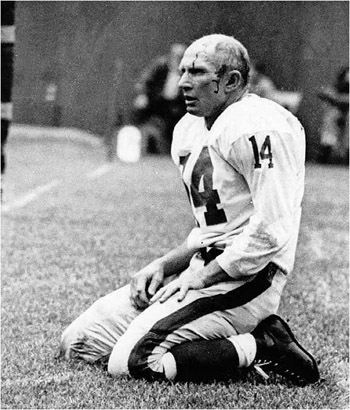
New York finished last in defense and second to last in offense. Tittle took a tremendous beating, winning just once in his nine starts. A famous picture was taken of him that year realizing it was all over for him and football.

Though Tittle never won a championship, despite leading the Giants to three of them, the seven-time Pro Bowler, who won the NFL MVP trophy twice, was inducted into the Hall of Fame in 1971.

He still holds the record for seven touchdown passes in a game, and was the first of just eight quarterback in NFL history to have 30-touchdown passes in consecutive seasons. Farve is one of the other eight.

Tittle's 36 touchdown passes in 1963 was an NFL record until Hall of Famer Dan Marino broke it in 1984 under newer rules that made it easier to play quarterback in the NFL.

It still remains tied for ninth most ever, and the 37-year old Tittle is easily the oldest on the list. A 30-year old Tom Brady set the record in 2007 under even newer rules that have made it much, much easier to be an NFL quarterback.

Farve's 2010 season seems to be resembling Tittle's 1964 year somewhat. The Vikings are losing like the Giants did that year, and Farve has tossed seven interceptions in just four games. He threw that same amount in the entire 2007 season, a career low mark.

The one difference is surrounding talent. Farve has Pro Bowlers like Adrian Peterson, Randy Moss, Percy Harvin, Bryant McKinnie, and Steve Hutchinson helping him on offense. Tittle only had Hall of Famer Rosey Brown as a Pro Bowler, along with tight end Aaron Thomas make his only Pro Bowl in 1964.

Minnesota was, and perhaps still is, expected to be a team with Super Bowl ability this year, unlike the fact few expected much from the 1964 Giants. The season has a long way to go for the Vikings, but their start has to have everyone cheering for the organization concerned.

The hope is that Farve stops playing like he is 41 and washed up, rediscovering the fountain youth that led the Vikings to the NFC Championship last year. Hope that Father Time has not yet cashed in those eventual chips, that we all one day will see, yet again.

Friday, July 9, 2010

Cleveland Rocks And LeBron James Career In Hollywood Has Ended


After clearing the vomit from my mouth after the sociopathic narcissistic "press conference" ESPN held to promote LeBron James, I felt it important to throw the city of Cleveland some love. Not only because it is tiresome watching ESPN attempt to shove their anointed heroes down our throats in hope of cashing in on faux reverence, but because Cavalier fans need only look back to 1980 and owner Ted Stepien to get a smile of chagrin.

Stepien tried to buy a winner, traded away first-round draft picks back to back years that led the NBA into implementing the "Stepien Rule" that disallows teams to trade away first round picks in consecutive seasons. The moves failed so badly, fans renamed the team the "Cadavers". They can now hope the same fate for the Miami Heat.

Let us remember some great memories in Cleveland professional football history, perhaps pro footballs first great dynasty. Arthur McBride partially made his fortune in the taxicab industry. After an unsuccessful attempt to buy the Cleveland Rams in the NFL, he joined the fledgling All-American Football Conference and established the Browns in Cleveland.

His first move was to hire Paul Brown as the head coach and general manager, naming the team after him, as McBride handled the financial aspects. He would keep injured players on the payroll by saying they drove his taxicabs, thus the "taxi squad" was invented. The team dominated the AAFC, winning the leagues championship each of the four years the league existed.

After the AAFC folded in 1949, they moved to the NFL and immediately won the 1950 championship. The Browns continued win championships in 1954, 1955, and 1964. They also reached the championship games from 1951 to 1953, but lost.

The last title winning team was led by Jim Brown, perhaps the greatest football player ever. Each team was coached by Paul Brown, with the exception of the '64 squad, and many consider him the greatest coach in football history. It adds to the lore of the franchise that the faces of the franchise were named Brown.

The Rams had some success themselves, being founded in Cleveland in 1936. They stayed until 1945, winning the championship that year while led by Hall of Fame quarterback Bob Waterfield. The team did not play in 1943, due to a shortage of players because of World War II. They were the first NFL team to suspend operations without merging with another team, and the only other team in NFL history to do this was the Browns after owner Art Modell moved the team to Baltimore in 1996. The Rams moved to Los Angeles after the 1945 title season.

Sixteen men who primarily played with the Browns are members of the Pro Football Hall of Fame, the fourth largest total for a franchise in NFL history. Five more members also wore Brown jerseys for a short time. The Cleveland Rams have two members enshrined.

Here are a few of the legends:

Paul Brown, Coach, Browns 1946 - 1962
Otto Graham, Quarterback, Browns 1946 - 1955
Marion Motley, Fullback, Browns 1946 - 1953
Lou "The Toe" Groza, Kicker/ Tackle, Browns 1946 - 59, 1961 - 67
Dante Lavelli, End, 1946 - 1956
Bill Willis, Guard, Browns 1946 - 1953
Frank Gatski, Center, Browns 1946 - 1956
Len Ford, End, Browns 1950 - 1957
Mike McCormick, Tackle, 1954 - 1962
Jim Brown, Fullback, Browns 1957 - 1965
Gene Hickerson, Guard, Browns 1958 - 60, 1962 - 73
Leroy Kelly, Halfback, Browns 1964 - 1973
Paul Warfield, Receiver, Browns 1964 - 69, 1976-77
Ozzie Newsome, Tight End, Browns 1978 - 1990
Dan Reeves, Owner, Rams 1941 - 1971
Bob Waterfield, Quarterback, Rams 1945 - 1952

Basketball season is over, as is the era of Lebron James in Cleveland. Football is the main game in town anyways. Not just because of the hugely successful Ohio State University dominating college football for decades, but for the Cleveland Browns helping the NFL attain their riches of today.

From the AAFC and the Paul Brown Era, to the Jim Brown Era, to the Kardiac Kids, to the new Browns trying to achieve a winning program today, the Dawg Pound is as vivacious as ever. Now that Mike Holmgren has come into town, fans are optimistic the team can revive a team stagnate in mediocrity since the late 1980's.

Time moves on, as will the memory of the betrayal of James as he "takes his talents elsewhere" instead of having the heart to attempt to build his own legacy. An image tarnished forever for the perceived easy way out. Now is the time to buckle up the proverbial chin strap, get ready for some football, and hold dearly onto the memories of the truly great Cleveland legends.

Paul and Jim Brown, Otto Graham, Bob Feller, the list is long of legends yet those are the biggest names of all time for the area in the game of football. The NFL could pay better tribute by allowing the city to host a Super Bowl. Cleveland is the only NFL city to neither host a Super Bowl game nor appear in one. With the loss of the ESPN icon, perhaps the blow can be softened by the NFL? Even if neither happens, it is a city rich in tradition one certainly can hold with pride.

Friday, June 25, 2010

The Scariest Players In Football History

Hardy Brown

Hardy came up the hard way. He grew up in an orphanage after witnessing his father murdered when he was four.

After attending college at both Southern Methodist University and Tulsa University, the New York Giants drafted him in the 12th round of the 1947 NFL Draft. He was the 104th player chosen overall.

Brown opted to join the U.S. Army instead, and stayed in the service until 1948.

He then decided to join the Brooklyn Dodgers of the All American Football Conference that year, then joined the Chicago Hornets of the AAFC the next season. He played placekicker, offensive end, and linebacker.

Brown then went to the NFL in 1950, when he signed with the Washington Redskins. He lasted eight games with the team, before joining the Baltimore Colts for four games.

The Colts went defunct at the end of the year, so Brown joined the 49ers and was put in as their starting middle linebacker for the 1951 season. He knocked out 21 players from games in 1951 alone. In one game, he knocked the opponents entire backfield out of action.

He stayed with the team until 1955, and gained a reputation for being one of the hardest hitters in the league. He was nicknamed "Thumper" and "The Hatchet" by all.

49ers head coach Buck Shaw banned him from team practices, fearing the team would lose players. Hardy Brown is the only man in NFL history to be banned from his own team practices without committing a transgression.

Brown had a technique where he would wind up his shoulder, and had sent players flying backwards as much as ten yards from his impact.

He also almost took the eye out of Joe Geri, a Pittsburgh Steeler running back, in 1951. He fractured the face of one player, and crushed the vertebrae of another.

He was named to his lone Pro Bowl Team in 1952 as the MLB position. He then would play both of the other linebacker positions his last two years with the team.

During the 1954 season, the Detroit Lions Gil "Wild Horse" Mains, a future professional wrestler, jumped into Brown's leg feet first. Brown needed 20 stitches, but refused to leave the game. He soon returned and broke the nose of Lions running back Bill Bowman.

Brown moved on to the Chicago Cardinals for the 1956 season, and played eight games before retiring.

He was lulled out of retirement in 1960 to join the Denver Broncos in the newly formed American Football League, thus becoming one of just two men to have played football in the AAFC, NFL, and AFL.

Hardy Brown retired after that year, and is remembered as one of the most vicious defenders of his day. The number of careers he ended or destroyed is innumerous. It is often said that he left a trail of broken bones in his wake.

His childhood story is set to be told in the upcoming movie "Twelve Mighty Orphans".


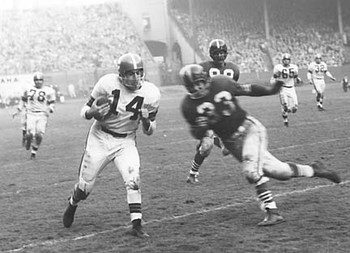
Hardy Getting Ready To Hit Otto Graham


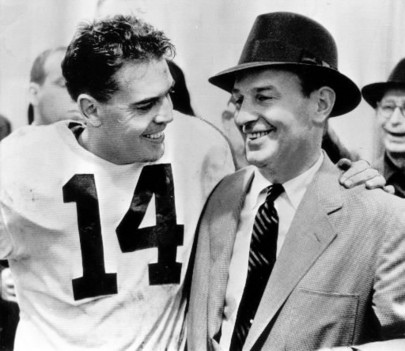
Otto After The Game


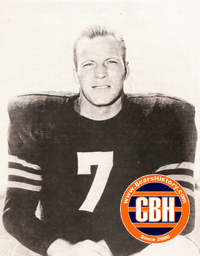
Ed "The Claw" Sprinkle

Sprinkle was signed as an undrafted free agent by Chicago in 1944 because Hall of Fame Bears center Clyde "Bulldog" Turner recommended him to owner/ coach George Halas. Turner had attended the same college, Hardin-Simmons, as Sprinkle and was familiar with him.

He was brought along slowly initially to gain weight and muscle, but it became quite apparent that Sprinkle excelled on defense. His was called "The Claw" because of his ability to shed blockers with his strong left arm from his right defensive end position.

Bears would end up winning the 1946 NFL championship by defeating the New York Giants 24-14. In 1950, he attained a Pro Bowl nod. He would return to the Pro Bowl in each of the next three years.

By the time he retired after the 1955 season, he had a career where he played with some of the greatest players in NFL history. Men like Turner, Bill George, Sid Luckman, George Connor, Doug Atkins, and George Blanda played defense with him and are all members of the Pro Football Hall of Fame.

Sprinkle was dubbed "The Meanest Man in Pro Football" in his playing days. He used his left arm in ways that opponents accused him of dirty play, especially after the whistle had sounded to halt the action. There are also those who say he used his cleats to stomp on the opposition.

He disputed these claims in an interview, saying that he was about as aggressive as any other player in the league and that he would have faced retribution if he was a dirty player. He was never fined nor suspended for any of his actions on the field.

"A guy wouldn't have lasted long in those days playing dirty.", he said. "The others would take care of him. They would call a play and try to bury him with six or eight guys, or blindside him. There were so many ways to do it."

Halas often said that not only was Sprinkle the greatest pass rusher he ever saw play, but that he was the roughest player the Bears ever had. He probably would have went to more Pro Bowls if defensive ability was more recognized then, but the honor often went to pass catching ends until later in his career.

His owner, teammates, coaches, and Bears fans loved and admired him. Though "The Claw" might be most renowned for his rough and tumble style of play, there are many Bears historians that agree with Halas that Ed Sprinkle was the greatest pass rushing defensive end to ever wear their jersey.


Dick Butkus

The Chicago Bears had the great fortune of drafting two Hall of Famers in the first round of the 1965 draft. They snagged Butkus with the third pick overall, then running back Gale Sayers with the next selection.

Butkus started right away at middle linebacker and instantly became a star. After getting a career best five interceptions, he was named to the first of his eight straight Pro Bowls. He was known for having the brute strength to cause opponents to fumble, and he pounced on a then-NFL record 27 balls over his career.

The NFL also feared his hitting abilities and intelligence. Sports Illustrated dubbed him "The Most Feared Man in the Game" in 1970 after he won his second straight Defensive Player of the Year Award. His desire and athleticism was legendary.

Butkus' knees began to fail him as his career went on, so he retired after 1973. He filed a lawsuit against the team for pushing pain killing pills on him so he would suit up and fill seats for more money. Since then, he has actively campaigned for sports to be played clean without the use of drugs like steroids.

He is a member of the NFL's 1960's and 1970's All-Decade Teams, the 75th Anniversary Team, and both the Pro Football and College Football Halls of Fame. His jersey has been retired by both the Bears and his Alma mater Illinois University.

Few men struck fear in the hearts of opponents like Butkus. The NFL Network named him the most feared player to ever play the game, and it is a justified honor. No linebacker has ever roamed the gridiron like him.


Jack Tatum

Tatum was a first round draft pick of the Oakland Raiders in 1971. He was the 19th player picked overall. He went to college at Ohio State University. Two legends there would help change his path. Woody Hayes was planning to use Tatum as a running back when his assistant coach, Lou Holtz, persuaded Hayes to move Tatum into the defensive safety position.

In his first game as a Buckeye, Tatum knocked the opposing teams starting tight end and running back out of the game. He was All-Big Ten from his sophomore year until his senior year, and was a two-time All-American. He helped Ohio State get to two National Championship games in his collegiate career, winning once. Ohio State lost just two games in his three seasons playing.

His legend at Ohio State is so everlasting that current Ohio State head coach Jim Tressel instituted a "Jack Tatum Hit of the Week Award," given to the player who had the most impressive defensive hit of the game.

Tatum made an immediate impact upon his arrival in the NFL. One game, he knocked out two Baltimore Colts from the game. Hall of Fame Tight End John Mackey was one of the players. He also once sent Hall of Fame wide receiver Lynn Swann to the hospital after a hit.

Tatum was one of the most feared and respected free safeties in the NFL. He was named to his first Pro Bowl squad in 1973, and would go on to be named to the Pro Bowl team each season until 1977. He was a key ingredient to the Raiders team that would go on to win Super Bowl XI.

Tatum would then be traded to the Houston Oilers prior to the 1980 season, and responded by intercepting a career high seven interception for 100 yards despite not starting one game. He helped the Oilers win the AFC Central Division Championship.

Houston, coincidentally, would then lose to the Wild Card Oakland Raiders in the first round of the playoffs. Tatum retired after that game. No matter how one looks at him, Tatum is part of some of some of the most memorable moments in the NFL's history.

The famous "Immaculate Reception", at the end of a playoff game in 1972, started when Tatum laid out Pittsburgh's John Fuqua. Most fans recall Hall of Fame running back Franco Harris gathering the caromed ball and running it in for a game winning touchdown. In Super Bowl XI, Vikings wide receiver Sammy White was leveled by Tatum on a crossing pattern, but the Viking held onto the ball.

During a 1978 preseason game, he hit New England Wide Receiver Darryl Stingley in a play that would paralyze Stingley for life. Tatum happened to play on a team that was called the "Bad Boys" of the 1970's NFL. It was a unique roster full of characters.

Tatum was nicknamed the "Assassin" due to his hard hitting ability. The hit on Stingley, coupled with the Raiders already established reputation, gave Jack an unfair label of being a dirty player. He was vilified by casual observers, and anti-Raider media types after this play.

Tatum once said, “I always wanted to hit someone hard, and if they got hurt, that was just part of the game. But you always wanted them to be okay.” He admitted his hitting prowess "borderlines on felonious assault."

"They said on ESPN that I hit Stingley in the back and that's just a lie," Tatum said. "It's amazing to me that they lie like that when they can just look at the hit. They have it on tape." As you can see in the picture, the hit was clean". Even then-Patriots head coach Chuck Fairbanks said the hit was far from dirty.

The "Assassin" may have hit guys hard, but that is the way the game was played then. Jack Tatum played within the rules. He was not flagged nor fined for his hit on Stingley, though the play was the catalyst for changing the ten yard chuck rule to the current five yard rule.


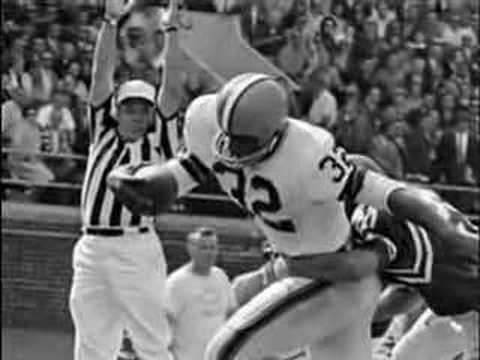
Jim Brown

When the Cleveland Browns drafted Jim Brown in the first round of the 1957 draft, with the sixth overall selection, they were getting possibly the greatest football and lacrosse player in the history of Syracuse University and collegiate sports.

He was put in as a starter immediately and led the NFL in rushing yards and touchdowns, yards rushing per game, and rushing and receiving touchdowns as a rookie. He was named to the Pro Bowl, an honor he would accrue every year that he played.

In his nine years with the NFL, he led the league in rushing yards eight times. He led the NFL in yards rushing per game eight times, rushing touchdowns five times, carries six times, yards from scrimmage six times, and rushing and receiving touchdowns six times. There has never been a player in the history of any sport who has so thoroughly dominated a professional sport for as long a time.

To intensify the target that was on his back already for being the best player in the NFL, he had to deal with the prevalent bigotry that ran rampant in society at the time. He dealt with anger over the color of his skin, which was intensified due to the fact he was a handsome, educated man who refused to succumb to being bullied.

Always as quick and strong with his mind as he was with his body, one game an opposing player yelled an expletive at him and claimed "You stink Brown!" He walked back to the huddle, asked for the ball, then proceeded to score. Brown then asked "How do I smell from here?"

He retired after nine years as the NFL rushing king in yards for a season and career, rushing and total touchdowns in a career, and still holds the records for having run for four touchdowns in a game six times and leading the league in all-purpose yards five times.

Not only is Brown a member of the NFL's 1960's All-Decade Team and 75th Anniversary Team, but he also a three time NFL MVP, a three time Pro Bowl MVP, and a member of the Pro Football Hall of Fame.

The 1964 season saw Cleveland win the NFL Championship, the last the franchise has seen. Brown helped the team secure the title by running for 114 yards and helping Cleveland control the clock will ball possession.

When he shocked the sports world by retiring at age 29, an age many consider to be the prime years of an athlete, he went into acting and starred in several films. Much as he broke barriers on the gridiron, he did the same in Hollywood. Yet, through all the fame, he always worked to help those less fortunate in society.

Jim Brown was truly scary each time he was handed the ball. He would outrun opponents while carrying a few on his back. A man amongst boys and most likely the greatest human being to ever step foot on an NFL field. He is also an American hero.


Joe Greene

The Pittsburgh Steelers used their first round pick in the 1969 draft, the fourth overall selection, to select the man they would call "Mean" Joe Greene. The reason for his nickname came from the fact he went to college at North Texas State, and their sports teams are called the "Mean Green".

Yet he lived up to the moniker instantly. He went to the Pro Bowl after being named Defensive Rookie of the Year on a Steelers team that won just once. He went to the Pro Bowl in nine of the next 10 years. The lone exception was in 1977, where he was named First Team All-Pro.

Greene did not like to lose, and his fiery disposition exuded this fact. He once spat in the face of Dick Butkus, challenging him to a brawl. He kicked a lineman lying on the ground, and swatted the ball away from the center as the opposition was lining up to run a play. He was frequently triple-teamed as the team struggled, but his desire was rubbing off on the entire Pittsburgh roster.

The Steelers went from perennial losers to the most dominate team in the 1970's, and Greene led the way. On a team stockpiled with stars now, he remained the main face of the franchise. The Steelers would have 12 Hall of Famers in the organization at this time, yet he was generally the first player mentioned above all

Pittsburgh won four Super Bowls under his leadership, as he led a legendary defensive unit simply called the "Steel Curtain". Four Hall of Famers patrolled this defense, though several fans believe there are others who should join them in Canton. It was a defense filled with 10 Pro Bowl players, yet perhaps none was more important than Greene. Pittsburgh's defense fed off of his abilities and leadership.

When he retired after the 1981 season, opposing teams were glad to see him go. He dominated them for 13 years, piling up an unofficial total of 78.5 sacks. He also was stellar versus the run, often swallowing up running backs no matter how many blockers were attempting to pester him.

"Mean" Joe was a total team player bent on winning. He would line up between the center and guard to take them out of the play so his teammates could have an easier time stopping the opponents. Something they did time and time again.

He is a member of the 1980's All-Decade Team and 75th Anniversary Team, as well as being twice named NFL Defensive Player of the Year. He is also a member of both the Pro Football and College Football Halls of Fame.


Randy White

When the Dallas Cowboys drafted White in the first round of the 1975 draft, the second pick overall, they didn't know what to do with him. He played on the defensive line at Maryland University, winning virtually every award possible, but his blend of speed, intelligence, strength, and athleticism had the Cowboys think he would make an excellent middle linebacker who would one day supplant aging great Lee Roy Jordan.

He spent his first two years as a reserve and special teams performer, as Bob Bruenig passed him on the depth chart and became the starter when Jordan retired. Dallas then moved White to defensive tackle, a move that paid off in legendary proportions.

He made the Pro Bowl in his first year at the position as the Cowboys would go on to win in Super Bowl XII. He was dominate in the game, and was named the co-MVP along with his defensive linemate Harvey Martin.

The next eight years saw him return to the Pro Bowl. He was unblockable and even played through injury. He missed two games in his 14 year career. There were Cowboy fans debating if he or Hall of Famer Bob Lilly was the best defensive tackle in team history. Lilly had long been recognized as one of the best the NFL ever saw, so White's abilities were truly recognized and admired.

Though he was officially recognized with 52 career sacks, the Cowboys kept this stat through his career and credit him with 111 total. But he was much more than an amazing pass rusher from inside the pocket, he also was equally adept at stopping the run. He finished his career with an astronomical 1,104 tackles, including an amazing 701 solo tackles.

Not only is White a member of the NFL 1980's All-Decade Team, but he is a member of both the Pro Football and College Football Halls of Fame. He was known as the "Manster" because opponents swore he was half man and half monster. He terrorized and struck fear into other teams hearts each time he took the field.


Reggie White

White was not drafted in 1983 by the NFL despite having been named the SEC Player of the Year and All-American in his senior season at the University of Tennessee. He instead joined the Memphis Showboats of the fledgling United States Football League.

He played 36 games over two years for them, and racked up 23.5 sacks. The USFL folded after 1984, and the Philadelphia Eagles made White their first draft choice in the 1984 Supplemental Draft. He had 13 sacks in 13 games for the Eagles in 1985.

He became a huge star the next year, making the first of 13 consecutive Pro Bowls. He had a whopping 57 sacks between 1986 - 1988, including 21 in just 12 games in 1987. Though Philadelphia had one of the better defenses in the league when White was there, they were unable to reach any Super Bowls.

He became a free agent in 1993, so he joined the Green Bay Packers. His leadership and skills were crucial in helping the Packers reach consecutive Super Bowls, where they won once. He stayed with the Packers until retiring after 1998.

The Carolina Panthers coaxed him out of retirement in 2000, and he had a career low 5.5 sacks. It was the only season of his career he failed to reach the Pro Bowl. He then retired with a then-NFL record 198 sacks in 232 games played.

Not only was he a great pass rusher, but he was equally excellent against the rush. Hew had an amazing 1,048 tackles, including four years of 100 tackles or more. He had a "hump" and "swim" move that blockers could not stop him from using, and he was rarely blocked out of a play.

He is a member of the NFL's 1980's and 1990's All-Decade Teams, as well as the 75th Anniversary Team and USFL All-Time Team. He won the NFL Defensive Player of the Year Award twice and the NFC Defensive Player of the Year Award three times. His jersey has been retired by both the Eagles and Packers, and he is a member of both teams Halls of Fame as well as the Pro Football and College Football Halls of Fame.

White was called the "Minister of Defense" because he was an ordained minister. Though a gentle soul off the field, he was a scary sight on it. Teams weekly concocted game plans to stop him, but failed.


Dick "Night Train" Lane

The story of the Night Train is proof why the NFL should never shorten training camp and preseason. Found as an abandoned infant, he graduated from high school then went to junior college for one year before joining the Army. After his discharge, he got a job as a factory worker and disliked it. He then showed up at the training camp of the Los Angeles Rams asking for a tryout in 1952.

He initially tried out as a wide receiver, but was moved to cornerback because the Rams had two Hall of Famers already there in Tom Fears and Elroy "Crazy Legs" Hirsch. Lane made the team and quickly earned a starting job. He picked off an NFL record 14 passes in just 12 games during his rookie year, returned them for a league leading 298 yards, still the sixth most in NFL history, and scored twice. He even recorded a safety on a tackle, yet somehow was not named a Pro Bowler.

The Rams traded him to the Chicago Cardinals in 1954 and he responded with his first of three consecutive Pro Bowl season by leading the league with 10 interceptions for 181 yards. After two more Pro Bowl years, including one season in 1958 where he caught a 98 yard touchdown pass, he was traded to the Detroit Lions in 1960 and made the Pro Bowl three straight years.

He was part of an elite defense that had three Hall of Famers in the secondary with Lane, Yale Lary, and Dick LeBeau. The defensive line was called the "Fearsome Foursome", led by Roger Brown and Alex Karras and Hall of Fame middle linebacker Joe Schmidt. Though the Lions never won a championship, there were few defenses ever as good.


When he retired after 1965, he had 61 interceptions for 1,207 yards and seven total touchdowns with his safety. His 1,207 interception return yards still ranks as the sixth most ever in NFL history. The NFL named him the top cornerback in their first 50 years of existence, and he is on their 75th Anniversary Team and 1950's All-Decade Team.

What made Lane stand out even more than his propensity to acquire the ball, and go long distances with it, was his hitting ability. He often knocked players out of games, and his favorite move was dubbed the "Night Train Necktie". It was a move where he would lasso a receiver around the head and shoulders, crashing him hard into the turf.

Few cornerbacks have ever hit as hard or covered a receiver as well as "Night Train" Lane. He may not only be the scariest cornerback in the history of football, but also the most complete and best overall.


Deacon Jones

Jones was drafted in the 14th round of the 1961 NFL Draft by the Los Angeles Rams, the 186th player picked overall. Amazingly, the American Football League chose not to take a flier on him.

He earned a starting job right away, was named the teams Rookie of the Year, and made the first of seven consecutive Pro Bowls by 1964. The Rams had stockpiled defenders like Hall of Famer Merlin Olsen along with Pro Bowlers like Rosey Grier, Jack Pardee, Eddie Meador, Lamar Lundy, Maxie Baughan, Irv Cross, Myron Pottios, Coy Bacon, Roger Brown, and Hall of Famer Bill George over this time.

The "Fearsome Foursome" was born in Los Angeles, and the group was very popular with the fans and media. Jones was called the "Secretary of Defense", and was named the "Most Valuable Ram of All Time"by the Los Angeles Times newspaper. Hall of Fame coach George Allen said Jones was the "Greatest Defensive End of Modern Football".

He left the Rams after 1971 and joined the San Diego Chargers. He was named to his final Pro Bowl in 1972, then reunited with Allen as a member of the Washington Redskins in 1974 before retiring. Sacks were not recorded in his era, but several teams recorded the stat anyways for fun. Jones is said to have recorded 50 over two years, including 26 in 1967. Both would be records if recognized. One source claims he had 173.5 over his career, while others claim that number to far exceed 200.

It was Jones himself who coined the phrase "sack" , when it came to tackling the quarterback attempting a pass. His toughness is legendary, having missed just six games in his 14 seasons. He was named NFL Defensive Player of the Year twice. He also is a member of the NFL's 1960's All-Decade Team and 75th Anniversary Team, along with being a member of the Pro Football Hall of Fame.

No other defensive end is said to be more important to the position than Deacon Jones. Blessed with long arms, his favorite pass rush move was the "head slap" technique. Opponents said it felt like Jones was slapping their brains out of their earholes with the move because he was so strong and had pinpoint accuracy.

The Rams have retired his jersey, but not his memories. There may be no tougher or scarier defensive end in the history than David "Deacon" Jones.


Lawrence Taylor

The New York Giants drafted Taylor in the first round of the 1981 draft, where he was the second player chosen overall. The Giants immediately started him at right outside linebacker, a position he would spend most of his career at, and he rewarded them by being named the NFL Defensive Player of the Year and NFL Defensive Rookie of the Year. He is the only player to have accomplished this feat. He also was named to the first of his ten consecutive Pro Bowl nods.

The NFL began to officially record quarterback sacks as a statistic in 1982, and Taylor stood out even more as he won his second straight NFL Defensive Player of the Year Award . He would pile up 142 over his 13 seasons. He led the NFL with 20.5 in 1986, winning the NFL Defensive Player of the Year Award for a record third time as the Giants would go on to win Super Bowl XXI.

The 1990 season was his last as a Pro Bowler, yet he helped the Giants win Super Bowl XXV. He retired after the 1993 season and is a member of the NFL's 1980's All-Decade Team and their 75th Anniversary Team. The Giants also retired his jersey.

While some fans recall how Taylor broke the leg of Washington Redskins quarterback Joe Thiesmann during a nationally televised game in 1985, it is not the play that capsules his career. Teams best remember him for knowing he was coming hard off the edge, but were hardly ever able to stop him. His speed, strength, and athleticism were unusual and unmatched.

His abilities opened things up for the rest of an excellent Giants defense that won two championships and were in serious contention for several others. Many pundits think he is the greatest defensive player to have ever played, and he certainly was one of the most feared.


Ronnie Lott

When the San Francisco 49ers drafted Lott in the first round of the 1981 draft, the eoghth pick overall, they put him at cornerback. He stood out immediately, going to the first of ten straight Pro Bowls after getting seven interceptions and a league leading three touchdowns that helped the 49ers win Super Bowl XVI.

After 17 interceptions and four scores and another Super Bowl win over four years, he shifted to free safety midway in the 1985 season. The move initially didn't go well, because he had to have the tip of his left pinkie finger amputated after a tackle. He stayed at free safety however.

He led the NFL with ten interceptions in 1986 despite missing two games. San Francisco would go on to win both Super Bowl XXIII and XXIV with Lott creating turnovers and crushing opponents with bone jarring hits.

He departed the 49ers to join the Los Angeles Raiders in 1991, and led the NFL with eight interceptions playing the strong safety for the first time. He stayed with them until 1993, then played two seasons at free safety for the New York Jets before retiring after the conclusion of the 1994 season.

He is a member of the NFL's 1980's and 1990's All-Decade Teams, the 75th Anniversary Team, as well as both the Pro Football and College Football Halls of Fame.

When you see how Lott got 1,113 tackles, 61 interceptions, 17 fumble recoveries, and five touchdowns over his 14 seasons, you see a productive player. Yet it does not tell his true worth. His hitting prowess changed games and game plans because he was so feared.


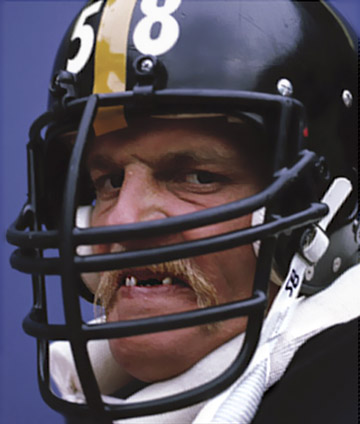
Jack Lambert

Lambert was drafted in the second round of the 1974 draft by the Pittsburgh Steelers, the 46th player chosen overall. He earned the starting job at middle linebacker right away and won the NFL Defensive Rookie of the Year Award as the Steelers won Super Bowl IX..

His second season saw him get the first of nine straight Pro Bowl nods. He recovered a career high eight fumbles in his third year, tied as the second most ever by a defensive player. He was not only an established star in the league, but he was also a well reknowned leader.

His leadership really shone in 1976, when the Steelers started the year at 1-4 after several injuries to key players. Lambert held a players only meeting and put the onus on the defense to lead the team. Pittsburgh's defense responded by sending eight players to the Pro Bowl after pitching five shutouts over the next nine games, and only 28 points over the course of the other four games.

He was named NFL Defensive Player of the Year and was a member of four Super Bowl winning Steelers teams in his career. He is a member of both the NFL's 1970's and 1980's All-Decade Teams as well as the 75th Anniversary Team. He is also a member of the Pro Football Hall of Fame.

Few fans who saw Lambert play will ever forget his determination, leadership, intelligence, and relentless motor. What they also will not forget is his toothless snarl that struck fear in the opposition each play, a look that made "Count Dracula in Cleats" become an indelible image of the league for eternity.


Johnny Sample

Sample was drafted by the Baltimore Colts in the seventh round of the 1958 draft, where he was the 79th player chosen overall. Though he played sparingly as a rookie, he was on the field as the Colts defeated the New York Giants in the 1958 NFL Championship, which is called "The Greatest Game Ever Played".

He then began to start at free safety and return kicks by his second year. Baltimore traded him to the Pittsburgh Steelers in 1961, and he led the NFL in punt returns, punt return yards gained, and had a career best eight interceptions his first year with the Steelers, who had moved him to cornerback.

After an injury plagued 1962, he joined the Washington Redskins the next year for two games. He stayed with the team until 1965, before jumping to the American Football League to play with the New York Jets. The Jets would go on to win the 1968 AFL Championship, then Super Bowl III, where Sample picked off a pass. He retired after the game

Though he is the only person to ever win a Super Bowl as well as an NFL and AFL Championship, people tend to forget he snagged 41 interceptions and scored six times in his 11 seasons because of the style of play he had on the field.

He was known as a hard hitter who was dirty to some. He even wrote a book called "Confessions of a Dirty Ballplayer" in 1970 before becoming a famous professional tennis umpire. Homer Jones, a Pro Bowl receiver for the New York Giants who invented the spike and has the NFL record for career average of yards per catch, said Sample laid out the biggest hit he ever saw at the expense of his teammate Del Shofner.

Shofner was a well respected receiver with five Pro Bowls under his belt when he caught a pass and was headed towards the sidelines. Sample came from out of nowhere and laid a hit so ferocious that it knocked Shofner out and caused both teams benches to empty into a brawl.

The NFL's director of football operations is Gene Washington, a former Pro Bowl receiver. He said, "I played against Sample, and nobody today plays the way he did. Playing on the line or over the line, as it relates to dirty tactics, there is not an equal."

Whether he got into an opponents psyche or body, there where few defensive backs as feared as Johnny Sample.


Larry Csonka

Csonka was drafted by the Miami Dolphins in the first round of the 1968 draft, where he was the eighth player chosen overall. He had attended Syracuse University, where he had broken many school rushing records that were set by such legends like Jim Brown, Ernie Davis, and Floyd Little.

He had almost never became a running back. He was playing defensive end in high school when he filled in on the kickoff team in his sophomore year on the last game of the season. He got his hands on the ball and loved it. After pleading to his coaches to play fullback for a long period of time, he was given an opportunity and immediately stood out from then on.

Miami brought him along slowly his first two seasons, handing the ball off to him just under ten times a game because he suffered two concussions so severe that his career was in jeopardy. They increased his workload his third season and the team improved as Csonka made the first of his five consecutive Pro Bowls.

He never missed a game over a four year span that saw him regularly run over defenders on each play. He was a nightmare trying to tackle, and he would often deliver a more forceful impact than the opposition could deliver. To make matters worse, he rarely fumbled and was an outstanding blocker.

He was called a "movable weight" by one defender, who lamented the strength in Csonka's legs. He also was extremely tough, having played through at least ten broken noses in his gridiron career. Monte Clark, a assistant coach on Miami, once said "When Csonka goes on safari, the lions roll up their windows."

"Zonk" became famous as the offensive leader on Dolphin teams that appeared in three Super Bowls in the first half of the 1970's, winning two. He was named MVP of Super Bowl VIII. His story was on books and magazines constantly, and was named 1973 Super Athlete of the Year by the Professional Football Writers Association.

With all of his successes, he was significantly underpaid. The World Football League was starting up in 1974, so Csonka left the Miami Dolphins for the Memphis Southmen for a more lucrative contract. He stayed there until the WFL folded midway into their second year.

He joined the New York Giants in 1976, and was part of a memorable play two years later most call "The Miracle at the Meadowlands". With the Giants leading the Philadelphia Eagles by five with 31 seconds left on the game clock, the New York offensive coordinator instructed the quarterback to hand off the ball to Csonka instead of kneel down. The rest of the team was expecting the quarterback to kneel, but he attempted to hand it to Csonka while juggling the ball. The ball bounced around until Philadelphia scooped up the ball and ran it in for a winning score.

He returned to Miami in 1978 and scored a career high 13 times and was named the NFL Comeback Player of the Year. He asked for an increase in pay, but was denied so he retired. He is a member of the Pro Football, College Football, and Miami Dolphins Halls of Fame.

The images of a bloodied "Zonk" glaring into a hole just before he ran over three defenders is permanently etched in the memories of every football fan that got to see him play. There were few as tough, sturdy, or strong to ever carry the football.


Conrad Dobler

Dobler was drafted in the fifth round of the 1972 draft by the Saint Louis Cardinals, the 110th player chosen overall. He joined a team filled with great blockers who all would go to the Pro Bowl in their careers. Men like Hall of Famer Dan Dierdorf, Bob Young, Ernie McMillan, Tom Banks and Hall of Fame tight end Jackie Smith played along the line with him.

He started right away at left guard, but was moved to the right side in his second year. A position he would stay at the rest of his career, and he stood out immediately. Known for his surly demeanor on the field, Dobler would do whatever it took to keep the opposition away from his teams high powered offense.

Though he was called "Pro Football's Dirtiest Player", he was also excellent and respected. He was named to the Pro Bowl for three straight years from 1975-1977. Whether he was seen punching Hall of Famer "Mean" Joe Greene, kicking Hall of Famer Merlin Olsen in the head, or spitting on an injured player, Dobler was a character you loved to have on your team or hate the fact that he wasn't.

What made him so scary was his unpredictable nature. He was as apt to punch you or dive into your knees on any play. This style of play was also one with payback, but he was so tough that he played through multiple injuries. The Cardinals traded him to New Orleans in 1978, who then traded him to the Buffalo Bills in 1980 before he retired after 1981.

He now is 90% disabled after several surgeries to try to fix a body that both gave out and was dealt severe punishment. He has had nine knee replacement surgeries alone so far, causing financial hardship seen with many players of his era because of how they are disregarded by the NFL and NFLPA.


Bronko Nagurski

Bronko joined the Chicago Bears after a legendary collegiate career with the University of Minnesota. He once scored a touchdown and intercepted a pass while playing with cracked vertebrae.

At 6'2" 226, he was one of the largest running backs of his era. His strength carrying the ball was legendary. He ran over four players while playing in Wrigley Field, then smashed against the brick wall after scoring. "That last guy hit me awfully hard." was his response.

He got hurt carrying the ball, so the Bears used his blocking prowess by inserting him at offensive tackle. He was a All-Pro player at fullback, defensive tackle, and offensive tackle, making him the only player ever to be named to the All-Pro at three different positions.

Nagurski was also a professional wrestler when he wasn't playing football. He did it to supplement his income, because NFL players were paid little in his era. He won three world championships as a wrestler.

Nagurski is considered one of the greatest defensive tackles in college football history. Not only is there an annual award named after him that goes to the top defender in college football, but he is a member of the College Football Hall of Fame and the starting defensive tackle on Sports Illustrated's NCAA Football All-Century Team. He is also an charter member of the Pro Football Hall of Fame, a member of the 1930's All-Decade Team and NFL 75th Anniversary Team.

As a professional player, he was truly feared on both sides of the ball. Whether he was carrying it, blocking, or tackling, Nagurski made a huge impact. He retired after 1937, but returned in 1943 to help Chicago win a championship by scoring a touchdown in the title game. The Bears retired two of the numbers he wore.

When Hall of Famers like Jim Brown, Marion Motley, John Riggins, Earl Campbell, and Larry Csonka were seen dragging around defenders into the end zone, history must pay tribute to the man who did it first. Bronko Nagurski was a winner who scared opponents each time he stepped on the gridiron.

Tuesday, August 18, 2009

The ALMOST All-Time San Francisco 49ers Defense

Defensive Tackle : Cleveland Elam

Cleveland was drafted in the fourth round by the Niners in 1975, the 85th player chosen overall.

Elam soon found himself starting in his rookie season, and quickly established himself as one of the best in the league.

He was honored with his first Pro Bowl appearance in 1976, as he scooped up a fumble and went 69 yards for the only touchdown of his career.

The 1977 season was his best. He went back to the Pro Bowl, and was named First Team All-Pro.

Elam had his knee severely injured in his fourth season, and was only able to start in four of the twelve games he played in.

He joined the Detroit Lions for the 1978 season, but retired after playing eight games. His knee was giving him too much trouble.

Ed White, the legendary offensive guard, said Hall of Fame defensive tackle Bob Lilly was the best player he ever faced, but also said Elam was just as good when healthy.

Remember, White faced Hall of Famers Alan Page, Carl Eller, and Fred Dean, as well as Jim Marshall, Gary Johnson and Louie Kelcher, in practice every day for years.

This is high praise for a man who knows greatness first hand.


Defensive Tackle : Bryant Young

Bryant was the 49ers first round draft choice in 1994, the seventh player chosen overall.

He was named a starter immediately, and started in every game he played during his 14-year career with San Francisco.

His rookie season saw him get six sacks, as the 49ers went on to win Super Bowl XXIX.

Young missed four games the next season, but had another six sacks.

The 1996 season was the best of his career. He had 61 tackles, 11.5 sacks, and two safeties. All are career high marks.

He was named First Team All-Pro, and to his first Pro Bowl.

The next two seasons saw him miss four games each year, and get 13.5 sacks.

The Associated Press named him the 1999 Comeback Player Of The Year, when he had 11 sacks and a safety. He earned his second Pro Bowl trip as well.

After nine-and-a-half sacks the next season, Young went to the Pro Bowl in both 2001 and 2002. He had five-and-a-half sacks over that time.

Young got six-and-a-half sacks the next two seasons, then was moved to defensive end in 2005. He played there until 2007, and had 20 sacks. He then retired.

His three safeties tie him with Charlie Krueger for the most in franchise history, and his 89.5 sacks are officially recognized as the most in team history.

Bryant Young was an excellent pass rusher, and is one of the best defensive tackles in 49ers history.


Defensive End : Charlie Krueger

Charlie was the Niners' first draft pick in 1958, the ninth player chosen overall that season.

Though Krueger played over 12 seasons at DT, he played his first three years at DE.

In his first three years, he recorded a safety each season.

He made his first Pro Bowl in his second season in 1960, and was moved to defensive tackle permanently in 1962.

Krueger returned to the Pro Bowl in 1964, a year after he missed half the season due to an injury.

He would only miss one game the rest of his career after that.

Krueger was named an All-Pro twice more in 1965 and 1970.

The 1965 season saw him score the only touchdown of his career, when he returned a fumble recovery for six yards.

He also intercepted the only pass of his career in 1969.

His younger brother, Rolf, was a defensive tackle who joined the 49ers in 1972 after having played three years for the Saint Louis Cardinals.

Rolf wore number 70 in Saint Louis, but switched to number 78 because his older brother had that jersey number already.

The brothers both played the same position, so Rolf backed up Charlie until 1973.

Charlie retired after that season, and is easily the greatest defensive linemen in 49ers history.

His three safeties tie him with Bryant Young for the most in franchise history.

Charlie Krueger's number 70 has been retired by the Niners.


Defensive End : Cedric Hardman


Cedric was the Niners' first round draft pick in 1970, the ninth player chosen overall.

He soon earned a starting job, and earned a Pro Bowl nod in his second season.

In 1973, he recorded a safety.

Hardman was one of the better defensive ends of his era, and he would go back to the Pro Bowl for the final time in his career after the 1975 season.

After the 1979 season, he joined the Oakland Raiders.

Used as a pass rush specialist, he had 24 sacks in the two years he played with them.

The Raiders would win Super Bowl XV in the 1980 season.

In 1981, he snatched up a fumble and scooted 52 yards for the only touchdown of his career. He also recorded the last safety of his career.

He then retired.

The United States Football League was formed in 1982, and their Oakland Invaders franchise made Hardman the first player they ever signed.

He played with them in their inaugural 1983 season as a player/coach, then retired for good.

Hardman is also a noted actor who has appeared in such movies like Stir Crazy and House Party.

In Cedric Hardman's 10 seasons with the 49ers, he recorded 106.5 sacks. It is the most in franchise history, though the NFL did not officially recognize sacks as a statistic during Hardman's playing career.

He might be the greatest defensive end in franchise history.

Tommy Hart deserves mentioning.


Outside Linebacker : Charles Haley


Charles was drafted in the fourth round of the 1986 draft by San Francisco, the 96th player chosen overall.

He only started in three games in his first two seasons with the 49ers, primarily used as a pass rusher. He did swipe the first of his two career interceptions as a rookie, along with 12 sacks. He had six-and-a-half sacks the next year.

Haley was named a starter in 1988, and responded with his first Pro Bowl season. He had 11.5 sacks, and recorded the only safety of his career. The 49ers would go on to win Super Bowl XXIII that year.

San Francisco repeated as champions the next year. Haley had 10.5 sacks and scored the only touchdown of his career off of a fumble recovery.

He had the best year of his career in 1990, after getting a career best 16 sacks. He was named to the First Team All-NFL Team, as well as the Pro Bowl.

Haley made the Pro Bowl again the next year, after having seven sacks. He had confrontations with head coach George Seifert and quarterback Steve Young that season, so San Francisco traded Haley to the Dallas Cowboys after the season.

Dallas moved him to defensive end, and he had 10 sacks over the next two years. The Cowboys would win the Super Bowl each season.

The 1994 season was the best year Haley ever had in Dallas. He had 12.5 sacks and the last interception of his career. Haley made the Pro Bowl and was named First Team All-Pro.

Haley made his last Pro Bowl the next year, after getting 10.5 sacks in the 13 games he played. The Cowboys would go on to win Super Bowl XXX.

He got injured in the fifth game on 1996, getting a career low one sack. He then retired from the game.

San Francisco lured him out of retirement in 1998 to help them in the playoffs. Haley decided to play the 1999 season, and had three sacks as a reserve player. He then retired.

Haley is the only player in NFL history to be a member of five Super Bowl winning teams.

His three Pro Bowl appearances are the second most by any linebacker in franchise history, and his 66.5 quarterback sacks are the second most in team history.

Charles Haley was a excellent pass rushing linebacker, and his place in Niners history is one to recognize.

Skip Vanderbundt, Keena Turner, and Lee Woodall deserve mention.


Middle Linebacker : Hardy Brown


This is a personal choice.

Hardy came up the hard way. He grew up in an orphanage after witnessing his father murdered when he was four.

After attending college at both Southern Methodist University and Tulsa University, the New York Giants drafted him in the 12th round of the 1947 NFL Draft. He was the 104th player chosen overall.

Brown opted to join the Army instead, and stayed in the service until 1948.

He then decided to join the Brooklyn Dodgers of the All American Football Conference that season.

This was the only year he was used as the primary kicker on a team. He made 25 of 29 extra point attempts, and missed the only field goal attempt of his career.

Brown also scored the only two offensive touchdowns of his career. He ran for one off of six attempts, and caught one off of three receptions.

He intercepted the first pass of his career that season as well.

Brown then joined the Chicago Hornets of the AAFC the next season.

He did catch one 10-yard pass, as well as punt 10 times for 397 yards. Brown also had a career high three interceptions.

Brown then went to the NFL in 1950, when he signed with the Washington Redskins. He lasted eight games with the team, before joining the Baltimore Colts for four games.

While with the Colts, he missed the last extra point attempt of his career and picked off a pass.

The Colts went defunct at the end of the year, so Brown joined the 49ers and was put in at MLB for the 1951 season.

Brown knocked out 21 players from games in 1951 alone. One game, he knocked the opponents entire backfield out of action.

He stayed with the team until 1955, and gained a reputation for being one of the hardest hitters in the league. He was nicknamed "Thumper" and "The Hatchet" by all.

The 49ers coach, Buck Shaw, banned Hardy from team practices, fearing he would lose players. Hardy Brown is the only man in NFL history to be banned from his own team practices without committing a transgression.

Brown had a technique where he would wind up his shoulder, and had sent players flying backwards as much as 10 yards from his impact.

He also almost took the eye out of Joe Geri, a Pittsburgh Steelers running back, in 1951. He fractured the face of one player, and crushed the vertebrae of another.

He was named to his lone Pro Bowl Team in 1952 as the MLB position. He then would play both of the other linebacker positions his last two years with the team.

Brown did punt the ball for the last 10 times of his career in 1954, totaling 384 yards. He also matched his career best of three interceptions.

He took one of the interceptions for a 41 yard score, the last touchdown of his career.

During that season, the Detroit Lions Gil "Wild Horse" Mains, a future professional wrestler, jumped into Brown's leg feet first. Brown needed 20 stitches, but refused to leave the game. He soon returned and broke the nose of running back Bill Bowman.

Brown moved on to the Chicago Cardinals for the 1956 season, and played eight games before retiring.

He was lulled out of retirement in 1960 to join the Denver Broncos in the newly formed American Football League, thus becoming one of just two men to have played football in the AAFC, NFL, and AFL.

Hardy Brown retired after that year, and is remembered as one of the most vicious defenders of his day. He destroyed numerous careers.

It is often said that he left a trail of broken bones in his wake. His exploits are documented in NFL Films in both their "Greatest Hits" film and their "San Francisco 49ers - The Complete History" film.

His childhood story is set to be told in the upcoming movie "Twelve Mighty Orphans".

Ken Norton deserves mention.


Hardy Getting Ready To Lay Out Otto Graham


Otto After The Game


Outside Linebacker : Matt Hazeltine

Matt was drafted in the fourth round of the 1955 NFL Draft by San Francisco, the 45th player chosen overall.

He soon found his way into the starting lineup, and intercepted the first pass of his career in 1956. He had a career best three interceptions that season as well.

Hazeltine scored the first touchdown of his career in 1958, after taking an interception in for a score.

He scored another touchdown the next year, after taking a fumble recovery for 42 yards.

The 1962 season was his first Pro Bowl year, an honor he would garner again in 1964.

After missing six games in 1965 because of injury, Hazeltine scored the last touchdown of his career off a fumble recovery in 1966.

He retired from the game in 1968, but decided to come back to the NFL in 1970 at 37 years old.

He joined the New York Giants for that season, and played every game. He also intercepted a pass.

He then retired from the game permanently.

His two touchdowns off fumble recoveries is tied with three others as the most in team history.

Hazeltine died of ALS in 1987, and is one of three 49ers from the 1964 squad to have lost their life to a disease most commonly known as Lou Gehrig's Disease.

Matt Hazeltine played 14 solid seasons in San Francisco, and is one of the best linebackers the team has ever had.

The 49ers have an award named after him. It is handed out annually to the 49er who demonstrates the most courage, and is the most inspirational player on defense.


Strong Safety : Tim McDonald


Tim was the second round draft choice of the Saint Louis Cardinals in 1987, the 34th player chosen overall.

McDonald played in just three games in his rookie season, the only year of his career where he did not create a turnover.

The Cardinals moved to Phoenix, Arizona, the next season, and McDonald had two interceptions and sacks in the 15 games he started.

He had a career high seven interceptions for 170 yards in 1989, and scored a touchdown. He also had a career high 155 tackles. McDonald went to the Pro Bowl.

After four interceptions the next season, McDonald returned to the Pro Bowl in 1991 and 1992 with the Cardinals. He had seven interceptions in those two years.

The 49ers then signed McDonald as a free agent for the 1993 season. He was a Pro Bowler his first three seasons with them.

The 1994 season saw San Francisco win Super Bowl XXIX, and McDonald scored two touchdowns that year. One was a career best 73-yard return off of one of his two interceptions, and the other was a 49-yard run on a fumble recovery.

McDonald scored a league leading two touchdowns off of four interceptions the next year.

He remained a consistent force and leader for the team from 1996 to 1999. He had 11 interceptions and seven sacks over that time. He retired after the 1999 season.

Tim McDonald only missed one game for the team in his seven years with them.

His three touchdowns off of interceptions is tied with three others as the most in franchise history.

Carlton Williamson and Tony Parrish deserve mention.


Free Safety : Dwight Hicks

Dwight was drafted by the Detroit Lions in the sixth round of the 1978 draft, and was the 150th player chosen overall.

He did not make the Lions squad, so he played that year with the Toronto Agronauts of the Canadian Football League.

Hicks signed with the 49ers for the 1979 season, and started in four of the seven games he played in.

He intercepted five passes, which led the team.

Now the starter, Hicks picked off four balls, which tied with Ricky Churchman for the team lead.

Hicks had his best season in 1981. He led the NFL with 239 return yards, which was on nine interceptions. He also scored a touchdown on a career long 72 yard return, and another on a 80 yard run off of a fumble recovery.

He went to the Pro Bowl, an honor he would achieve the next three seasons as well.

San Francisco went to Super Bowl XVI at the conclusion of the 1981 season, and Hicks was a big reason why they won over the Cincinnati Bengals 26-21.

The 49ers had just fumbled the opening kickoff, and the Bengals found themselves on San Francisco's five yard line. Hicks intercepted a pass and returned it 27 yards, which eventually led to a 49ers touchdown.

Hicks then had three interceptions in the strike shortened 1982 season.

He scored the last two touchdowns of his career, which led the NFL, on two interceptions the following year.

San Francisco would win Super Bowl XIX in 1984, as Hicks had three interceptions that season.

His last season with the 49ers would be 1985, and he even saw time at cornerback when injuries hit the secondary. He recorded his only official sack of his career, and swiped four balls.

Hicks joined the Indianapolis Colts for the 1986 season, and had two interceptions in the nine games he played. He then retired.

Dwight Hicks' four Pro Bowl games are tied with Merton Hanks as the most by any free safety in team history.

His three touchdowns off of interceptions is tied with three others as the most in franchise history.

Merton Hanks, Lowell Wagner, Dickie Moegul, Rex Barry, Dave Baker, Zack Bronson and Jim Cason all deserve mention.


Cornerback : Kermit Alexander


Kermit was the 49ers first round draft pick in 1963, the eighth player chosen overall.

He started right away at cornerback that year, and had five interceptions. He also returned 24 kickoffs at a career high 26.6 yards per return average.

San Francisco moved him to safety the next year, and he intercepted five more balls. He also led the league with five fumble recoveries, while returning 20 kickoffs. He also returned 21 punts, and took one a career long 70 yards for a touchdown.

The 1965 season saw Alexander lead the NFL with a career best eight fumble recoveries, 32 kickoff returns and 741 kickoff return yards. He also intercepted three passes and returned a career high 35 punts.

The 49ers moved him back to cornerback in 1966, and he responded with four interceptions and a touchdown off of one of his four fumble recoveries. Alexander also scored his last touchdown off a punt return, on 30 attempts, and returned a career best 37 kickoff returns.

He led the NFL with 1,182 kickoff and punt return yards, and matched his career best average of 26.6 yards per kickoff return. He also was second in the league with kickoff returns and kickoff return yardage.

Alexander only returned six punts and one kickoff in 1967, but he did manage to intercept five passes.

The best year of his career may have been 1968, the only season he would earn a Pro Bowl honor. He had a career best nine interceptions and 165 interception return yards. Alexander took one interception 66 yards for a touchdown as well.

It was also his last season used as the 49ers primary return specialist, with 24 punt returns and 20 kickoff returns. Some also may remember Alexander hit Gale Sayers that year, tearing Sayer's knee ligaments.

After intercepting five balls the next year, Alexander found himself on the Los Angeles Rams for the 1970 season. He would score a touchdown off of four interceptions.

The Rams then moved Alexander to strong safety the next season, and responded with three interceptions. He also scored the last touchdown of his career off of a career long 82 yards interception return.

He then joined the Philadelphia Eagles for the 1972 season, but was injured after seven games. It was the first year of his career he failed to create a turnover of any kind. After returning five punts and nine kickoffs the next year, he retired.

Alexander recovered 23 fumbles in his seven years with the Niners, the most in team history.

His 36 interceptions are the second most by any 49ers CB in franchise history, nine less than Hall of Famer Jimmie Johnson, and the third most interceptions overall by any 49er ever.

He is still fifth in team history in kickoff return yards, kickoff returns, and punt returns. His two punt return touchdowns is tied with five others as the most in team history.

Kermit Alexander is one of the most underrated defensive backs in NFL history, and he is certainly one of the best in San Francisco 49ers history.


Cornerback : Eric Wright

Eric was drafted in the second round by the Niners in 1981, the 40th player chosen overall.

He started right away, and intercepted three passes in his rookie year.

The 49ers won Super Bowl XVI that year, and Wright took a ball 25 yards off of an interception in the game.

After getting one pick in the strike shortened 1982 season, Wright had the best season of his career in 1983.

He had seven interceptions for 164 yards and two touchdowns. All were career high totals.

Wright was named to the UPI's All-Conference First Team.

He made his first Pro Bowl in 1984, after getting two interceptions.

The 49ers wound up winning Super Bowl XIX that season, and Wright had an interception in the game.

Wright's last Pro Bowl season was in 1985, when he had one interception. He was also named First Team All-Pro.

His next two years were injury plagued. He was able to suit up for just four games total, starting in three.

The 1988 season saw him bounce back. He started 10 of the 15 games he played, and had two interceptions.

He was used as a reserve the final two seasons of his career, starting one of the 20 games he appeared in. He intercepted two passes in 1989, and retired after the 1990 season.

For the first five years of his career, Eric Wright was a lockdown defender who was one of the best at his position in the NFC.

Don Griffin and Bruce Taylor deserve mention.


Kicker : Tommy Davis

Tommy was drafted by San Francisco in the 11th round of the 1957 NFL Draft. He was the 128th player chosen overall.

The 49ers used Davis as both their kicker and punter for the first eight years of his career.

He led the NFL with a 71 yard punt in his rookie season, and averaged 45.7 yards per punt on 59 attempts.

Davis had an NFL long punt of 74 yards the next season, and led the NFL in field goal attempts and field goals made.

He made his first Pro Bowl in 1963, after he led the NFL with a 45.6 yards per punt average, and a career best 82 yard punt.

Davis returned to the Pro Bowl the next year, his last, despite having the only two punts of his career blocked.

The 1965 season may have been his best. He had a career high 103 points, and a career best 45.8 yards per punt. He also led the NFL in extra points attempted and made.

After giving up his punting duties after 1966, Davis remained the 49ers kicker until he retired after the 1969 season. He also punted the ball 23 times in that final year.

His 350 extra point attempts and 348 conversions are the second most in team history, and his 99.4 percent success rate is the best by anyone with at least 105 attempts.

The 276 field goals he attempted in his career are the most ever in team history, and his 130 field goals made are the second most ever.

His 511 punts for 22,833 yards are the most in team history, though Andy Lee could pass those numbers in 2009.

His career average of 44.7 yards per punt is the best in team history by anyone with at least 20 attempts.

Davis' 82 yard punt is tied with Lee as the second longest in team history.

His two Pro Bowls are the most by any 49ers kicker, though he was named for both his kicking and punting prowess. Back then, only one kicking specialist made the Pro Bowl.

Tommy Davis is easily the greatest kicker and punter in 49ers history.

Ray Wersching, Mike Cofer, Joe Nedney, and Gordie Soltau deserve mention.


Punter : Tom Wittum

Tom was drafted by the Niners in the eighth round in 1972, the 200th player chosen overall.

His rookie season was his best. He averaged a career best 43.7 yards per punt on 77 attempts. He also ran one ball for a career long 63 yards.

He was named to the Pro Bowl that year, and would achieve that honor again the next season.

Wittum averaged 41.2 yards per punt that season. He also ran a ball 13 yards.

He caught the only two passes of his career in 1975, gaining 29 yards.

In 1976, Wittum attempted a career high 89 punts.

In 1977, he attempted three passes, and completed one for 15 yards. He also attempted two field goals, making one, and four extra points, making two.

He then retired from the NFL.

Wittum's 380 punts for 15,494 yards are the third most in team history. His nine kicks blocked are the most.

His two Pro Bowls are the most by any Niners punter.

He once punted a ball 64 yards in a Pro Bowl game, and it is tied as the longest ever. His nine punts in one Pro Bowl game is the second most ever.

Frankie Albert deserves mention.


Punt Returner : Dana McLemore

Dana was drafted in the 10th round of the 1982 draft by San Francisco, and was the 269th player chosen overall.

He rarely played in his rookie season, but he did take one of his seven punt returns for a career long 93 yard touchdown. He also returned 16 kickoffs.

McLemore returned 31 punts the next year, and returned one 56 yards for a score. He also returned a career high 30 kickoff returns.

He would return just 10 kickoffs for the rest of his career.

The 1984 season saw him return a 79 yard return for a touchdown off of a career high 45 attempts.

He also intercepted the first two passes of his career, returning one 54 yards for a score.

San Francisco would win Super Bowl XIX that season.

McLemore's 28 yard punt return in the second quarter set the table for the 49ers third touchdown of the game.

After returning 38 punts and intercepting a pass the next season, McLemore joined the New Orleans Saints for three games in 1986.

He returned 10 punts and two kickoffs before rejoining San Francisco for three games. He did not record a statistic with them.

The 1987 season would be his last in the NFL. He returned 21 punts, including one going for a 83 yard touchdown, and intercepted the last two passes of his career.

He then retired.

Dana McLemore's four punt return touchdowns are the most in team history.

John Taylor, Abe Woodson, Dexter Carter, Kermit Alexander, Hugh McElhenny, Bruce Taylor, and Freddie Soloman all deserve mention.