Showing posts with label Minnesota Vikings. Show all posts

Thursday, November 10, 2011

NFL 2011 Mid-Season Awards


Making predictions of an upcoming NFL season is basically akin to swinging a stick at a pinata blindfolded, yet without knowing if such a target truly exists. The reason of an educated guess can be leaned upon, yet there is no real science because too many unknown factors lurk in shadows set aside annually by the enemies of success.

Even with a 2011 season hurriedly smashed together after a players strike that killed much of the preseason, the league has gone on collecting the offerings of fans as this circus barks town to town. The actual play on the field may have degenerated some, but much of this stems from rules that were set out without much clear thought instilled.

As the NFL hits the midpoint of the 2011 season, there are already reasons to rejoice about the game. Some surprises have been peppered in with the unexpected and relied upon. As the pretend awards are passed out, on their way to the real ones in a few months, we look back at preseason predictions and compare them with the reality of here and now.


MVP : Aaron Rodgers, Quarterback, Green Bay Packers


I picked Rodgers to win this award a few months ago, and he has played as expected. His team, which relies on him heavily, is undefeated and showing they could be better than the Packers squad that won it all last year. I still think he walks away with the NFL MVP Award when he season ends, and Rodgers has done nothing to show why he won't yet.

Matt Forte, Frank Gore, Drew Brees, and Eli Manning are worth noting for their efforts so far.


Offensive Player of the Year : Fred Jackson, Halfback, Buffalo Bills


My preseason selection, Ray Rice of the Baltimore Ravens, has done nothing but show why I selected him. Yet Jackson is the biggest reason the Bills are in first place in the AFC East. He leads the NFL in rushing yards and is just 47 yards away from leading the league in total yards from scrimmage.

Jackson already had the respect of the league for his versatility, and it appears he is headed to his first Pro Bowl season. If he holds up this year, since the Bills rely on him so heavily, Buffalo could make the playoffs for the first time since 1999.

Rice, Forte, LeSean McCoy, Wes Welker, Calvin Johnson, and Steve Smith are all certainly capable of winning this award when the season ends.


Defensive Player of the Year : Jared Allen, Defensive End, Minnesota Vikings


The player I picked to win this award, Ndamukong Suh, has been average for most of this season. Allen has been awesome all season. He is tied with the most fumbles forced, fumbles recovered, and passes defended amongst all defensive linemen.

He leads everyone with 12.5 sacks and is fourth in tackles amongst defensive linemen. Allen has also found time to intercept a pass. While the Vikings have struggled this season, it could be a lot worse if Allen wasn't having the season he currently is. Minnesota has been mostly competitive because he keeps caving in offensive lines off the edge.

Nick Barnett, Kameron Chancellor, Darrelle Revis, Charles Woodson, and Jason Pierre-Paul are just a few players who could be considered for this award.


Offensive Rookie of the Year : Cameron Newton, Quarterback, Carolina Panthers


My selection, Daniel Thomas, has struggled with his health all year and is fourth amongst all rookies in rushing yards. Newton is third so far.

But it isn't just his legs that makes him special. Despite being the first draft selection of 2011, pundits expected him to struggle from the spread offense, that he played in college, to the pro style offense. Newton has had a few rookie struggles, but he has mostly stood out for his struggling Panthers.

He has performed so well that Carolina hardly runs the football this year despite giving halfback DeAngelo Williams just 75 carries so far after making him one of the highest paid halfbacks in the game before the season started.

Newton has already set team records, by throwing for 432 yards in one game and 854 yards in two consecutive games. His 422 yards passing in his debut is the most in NFL history, and the 854 yards thrown in his first two games is also a NFL record.

Not only is Newton the first rookie in NFL history to pass for more than 400 yards in first career start, as well as the first rookie in NFL history to pass for more than 400 yards in first two career starts, he is just the sixth quarterback ever to throw for over 400 yards in consecutive games.

He is the only player in NFL history with at least five rushing touchdowns and five passing touchdowns in his first five games, and he is one rushing touchdown away from having for most rushing touchdowns by a rookie quarterback.

Andy Dalton, who is having an excellent season so far as the starting quarterback of the Cincinnati Bengals, is the only rookie in the discussion with Newton. Dalton has done well, but the surprising Bengals sit on top of the AFC North right now because of their defense.

Newton's team is not winning much yet, but the future appears bright for this 6'5" 248 lbs monster who already has the respect of opponents. He has a better quarterback rating than Dalton, as well as over 900 more passing yards. He is already the leader of a rebuilding Panthers franchise, and one day could be the best quarterback in the league.


Defensive Rookie of the Year : Patrick Peterson, Cornerback, Arizona Cardinals


My pick, J.J. Watt of the Houston Texans, is playing very well and is certainly in the running. So are players like Mason Foster, Ryan Kerrigan, Von Miller, Akeem Ayers, Marcell Dareus, Phil Taylor, and Brooks Reed.

Peterson leads all NFL rookies in solo tackles, interceptions, passes defended, and is third in total tackles. But what separates him is the work he does on special teams. He is already the best punt returner in the league.

He leads in the NFL with three touchdowns off of punt returns, punt return yards, and a whopping 21.8 average off of 19 returns. Peterson is already within reach of several NFL records.

His three touchdowns is tied with Devin Hester as the second most by a rookie in NFL history and one away from the record Hall of Famer Jack Christiansen set in 1951. He is just 242 yards away from the record Louis Lipps set in 1984 for the most punt return yards ever by a rookie. He is also within reach of the 23 yards per return average Herb Rich set on 12 returns in 1950.

His 99-yard punt return is the second longest ever in NFL history. It happened in overtime against the Saint Louis Rams, and was the first overtime by a rookie off a punt return since Tamarick Vanover did it in 1995.

If Peterson keeps up even half of this pace, as many suspect he will, there should be an easy task for the voters on who is the 2011 Defensive Rookie of the Year.


Comeback Player of the Year : Ben Tate, Houston Texans


I picked Tate and he is already fulfilling expectations. He already has 623 rushing yards despite being basically a reserve with limited touches. He is averaging a very impressive 5.7 yards per carry as well.

This award generally goes to players who, like Tate, are coming back from a previous year ruined by injuries. It also can go to an improved player who had previously struggled. Men like Ryan Fitzpatrick and Alex Green are in the running based on those facts.

Arian Foster is the star of the Texans. Not only is he the 2010 rushing yards leader, he leads the team in rushing yards , attempts, and touchdowns this season. Yet he has a lead of just 33 yards over Tate despite 45 more attempts and having started every game but two for Houston in 2011.

It will be curious to see how much longer the Texans keep this duo in tact beyond 2011. Tate has just one start this year, a number he undoubtedly would like to change down the road. Houston has the most rushing attempts and second most running yards by a team so far this year, which is a big reason the Texans sit on top of the AFC South right now.

Tate seems a cinch to join Foster as a pair off 1,000-yard rushers for the Texans this year. He has shown no residual effects from the broken leg he suffered during a 2010 exhibition game either. He has given no reason why he shouldn't win the 2011 Comeback Player of the Year Award.


Coach of the Year : Jim Harbaugh, San Francisco 49ers


There really is no doubt who is leading here. Harbaugh is leading one if the NFC's better teams with a good defense and rushing attack. Yet Harbaugh also has had a tremendous positive influence on quarterback Alex Smith, who has performed well despite having his top two wide receivers struggling to stay healthy this year.

My selection, Steve Spagnuolo, has seen his team play poorly. The Niners are already running away with the NFC West title, and their rookie head coach is a huge reason why. If Harbaugh keeps it going, he may pass his younger brother John in accolades. He and John Harbaugh, a successful head coach with the Baltimore Ravens, are the first pair of brothers to be NFL head coaches.


Yoooooooooo! Dis iz 7thStoneFromTheSun, 3rd's cuzin, once again! Yo? I did crappy las weak, going 8-6. I iz now 80-50 overall, so lets get dis partee started. Capeesh?


New Orleans Saints @ Atlanta Falcons
Game of the Week


Da winner gets two sit alone on top of da NFC South, even if Atlanta has played one less game so far. Both teems have average defenses, but da explosive Saints offense has looked better than the more balanced Falsons offense so far.

Matt Ryan has been inconsistent with Atlanta all yeer, but da defense has looked better in each of da las three weaks. Drew Brees has been mostly awesone for New Orleans all seasun, but da inconsistent Saints defense can get exposed by a good running teem.

If Michael "Burner" Turner gets off, Atlanta wins. If not, look for Brees to make da difference.

Atlanta 30 Saints 28


Tennessee Titans @ Carolina Panthers

I really iz flippin a coin on hear. Cam Newton mite prove me wrong.

Titans 27 Panthers 24


Pittsburgh Steelers @ Cincinnati Bengals

OK, da Bungles have had a nice ride against da lesser teems. Now reality sets on.

Steelers 24 Bengals 20


Saint Louis Rams @ Cleveland Browns

YO! I rather have a labotomy den watch dis crap.

Rams 28 Browns 20


Buffalo Bills @ Dallas Cowboys

I tink da Bills fun ride is over. I don't tink much of da Cowboys, but I can sea dem winning hear.

Cowboys 27 Bills 24


Jacksonville Jaguars @ Indianapolis Colts

How many times in da Jags history have dey gone into Indianapolis expecting two win?

Jaguars 23 Colts 21


Denver Broncos @ Kansas City Chiefs

Tim Teblow ran a win las weak, but da Chiefs will not allow dis.

Chiefs 31 Broncos 16


Washington Redskins @ Miami Dolphins

If da Skins lose hear, pack it up until 2012. John Beck gets his first win ever, at the expense of his former team.

Redskins 20 Dolphins 17


Arizona Cardinals @ Philadelphia Eagles

Kevin Kolb prolly won't play hear two get back at da Eagles for trading him. But Dominique Rodgers-Cromartie will.

Eagles 31 Cardinals 20


Houston Texans @ Tampa Bay Buccaneers

Houston kneads dis, and da Bucs are wildly inconsistent. Dat Houston runbning game pulls it out.

Texans 28 Buccaneers 17


Baltimore Ravens @ Seattle Seahawks

Da Ravens tend two play down too competition and dey are goin to have a let down after a big win las weak. I tink it will be a close one hear.

Ravens 27 Seahawks 24


Detroit Lions @ Chicago Bears

Da Bears are cummin off a big win las Monday, but da Lions know how two play dere division rivals.Det beet Chicago by 11 just over a month ago and sweep dis series to try to stay within reach of da Packers.

Lions 26 Bears 24


New York Giants @ San Francisco 49ers

I see a old school battle hear, where defense rules most of da game. I like da Niners defense much more den da Jints, but I tink Eli Manning is just a bit better den Alex Smith.

Giants 17 49ers 16


New England Patriots @ New York Jets

Dese are too flaewed teems dat we all expected more from. Flip a coin hear, da winner gets to sit on top of da AFC East. I'm going with the better defense.

Jets 23 Patriots 21


Minnesota Vikings @ Green Bay Packers

Da Pack just has two loose once. Right? Dis iz a game they very well could, but I tink dey isn't reddy yet.

Packers 34 Vikings 23


Power Rankings

1. Green Bay Packers
2. San Francisco 49ers
3. Atlanta Falcons
4. Detroit Lions
5. Baltimore Ravens
6. New York Giants
7. Houston Texans
8. New York Jets
9. New Orleans Saints
10. Pittsburgh Steelers
11. Chicago Bears
12. Cinncinatti Bengals
13. New England Patriots
14. Buffalo Bills
15. Philadephia Eagles
16. Dallas Cowboys
17. Tennessee Titans
18. Kansas City Chiefs
19. Tampa Bay Buccaneers
20. San Diego Chargers
21. Seattle Seahawks
22. Oakland Raiders
23. Carolina Panthers
24. Jacksonville Jaguars
25. Minnesota Vikings
26. Washington Redskins
27. Arizona Cardinals
28. Saint Louis Rams
29. Denver Broncos
30. Cleveland Browns
31. Miami Dolphins
32. Indianapolis Colts


OK, dat iz dat. Now iz da time two go find a few honeys too hang out with, because yous knows dat I iz all about da honey. As dey say in Ol' Messico = A.M.F.


Friday, October 21, 2011

NFL Comings and Goings Shine Loudest As Midseason Approaches in 2011


When the 2011 NFL season started, many pundits wondered aloud if the quality of competition would be effected by the fact training camp time was greatly reduced because of a players strike. While there have been many examples of this being true, the show must go forward.

This was seen with running back Jerome Harrison, who has been in the league since 2006. He was set to go to the Philadelphia Eagles in a trade this week, his fourth different team, but the move was halted by a physical detecting a brain tumor.

The trade attempt may have saved his life and career, thanks to the early detection. Harrison is known as the man who broke the immortal Jim Brown's franchise record by running for 286 yards in one game for the Cleveland Browns in 2009. It is the third most rushing yards in a single game in NFL history.

A few other realities have also shone forth. The Green Bay Packers are healthy and are on their way to being a serious contender in defense of their title. The duo of Tom Brady and Bill Belichick passed Hall of Famers Dan Marino and Don Shula for the most regular season victories one quarterback has ever had under one head coach.

While the Packers and New England Patriots are set at quarterback, other teams are not. The Washington Redskins benched Rex Grossman in favor of John Beck. The Minnesota Vikings appear ready to bench Donovan McNabb, who Grossman replaced in 2010.

Injuries caused the Miami Dolphins to go with Matt Moore, while the Saint Louis Rams will play A.J. Feeley this week. The Oakland Raiders, however, have been stealing the headlines recently.

After the death of gridiron giant Al Davis two weeks ago, the franchise made a move that was one the maverick owner would have liked. Oakland may have possibly given up two first round draft picks to the Cincinnati Bengals for disgruntled quarterback Carson Palmer, but it represents an upgrade at the position.

The Raiders has just gotten news that starter Jason Campbell with be out at least a month with a broken collarbone, and reserve Kyle Boller was not playing well. Palmer, who refused to play in 2011 unless he was traded, returns home to California. After having grown up in Orange County, he became a Heisman Trophy winner with the University of Southern California.

After leaving USC, he was the first pick of the 2003 draft by Cincinnati. Palmer battled with injuries to his knee and arm, making the Pro Bowl twice, but he grew weary of the Bengals losing ways. With the Raiders on the cusp of sitting on top of the AFC West, a revival of Palmer's career is there for the taking.

Another ghost of the NFL's past may soon reappear. The bombastic Terrell Owens is working out for teams in hopes of playing. While 37-years old, his age is not the issue with Owens. He is a clubhouse cancer who often lets everyone know it all about T.O.

Antonio Gates seems a viable candidate for induction into the Pro Football Hall of Fame one day, but the seven-time Pro Bowler has been showing signs of breaking down recently. He missed a career high six games for the San Diego Chargers in 2010 with foot issues, the same problems that have caused him to play just two games and catch only eight balls so far this season.

He is set to return this week, something the Bolts need if they want to stay in first play in their division. Gates is only 31-years old, but he is in his ninth season. If his foot problems continue, this could be his last year in the NFL.

Olin Kreutz decided not to finish the 2011 before exiting the game. A six-time Pro Bowl center, he spent 14 years with the Chicago Bears and was known for his leadership and fiery passion for the game. He rejected an offer to stay with the Bears, which turned out to be an unwise move.

Kruetz joined the New Orleans Saints for one million less dollars this season, and even started in a few games. Realizing his skill set was not what it once was, he walked away from the game instead of stealing a paycheck. While a member of the NFL's 2000s All-Decade Team, his only real chance at Canton will come from the fact he played with the Bears.

While worthy of induction, players tend to get overrated by the media in cities like Chicago and New York. Yahoo Sports even went as far as to call Kruetz one of the greatest centers ever, which shows how much extra love someone gets playing in those towns.

While a very good player, there are better centers who are still awaiting their call into Canton for decades. Still, you have to respect a man who played football for the love of the game and not the money.

While guys like McNabb and others may follow Kruetz to retirement, it is likely they will do so after the season. With the loss of so many legends on the horizon, which may even include Peyton Manning if his neck injury never starts to heal., the "Not For Long" league will have to once again readjust as the show goes on.


Yo! Whut it iz? Dis iz 7thStone again. OK, I rebounded sum to 9-4 las weak, makin my overall record now 55-35. Now lets get too it.


Denver Broncos @ Miami Dolphins

To of da crappiest teems in football battle for supremancee at da top of da toilet. Tim Tebow cums home to Florida and wins again.

Broncos 10 Dolphins 9


Houston Texans @ Tennessee Titans

The Titans looked bad las weak, sumthin da Texans have been doin four three weaks. Dis iz a game dat decides who wins da AFC South, in my opinion.

Texans 24 Titans 20


Chicago Bears @ Tampa Bay Buccaneers

Da Bears playoff chances could dim cunsiderablee if that Bucs play up to dere abilitees.

Buccaneers 23 Bears 21


Atlanta Falcons @ Detroit Lions

OK, dis iz a big game four both teems. Da Lions are cummin off dere furst loss, causin dem to tumble into secund place in da NFC North. Da Falcons are a game behind too teems in da NFC South, so dey knead to keep pace.

Detroit's passing game should bee da key hear, cuz da Atlanta secundairy has just been mediocre so far dis seesun and quarterback Matt Ryan has been erratic a lot.

Lions 27 Falcons 21


Seattle Seahawks @ Cleveland Browns

I supposeda storeeline hear iz dat Mike Holmgren's former teem battles his new teem. Flip a coin, but da Browns just ain't movin da ball as well as Seattle.

Seahawks 30 Browns 17


San Diego Chargers @ New York Jets
Game of the Week


Jets head coach Rex Ryan recentlee ran his toesucker again, dis time by statin da obvious. Norv Turner sucks as a head coach and blew it with sum loaded Chargers teems over da yeers. As far as Rex sayin he would've won it all as a head coach of da Bolts? Dat iz sour grapes cuz San Diego had hired Turner over Ryan in 2007.

Chargers like Phlip Rivers play with fire, so I sea dem tryin to show Ryan he should shut up. Star tight end Antonio Gates is back, sumthin da mediocre Jets safeties are not happy about. Da teem kneads too win two stay ahead of da Raiders in da AFC West to.

Da Jets iz overrated. Mark Sanchez is a less den mediocre system quarterback, and da rest of dis teem just ain't pickin up da slack. A loss hear could kill dere playoff dreems two.

Chargers 27 Jets 13


Washington Redskins @ Carolina Panthers

OK, da Redskins FINALLY flushed dat hunk of shit Rex Grossman. But dere offensive line, witch was average to begin with, is now realing with injurees. At least dey is facin a Panthers defense missin star linebacker Jon Beason a whole lot.

Da problem with da 1-5 Panthers iz dat dey don't run da ball. Dey got too good running backs, and even paid one a whole lotta cash a few months ago. Dey just seam to ask rookie quarterback Cam Newton two due to much, even if da kid has been grate doin it.

I tink dey run da ball finally, facing a Washington defense that can bee gashed on da ground. Newton mite get da press, but dat iz OK if dey win. A Redskins loss hear could be catestrophic to dere seesun.

Panthers 23 Redskins 17


Kansas City Chiefs @ Oakland Raiders

You know what sucks about dis game? Al Davis and Lemar Hunt, two of da gratest football men ever, are now dead. Yet dis rivalree still lives on, thanks too them.

Raiders 28 Chiefs 24


Pittsburgh Steelers @ Arizona Cardinals

A rematch of Super Bowl XLIII. But da big difference is da Steelers are still pretty good and da Cardinals ain't. If Arizona quarterback Kevin Kolb doesn't play well dis weak, da Big Redfans will be unhappy da Cards gave up soo much two get him.

Steelers 31 Cardinals 20


Saint Louis Rams @ Dallas Cowboys

So da Rams secundairee stinks and iz missin dere starting quarterback. Chalk dis up two da Cowboys.

Cowboys 37 Rams 10


Green Bay Packers @ Minnesota Vikings

Donovan McNabb's daze as a starter end after dis weak.

Packers 38 Vikings 13


Indianapolis Colts @ New Orleans Saints

Is dere reely any debate hear?

Saints 41 Colts 20


Baltimore Ravens @ Jacksonville Jaguars

Too weaks in a row of aweful Monday Night Football games. Too weaks in a row of heerin dat idiot Jon Gruden babble not stop about nuthin to fill dead air during a dead game.

Ravens 30 Jaguars 10


Power Rankings

1. Green Bay Packers
2. Baltimore Ravens
3. San Francisco 49ers
4. Detroit Lions
5. San Diego Chargers
6. New England Patriots
7. Pittsburgh Steelers
8. Buffalo Bills
9. Tampa Bay Buccaneers
10. New Orlean Saints
11. Oakland Raiders
12. Atlanta Falcons
13. New York Giants
14. Houston Texans
15. Philadelphia Eagles
16. Chicago Bears
17. Tennessee Titans
18. New York Jets
19. Dallas Cowboys
20. Washington Redskins
21. Cincinnati Bengals
22. Seattle Seahawks
23. Minnesota Vikings
24. Arizona Cardinals
25. Carolina Panthers
26. Jacksonville Jaguars
27. Cleveland Browns
28. Miami Dolphins
29. Saint Louis Rams
30. Denver Broncos
31. Kansas City Chiefs
32. Indianapolis Colts


OK, I iz outta hear! Time two make da donuts wif dis hunny I met at da race track da other day.

As dey say in Ol' Messico = A.M.F.


Wednesday, October 5, 2011

Incomplete : The 10 Worst Quarterbacks In The NFL Today

Jay Cutler, Chicago Bears


129 Interceptions and Fumbles in 72 Games
109 Touchdowns Thrown, 61.2 Completion Percentage, 84.0 Quarterback Rating
36-36 Record


When the Denver Broncos selected Cutler in the first round of the 2006 draft, they thought they had their quarterback of the future. Especially after he made the Pro Bowl in 2008.

Then the Broncos suddenly traded him to the Chicago Bears for quarterback Kyle Orton, first- and third-round selections in 2009, and a first-round pick in 2010. The reviews on Cutler have been mixed since.

His first year in Chicago saw Cutler lead the NFL in interceptions thrown. While he reduced his number of interceptions in 2010, Cutler led the league in number of times sacked and yards lost off those sacks. Though his turnovers decreased, Cutler threw an interceptions seemingly every game with a 4.1 interception percentage with the Bears.

While Cutler led the Bears to the 2010 NFC Championship Game last year, he still throws a ton of interceptions. He also endured a wrath of criticism for taking himself out of that championship game after spraining his MCL, even though Bears head coach Lovie Smith stated he made the decision to take bench Cutler.

Cutler hasn't really justified that big trade yet, and he has already tossed four interceptions this year. The plus side is that he is entering the second year under offensive coordinator Mike Mart's system.

The down side is that the Chicago offensive line has been horrendous at times.. If they improve, giving Cutler more time to throw, perhaps he quarterback will decrease his turnover rate and show Bears fans why their team mortgaged so much of their future on his arm.


Donovan McNabb, Minnesota Vikings


215 Interceptions and Fumbles in 165 Games
234 Touchdowns Thrown, 58.9 Completion Percentage, 85.6 Quarterback Rating
97-61-1 Record


It wasn't long ago quite a few thought McNabb was headed for induction into the Pro Football Hall of Fame one day, especially after earning his sixth Pro Bowl in 2009. Then the wheels came off.

After being the second overall pick of the 1999 draft by the Philadelphia Eagles, he started six games as a rookie. McNabb then proceeded to carry the franchise on his back the next decade. He is the Eagles all-time leader in career wins, pass attempts, pass completions, passing yards, and passing touchdowns by a quarterback.

He was then traded to the Washington Redskins before the 2010 season, where he ended up being benched for the final three weeks of the season. Not only were there whispers that his productive playing days were over, some claimed he was out of shape and couldn't grasp the new offensive system he was playing under.

Washington decided to trade McNabb to the Minnesota Vikings at the end of the season. He has continued to struggle, as have the Vikings, to an 0-4 record so far in 2011.

His quarterback rating not only has gone down the past two years, but the 15 interceptions McNabb threw last year was a career high mark. He will be 35-years old soon, but some critics are wondering if his days as an NFL starter are about to end sooner than expected.

McNabb has endured his share of criticism since being drafted. Not only did a bunch of fans boo his selection that day, but he has had critics question his competence. McNabb has handled everything with dignity and class, and his selection in 1999 rivals Champ Bailey and possibly Torry Holt as the best first round draft pick that year.

If Father Time has indeed caught up with McNabb, he won't go down without a fight. He still ranks ranks fourth best all-time in career interception percentage in NFL history. He was the NFC Offensive Player of the Year after leading Philadelphia to Super Bowl XXXIX.

History shows quarterbacks nearing the end of great careers mostly never turn it on again, but people like Kurt Warner, Y.A. Tittle and others have showed it does happen. McNabb, who last year said he wanted to play for many more years, and the Vikings certainly hope he has some greatness left in him.


Alex Smith, San Francisco 49ers


91 Interception and Fumbles in 58 Games
55 Touchdowns Thrown, 57.7 Completion Percentage, 73.8 Quarterback Rating
22-32 Record


Ever since Smith was the first overall draft pick in 2005, he has been on most lists as the worst starting quarterback in the NFL. He was probably put on the field too early, but the 49ers could not afford to give him time to sit and learn his position.

Yet Smith has only lasted a full year at starter once so far. He also may be running out of chances to be the starter, especially since the raw and athletic Colin Kaepernick was drafted this year. It hasn't always been Smith's fault that he he has yet to show why San Francisco drafted him, because he has been sacked 142 times in his career.

With the best receivers at his disposel in his career, Smith's 2011 season has seen him complete a career best 67.3 percent of his passes so far. He also has tossed just one interception, despite having no running game so far. New head coach Jim Harbaugh, a former NFL quarterback, has had a positive impact as the 49ers shot out to a 3-1 record.

Sometimes it takes a quarterback a few years to learn and get it all down. Canton has men like Len Dawson, Dan Fouts, Bart Starr and others as proof. So there is still a chance Smith can end up having a career comparable to those legends.


Tavaris Jackson, Seattle Seahawks


44 Interceptions and Fumbles in 40 Games
29 Touchdowns Thrown, 59.3 Completion Percentage, 77.2 Quarterback Rating
11-13 Record


Jackson was drafted in second round of the 2006 draft by the Minnesota Vikings. He ended up starting in 19 games his first three season, but stayed on the bench mostly behind Brett Favre the next two.

He left Minnesota after 2010 and signed a contract with the Seattle Seahawks. Jackson not only has good receivers like Mike Williams and Kevin Boss, he rejoined former Vikings teammate Sidney Rice.

It is his first season in a new system, as well as the first time in his career he is the anointed starter. He already has five touchdown passes, which means he will pass his career high of nine soon if he stays healthy. But Jackson has already tossed four interceptions as well, which has helped the 1-3 Seahawks rank 29th in scoring so far in 2011.

Since Seattle can't seem to get their rushing attack going yet, they will rely heavily on Jackson. After being played too early at the beginning of his career, he should be as ready as he might ever be. Jackson's entire career has been played under offensive coordinator Darrell Bevell, so system familiarity will not be a reason to hold him back.


Rex Grossman, Washington Redskins


71 Interceptions and Fumbles in 45 Games
46 Touchdowns Thrown, 54.6 Completion Percentage, 71.8 Quarterback Rating
23-15 Record


The Chicago Bears used a first round draft pick on Grossman in 2003. He did start seven games in his first three seasons, but the Bears started him all of 2006. He played decently as the Bears defense led the team to a Super Bowl before losing.

He lost his starting game after seven games the next year, and was released by Chicago after 2007. After sitting on the Houston Texans bench for a season, he followed offensive coordinator Kyle Shanahan to the Washington Redskins and ended up starting the final three games of 2010.

He is now the starter, but it may not be for long. Grossman still makes innumerous mistakes every game he plays, often forcing passes that often hit the defenders in the chest. Though he is in his ninth season, Grossman often plays like a rookie who has had minimal experience at the quarterback position.

With his high turnover rate, it will be interesting to see how long the Redskins will put up with him. They are a team rebuilding, but their 2011 schedule has had some luck in the fact that Washington has faced opponents bereft by injuries already.

At their current 3-1 record, it may be unlikely Grossman is benched even though the media has begun whispers a change is on the Redskins horizon. If this happens, it is probably the last legitimate shot Grossman will have as a starting quarterback in the NFL.


Mark Sanchez, New York Jets


63 Interceptions and Fumbles in 35 Games
35 Touchdowns Thrown, 54.5 Completion Percentage, 71 Quarterback Rating
21-14 Record


Some fair-weathered fans might not like this selection of a guy who played college ball at USC, where he won a national championship, then has led a New York team a game within the Super Bowl each season since the Jets drafted him in the first round of the 2009 draft.

They basically gave up a second round draft pick to the Cleveland Browns, along with three players no longer in Cleveland, to get a player who became the first rookie quarterback to start for the franchise since their inaugural season. Both critics and fans of Sanchez have pointed to his lack of collegiate experience since that day.

Being a player in a fish bowl like New York is a double-edged sword. While a player may be severely overhyped much of the time, every move made is also met with scrutiny. Sanchez has handled this situation well so far.

Some call him a newer version of Trent Dilfer, a quarterback who once rode the Baltimore Ravens running game and defense to a title in 2000. The Jets are similar to that Ravens team in that their rushing game and defense is the main reason they reached the AFC Championship the previous two years.

Sanchez still makes a ton of mistakes, but he is in just his third season and was never allowed to sit and learn his position because of the $50 million he was given in 2009. But the Jets are winning, and that is all that matters at the end of the day. No matter who is manning the quarterback position.


Eli Manning, New York Giants


153 Interceptions and Fumbles in 109 Games
162 Touchdowns Thrown, 58.2 Completions Percentage, 81.1 Quarterback Rating
63-44 Record, Super Bowl XLII Champion and MVP


Manning made a few waves before he even played in the NFL after the San Diego Chargers used the first pick of the 2004 draft on him. Refusing to play with the Chargers, he was dealt to the New York Giants for Philip Rivers.

Manning started seven games as a rookie, splitting the duties with veteran Kurt Warner. The Giants were encouraged enough by Manning's performance to allow Warner to move on to the Arizona Cardinals.

While Rivers has gone to three Pro Bowls, as opposed to one for Manning, the Chargers have yet to reach a Super Bowl. Manning, despite leading the NFL in interceptions thrown in 2007, rode a strong rushing attack and smothering defense to Super Bowl XLII.

In a game most remember for a 32-yard prayer Manning heaved to David Tyree, who snagged the ball with one hand, the quarterback was awarded the Super Bowl MVP after two short fourth quarter touchdown passes helped New York win 17-14. That is enough legacy for most quarterbacks to hang their hat on.

Manning has two areas that both greatly help and sometimes detract from his true abilities. While playing in the fish bowl called New York, he is the little brother of future Hall of Famer Petyon Manning. His family has a rich legacy that carries him and often shades the reality of his skills.

Manning is coming off a 2010 season where he led the NFL in interceptions thrown for the second time in his seven seasons. Now entering his eighth year, he has thrown just two so far despite having several teammates hurt and many changes made to the Giants roster.

He may be the third best NFL quarterback in his own family, but Manning believes he is an elite player. That confidence will hopefully increase his completion percentage while reducing a high turnover rate.


Jason Campbell, Oakland Raiders


94 Interceptions and Fumbles in 69 Games
72 Touchdowns Thrown, 61.1 Completion Percentage, 83 Quarterback Rating
29-39 Record


It has been a wild ride since Campbell began playing college football. It seems he has played in a new system under a new offensive coordinator annually. He has also played behind some porous offensive lines, leaving him vulnerable to being frequently hit.

Since being drafted in the first round of the 2005 draft by the Washington Redskins, Campbell has been inundated with tons of plays by several different coaches. He has been reunited with offensive coordinator Al Saunders this year, a man Campbell played under the first two seasons of his career.

After starting seven games as a rookie, Campbell has basically started since. He has proven to be pretty tough and durable over this time. He was making progress in Washington, but ended up getting traded for a fourth-round pick to the Oakland Raiders after the Redskins signed free agent Donovan McNabb.

He was benched by since fired head coach Tom Cable for three games, all of which Oakland lost, before coming back to lead the Raiders to their best record since 2002. While the Raiders rushing attack has been the star of this team, Campbell has tried to work hard and develop a repertoire with his young wide receivers.

It may seem Campbell has been around forever, but he will be only 30-years old soon. Oakland is headed in a good direction and have the right man for the quarterback job, but must get better play from the blockers and receivers to help him out.


Chad Henne, Miami Dolphins


37 Interceptions in 36 Games
31 Touchdowns Thrown, 60.7 Completion Percentage, 75.7 Quarterback Rating
13-18 Record


Henne was drafted by the Dolphins in the second round of the 2008 draft. After sitting on the bench as a rookie, he has started since. The results have been mixed.

While Henne's progress has slightly been slowed by the single-wing formation, also called "Wild Cat," his team frequently ran the first two years of his career, he also continues to make mistakes in his reads. Miami got him an upgrade of receivers to throw to, but his completion percentage had shown no improvement.

Despite having a good size and strong arm, his ability to check down to secondary receivers and not force passes to covered receivers has held Henne back. After having veteran coach Dan Henning teach him at the beginning of his career, Henne is now in his first season under Brian Daboll as his offensive coordinator.

With head coach Tony Sparano seemingly in his last season with the team, Henne appears to likely to have a new coaching staff in his future. Whether that is with the Dolphins or not will be determined later, as will be his future as a starting quarterback in this league.


Tim Tebow, Denver Broncos


10 Games Played and Four Turnovers
11 Touchdowns Thrown or Rushed, 50 Completion Percentage, 82.1 Quarterback Rating
1-2 Record


How can such an untested youngster make this list? When he is an overhyped entity, courtesy of the media and zealots whose view of him extends beyond the gridiron.

Critics say Tebow is basically a fullback at this stage of his career, and Denver has run him 44 times already in a career that started last season after the Broncos used a first round pick to acquire him. Despite a terrible 2011 preseason that obviously showed he isn't ready, his legion of fans cry his name all game.

The media has peppered Denver head coach John Fox with more Tebow questions than questions about the Broncos team, exacerbating the hype. Even with the Broncos coaches and players showing support for starting quarterback Kyle Orton, the media and a few fans keep harping on Tebow.

Tebow may not be ready until 2013, if the recent preseason was any indication of his progress, but that will not stop the factions who impatiently want him out there now. There used to be a time a quarterback would sit and learn how to be an NFL quarterback, and time is something Tebow needs a lot of.

Thursday, August 11, 2011

Steelers vs. Redskins: 5 Things to Watch During NFL Preseason Week 1 Matchup


Redskins Quarterbacks Against The Pittsburgh Defense

Now that Donovan McNabb has been traded to the Minnesota Vikings, quarterback is a question mark for the Redskins. John Beck is the anointed starter who had a few starts in his 2007 rookie year and hasn't seen the field since.

Beck's 2011 training camp got off to a rough start, where he developed a sore throwing arm and had to be shut down a few days. Washington brought back veteran journeyman Rex Grossman, who gave up a defensive touchdown the first time he touched the ball last year. This did not stop him from recently declaring the Redskins would win the NFC East this year, where most pundits expect them to dwell at the bottom of the standings.

Pittsburgh is full of skilled defenders who have helped the team reach two of the last three Super Bowls. Hall of Famer Dick LeBeau, the innovator of the zone blitz, is 73-years young and has been a member of the NFL since 1959.

Called "Coach Dad" by his players, LeBeau is trusted and beloved by the Steelers defenders. He has a knack for putting players in the right positions to make plays, as well as unearth gems that other teams overlooked.

Whomever is behind center for the Redskins should expect a few blitzes and pressure while trying to unload the football. Beck will try to avoid meeting 2010 NFL Defensive Player of the Year Troy Polamalu in every way for the limited snaps the Pro Bowl strong safety will play for the Steelers.


Trench Battle

There are changes on both teams offensive lines that have each franchise headed in a youthful direction. Washington cut veteran center Casey Rabach and Pittsburgh released veteran tackle Max Starks.

Cameron Heyward, the son of the late Pro Bowl fullback Craig "Ironhead" Heyward, is Pittsburgh's first-round draft pick this year. He will get a good look to see how much he can push veterans Brett Keisal and Ziggy Hood at defensive end. Aaron Smith is a 35-year old defensive end who has been a Pro Bowler and Steelers defensive end for 13 seasons, but injuries have limited him to 11 games the past two years and he is now fighting to keep a job.

The Redskins have added veteran defensive linemen Barry Cofield and Stephen Bowen, while drafting Jarvis Jenkins and Chris Nield. Lousy versus the run in 2010, Washington is trying to get better at that area this year. First round draft pick Ryan Kerrigan will get his first look as a linebacker after spending his collegiate career at defensive end, a similar move made by Redskins Pro Bowl linebacker Brian Orakpo in 2009.

Washington will have a few new faces on the offensive line, but new starting center Will Montgomery's first snaps will come against wily veteran nose tackle Casey Hampton. Marcus Gilbert and Kevin Williams are a pair of rookie blockers the Steelers plan to work hard to get their feet wet.


Redskins Many Wide Receivers Take On A Ton Of Steelers Defensive Backs

Pittsburgh has an idea of who will start in their defensive secondary this year, but improving the depth chart is their goal. They will have 15 defensive backs suited up for this game, possibly the only game some players will ever get into.

Washington has 11 wide receivers. Three were drafted and two veterans were signed as free agents. Yet the one layer who may be most under the microscope is fourth-year pro Malcolm Kelly. Kelly's best move since being drafted in the second round of the 2008 draft has been cashing an undeserved paycheck.

This could be the final games of his career, but Washington has hopes for the 6'4" Kelly because he is by far the biggest receiver on the team. The hope is that he can add a dimension to their attack, especially in the red zone.


Suisham's Revenge

Placekicker Shaun Suisham played for the Redskins from 2006 to 2009. He was replaced by Graham Gano after 12 games into 2009 despite the fact he had missed just three field goals. Gano missed eight field goals in 2010 and is now being challenged in camp by veteran Shayne Graham, who grew up in the same town as Redskins legend Gary Clark in Radford, Virginia.

Suisham played seven games for Pittsburgh last year after veteran Jeff Reed had an off year. Suisham missed just one kick in 15 attempts for the Steelers during their Super Bowl run. He is one of just three players in in NFL history to kick four field goals of 40 yards or longer in one game.


Washington Attempts To Find Their 2011 Running Backs

Drafting two halfbacks in 2011 is a sign Washington wants to improve this area. Trading for the versatile Tim Hightower hammers in that point even further.

While 2010 was a pleasant surprise by the effectiveness of Ryan Torain, he once again went down to injuries. He has been carrying the label of being injury-prone since college. Undrafted Keiland Williams was also a nice find in his rookie year, showing to be an effective receiver.

James Davis has had a disappointing NFL career since being drafted in 2009. He has also dealt with several injuries since college. Rookie Roy Helu is another halfback who struggled with injuries in college.

Rookie Evan Royster is the only Penn State running back with three 1,000+ yard seasons, a school that produced such legends as Hall of Famer Franco Harris, Lydell Mitchell, and 1973 Heisman Trophy winner John Cappelletti. He could be standing tall at the end if the competition goes down with injuries yet again.

While some expect Hightower to start this year, his reserves need to be settled. Williams has fullback experience, which improves his value. With the history of injuries most of the running backs in camp have, choosing the right reserves is both a gamble and critical to the success of the 2011 season.

Wednesday, April 20, 2011

NFL Free Agency: 10 Best Free Agent Signings Ever


Johnny Unitas

Unitas was drafted by the Pittsburgh Steelers in the ninth round of the 1955 draft. He was cut in camp, as the Steelers decided to go with Jim Finks, Ted Marchibroda and Vic Eaton at quarterback.

Finks would later go on to be a legendary general manager who built the Minnesota Vikings, Chicago Bears and New Orleans Saints into winners. Marchibroda became an offensive guru who coached several teams. Eaton, drafted two rounds after Unitas, was out of football after 1955.

Unitas hitch-hiked back home to save money, then worked construction. He kept in shape by playing semipro football for $6 a game.

Weeb Ewbank, the Hall of Fame head coach, asked Unitas' semipro teammate Jim Deglau to try out for the Baltimore Colts. Hearing the Cleveland Browns were interested in Unitas, he asked Deglau to bring the quarterback with him.

Despite the objections of family members, Unitas went to Baltimore. He made the team, backing up George Shaw and Gary Kerkorian. He soon passed Kerkorian, now in his third year of backing up Shaw, on the depth chart.

During camp, Unitas would stay after practice was over and throw balls all night to a wide receiver, Raymond Berry, who had caught just 13 catches the year before after making the team as a 20th-round draft pick. This bond between Unitas and Berry would soon have a tremendous impact on the NFL.

Shaw, who was the Colts first-round draft pick in 1952, broke his leg in the fourth game of the year. Unitas was plugged in and showed some promise.

His next 10 years saw him go to the Pro Bowl and win the NFL MVP Award three times. Baltimore also won the championship twice with maybe the greatest quarterback to ever play the game.

The 1970 season was his last as a starter, where the 37-year old Unitas led the Colts to a Super Bowl win. He played until the 1973 season before retiring.

Unitas left with a ton of records. Many have been equaled or passed as quarterbacks play longer season with rules that help them succeed, but his 47-games streak of a touchdown pass in each game still survives.

College football hands the top senior quarterback of each year the Johnny Unitas Golden Arm Award. The name of the award is fitting, because Unitas is more than the greatest quarterback in Colts history.

He is the best free agent signing in NFL history.


Dick "Night Train" Lane


A story that the movie "The Natural" may have gotten inspiration from.

Lane was found as an abandoned infant in a dumpster, then raised by a kind-hearted lady. After going to a community college for one year, Lane joined the United States Army for four years and fought in both World War II and the Korean War.

After serving, he got a job at an aircraft factory. He disliked the job, so he walked onto the training camp of the Los Angeles Rams seeking a job.

He wanted to play wide receiver, but the Rams already had a set of Hall of Famers there named Elroy "Crazy Legs" Hirsch and Tom Fears. He was switched to cornerback and found his calling.

Lane was a monstrous hitter who could blanket any receiver in the game. In a matter of months, he came from nowhere and was the top defensive back in all of professional football.

Though just 12 games were played in his rookie year, Lane had 14 interceptions. This is a record that still stands today for the most interceptions in a single season.

Yet Lane was dangerous once he got the ball. He returned the interceptions for 298 yards and two touchdowns, while still finding time to record a safety. Despite such incredible numbers, he was somehow left off the Pro Bowl squad even though he had almost twice as many interceptions combined over the players that were chosen.

He did get to the first of his seven career Pro Bowls in 1954. After having been traded to the Chicago Cardinals that season, Lane had 10 interceptions for 181 yards.

After six years with the Cardinals, he was dealt to the Detroit Lions and took part in some of the greatest secondaries in NFL history. Lane played with Hall of Fame safety Yale Lary and Hall of Fame cornerback Dick LeBeau.

When he hung up his cleats in 1965, Lane had 68 interceptions in 14 seasons. It still ranks the fourth most in NFL history, but it is still the most ever by a cornerback. Rod Woodson, who had 71 career swipes, got 24 as a safety.

Lane had 1,207 yards returned off of interceptions, still the sixth most ever. Deion Sanders is the only cornerback who had more.

He loved to hit receivers and often sought out contact. His favorite way to tackle was a clothesline shot, which was legal in the NFL then. It was dubbed a "Night Train Necktie."

There may be no free agent signing on defense more special or important than the day Lane decided to try and play professional football.


Original Cleveland Browns


When the Browns were formed in 1946, head coach Paul Brown had a plan. The fledgling All-American Football Conference would soon get steamrolled by these plans.

Otto Graham, Marion Motley, Dante Lavelli, Lou Groza and Bill Willis are all Hall of Famers that Brown signed as free agents that year. Along with many other great players like Mac Speedie, Lin Houston, Horace Gillom, Frank Gatski and Lou Rymkus who were just a few others that helped Cleveland dominate.

After winning all of the AAFC titles, they jumped to the NFL in 1950 and promptly won a title. Graham, Groza, Gatski, Gillom and Lavelli were all on the 1954 and 1955 teams that won it all.

Several great coaches came from those Browns rosters. Rymkus and Lou Saban won American Football League titles as head coaches and Ara Parseghian won a title with Notre Dame University.

When it comes to free agent signings, the original Cleveland Browns are on a level all by themselves.


Willie Wood


Wood went undrafted in 1960 after a collegiate career where he was the first African-American quarterback for the University of Southern California and the Pacific-10 Conference. He signed with the Green Bay Packers, who moved him to free safety.

While mainly returning punts, a duty he did much of his career, the rookie was mentored by Hall of Famer Emlen Tunnel. Tunnel retired at the end of the season, so Wood was named starter and held that spot the next 11 years.

He played on teams that went to the championship six times, winning five. Not only was he excellent at returning punts, he became a ball hawk. In 1961, he scored twice off of 14 punt returns.

He led the NFL with a 16.1 yards per return average. Wood led the NFL with nine interceptions in 1962, while becoming one of the best free safeties of his era. Green Bay relied on him as their last line of defense, and he seldom ever let them down.

When he retired after the 1971 season, Wood had intercepted 48 passes, scored four times, and went to eight Pro Bowls. Only Forrest Gregg and Brett Favre have gone more for the Packers.

After having been a finalist nine times, Wood was inducted into the Pro Football Hall of Fame in 1989.

He is easily the best free agent signing Green Bay ever made.


Dick LeBeau


LeBeau was a fifth-round draft pick of the Cleveland Browns in the 1959 draft. He was the 58th player picked overall, but did not make the Browns team and was cut in training camp. He would then be picked up by the Detroit Lions as a free agent and played six games in his rookie year, mostly on special teams.

He did recover the first fumble of his career that season. In 1960, LeBeau earned the starting job at cornerback opposite newly acquired Hall of Famer Dick "Night Train" Lane.

The Lions defense also had Hall of Fame MLB Joe Schmidt, Hall of Fame Safety Yale Lary, Pro Bowl defensive tackle Alex Karras and Pro Bowl safety Terry Barr. LeBeau picked off four passes. The next three seasons, LeBeau and Lane formed the best cornerback tandem in the NFL.

LeBeau picked off three passes in 1961, then four in 1962. He scored the first two touchdowns of his career that year, by interception and fumble recovery. In 1963, LeBeau picked off five passes and returned them for 158 yards. He also returned one interception 70 yards for a touchdown.

LeBeau would then make his first of three consecutive Pro Bowl appearances in 1964. That season also marked Lary's last in the NFL, and Lane played only seven games. LeBeau still managed five interceptions that year. The 1965 season was the last year for both Lane and Schmidt. LeBeau picked off seven passes and returned one for the last touchdown of his career.

The 1966 season would be LeBeau's last Pro Bowl season, when he intercepted four passes. LeBeau stayed steady the next several years. He picked off four passes in 1967, opposite of Hall of Fame cornerback Lem Barney under new coach, and former teammate, Joe Schmidt.

LeBeau and Barney would then team up for the next three years as one of the best CB tandems in the league. LeBeau had 20 picks over that time. At 34-years old in 1971, LeBeau would intercept six passes.

The 1972 season would be the last year as a Detroit Lion for LeBeau and Schmidt. LeBeau was moved to free safety that year, and would not intercept a pass for the first time since his rookie season. He did recover the last fumble of his career that year.

LeBeau only retired from the NFL as a player after 1972. He went into coaching in 1973 for the Philadelphia Eagles as their secondary coach. He stayed with the team until 1975. He then held the same duties with the Green Bay Packers from 1976 to 1979.

In 1980, he moved to the Cincinnati Bengals. He served as a secondary coach, and as defensive coordinator with the Bengals until 1991. LeBeau then served as the defensive coordinator for the Pittsburgh Steelers from 1992 to 1996.

This is when LeBeau would gain notoriety for inventing the now commonly used "Zone Blitz" defense. The Steelers defense featured such greats as Hall of Fame cornerback Rod Woodson, Pro Bowl linebackers Greg Lloyd, Hardy Nickerson, Levon Kirkland, Chad Brown, Kevin Greene, Jason Gildon and strong safety Carnell Lake. They would go to the Super Bowl after the 1995 season.

In 1997, LeBeau returned to the Bengals as a defensive coordinator. He would then be named head coach of the Bengals in 2000 and held that job until 2002.

LeBeau then worked for the Buffalo Bills in 2003. He returned to the Steelers in 2004, and is still the defensive coordinator of the Steelers today. In 2005, the Steelers won Super Bowl XL. Pittsburgh also won Super Bow XLIII in 2008.

Dick LeBeau is one of the most respected coaches in NFL history, obviously, and is called "Coach Dad" by his players. He is a member of the Detroit Lions Legend and his 62 interceptions are the most in the history of the Lions.

He is the first player from the 1959 NFL Draft to be inducted into the Pro Football Hall of Fame. He is the best free agent signing the Lions ever had.


Don Maynard


Maynard was drafted by the New York Giants in the ninth round of the 1957 draft, but did not make the team.

He tried again the next year and made it, mostly being used as a punt returner. The Giants cut him again, so he played in the Canadian Football League in 1959 for the Hamilton Tiger-Cats.

He left the CFL to become the first player signed by the expansion New York Titans of the fledgling American Football League. He caught a career best 72 balls his first year. Yet he also teamed up with Art Powell to be probably the best wide receiver duo in the AFL.

The tandem became the first professional football players to gain over 1,000 yards on receptions in a season. They duplicated that feat again in 1962. Despite this dynamic duo, the Titans attracted few fans and were struggling financially.

They changed their name to the Jets in 1963, but business did not pick up until 1965. That year saw them draft, then outbid the NFL for the services of a brash quarterback named Joe Namath.

The future Hall of Famer had a chip on his shoulder, but an arm to back it up. Maynard quickly bonded with Namath and the team started to get better each year.

New York reached the AFL title game in 1968, where Maynard would carry the Jets to victory. Facing the Oakland Raiders and Hall of Fame cornerback Willie Brown, Maynard caught six balls for 118 yards. He scored the Jets' first and last touchdowns, and the last one sealed a 27-23 win.

It capped off a wild series between the Jets and Raiders that year. Six weeks earlier, the teams made history in the infamous "Heidi Game" incident. The game was taken off the air by television executives with 65 seconds to play and the Jets leading 32-29. Oakland then stormed back and won 43-32.

The Jets went into Super Bowl III as tremendous underdogs. No one expected much from them outside of the Jets organization and fans. This led to Namath's now famous guarantee of victory.

Maynard was covered by Johnny Sample, an extremely tough player who knocked many men out of many games in his career. Maynard got shut out, but his bookend George Sauer caught eight balls for 133 yards.

That, along with a stingy defense and 121 rushing yards by Matt Snell, led the Jets to a 16-7 win over the heavily favored Baltimore Colts. It is the game that convinced the NFL to merge with the AFL. Maynard and Sauer both had 1,000-yards receiving together twice.

While a precision route-runner, Maynard was incredible at getting deep and stretching defenses. When he retired at the end of the 1973 season, he had an excellent career average of 18.7 yards per reception. His 88 touchdown receptions over 15 years show he was also a threat in the end zone.

Don Maynard, inducted into the Pro Football Hall of Fame in 1987, was the Jets first and best free agent signing.


Warren Moon


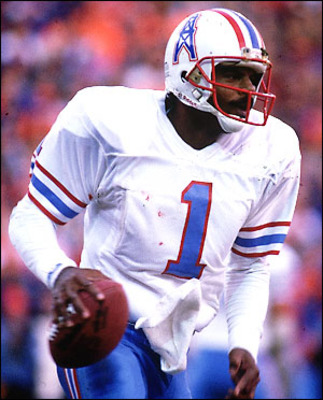
It still is an amazing fact that Moon went undrafted in 1978. Despite leading his college team to a Rose Bowl win the year before, some NFL teams wanted him to switch positions. His refusal was followed by an apparent blacklisting.

Instead, he joined the Canadian Football League and stayed there until 1983. He led his team to an unprecedented five titles and is now a member of the Canadian Football Hall of Fame.

The NFL couldn't keep on their blinders any longer, and a bidding war began for his services.

Bud Adams, the owner of the Houston Oilers, gained an upper hand by hiring Hugh Campbell as head coach. Campbell had coached Moon in the CFL.

Moon started setting team records for the Oilers almost as soon as he donned their uniform. Houston had an explosive offense, led by Moon, but always seemed to just fall short of reaching a Super Bowl.

After 10 years and six Pro Bowls, Moon was traded to the Minnesota Vikings before the 2004 season. He lasted three years there, making the Pro Bowl twice.

At 41-years old, Moon signed with the Seattle Seahawks as a free agent. He went to the Pro Bowl again. He joined the Kansas City Chiefs in 1999, retiring after two years at 44-years old.

Moon was inducted into the Pro Football Hall of Fame in 2006, making him the first Canadian Football Hall of Famer, first undrafted quarterback, and the first African-American quarterback to achieve this.

His free agency signing wasn't just great for the Oilers, NFL or football, but society as well.


John Randle


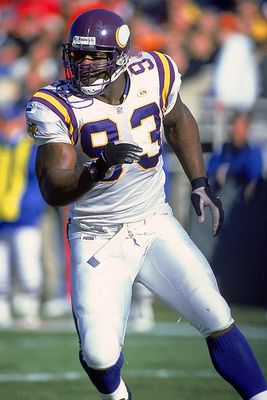
Randle went undrafted in 1990, so he tried to join the Tampa Bay Buccaneers because his brother Ervin was entering his fifth season with them. The Buccaneers though he was too small, so they declined. The Minnesota Vikings then gave him a try out and was impressed.

Randle made the team and earned a starting job midway into his second season. He was a quick player who was excellent at rushing the passer.

Starting in 1992, he had eight straight years of double-digit sacks. From 1993 to 1998, he went to the Pro Bowl.

His 1997 was probably his best. Randle led the NFL with 15.5 sacks and had a career high 58 tackles.

He became a free agent after the 2000 season, so he joined the Seattle Seahawks. He scored the only touchdown of his career, off a fumble recovery, in his first season in Seattle. He also had 11 sacks, but missed the first game of his career in what would be his final Pro Bowl season.

Randle missed four games the next year. His five games missed with Seattle were the only games he missed in a 14-year career. He would retire after the 2003 season.

His 137.5 sacks are the sixth most ever, and the most ever by a defensive tackle. Steve McMichael is second with 95.

For a player nobody wanted, the Vikings sure were lucky and blessed to sign this free agent that got inducted into the Pro Football Hall of Fame in 2010.


Gary Zimmerman


Zimmerman was selected in the first round of the 1984 Supplemental Draft by the New York Giants, but he chose to join the United States Football League instead. When the USFL folded two years later, he was a free agent.

The Minnesota Vikings signed him and plugged him in at left tackle right away. Zimmerman stayed with the Vikings for seven years, going to the Pro Bowl four times. At the end of the 1992 season, he became a free agent again.

He signed with the Denver Broncos, who needed someone to protect Hall of Fame quarterback John Elway's blind side. Though still mobile at 33-years old, Elway was slowing down some after years of hits.

Zimmerman was the glue of an excellent offensive line, and one of the most important pieces to the Broncos attack. In his five years with Denver, he was a Pro Bowler three times.

He made his last Pro Bowl in 1996 despite missing the first two games of his career. He missed two games again the next year, but Denver would go on and win Super Bowl XXXII. He retired after that.

Zimmerman is on both the 1980s and 1990s NFL All-Decade Team, one of just a few players to make two teams. He is also on the USFL All-Time Team.

Inducted into Canton in 2008, Zimmerman is one of the very best free agent signings for both the Vikings and Broncos.


Reggie White


The Philadelphia Eagles made him their first draft pick in the 1984 Supplemental draft. Steve Young, Mike Rozier and Gary Zimmerman were selected ahead of him.

All decided to go play in the United States Football League. White was named the USFL Man of the Year in 1985, and he is a member of the USFL All-Time Team.

When the USFL folded after 1985, he joined the Eagles. He played eight seasons for them, going to the Pro Bowl each season except his first.

He was widely known as the best defensive end in all of football, and he was dubbed the "Minister of Defense" because he was also an Evangelical minister.

He became a free agent after the 1992 season, and a bidding war started to attain his services. The Green Bay Packers won by giving him an airplane to use whenever White desired.

In his six seasons as a Packer, White went to the Pro Bowl every year. He led them to Super Bowl XXXI, where the Packers defense and special teams carried them to victory.

After being named the NFL Defensive Player of the Year in 1998, he retired. But the Carolina Panthers coaxed him out of retirement in 2000, the only year of his career he was not a Pro Bowler except for his first year. He retired for good after that.

His 198 sacks are the second most ever since the stat started to get recorded in 1982. He retired as the Packers leader in sacks, but now ranks second. He still heads the Eagles list.

Not only was his free agent signing good for the USFL, but Green Bay's signing him won them a championship.

Inducted into Canton in 2006, almost two years after his unexpected death, White is one of the truly great free agent signings in NFL history.

Monday, April 11, 2011

Dignity After Football


Those who have read this blog know my feelings about the NFLPA, an organization as greedy, underhanded, sleazy, and willingly blind like the NFL itself.

An organization presided for year by former player Gene Upshaw, who screwed over his brethren at every opportunity. Even his own teammates that helped him win championships and other personal glories.

When Upshaw died, few tears were shed by former players.

Now the NFLPA is being run by an ambulance chaser who point blank told a former Redskin, a team he supposedly is a fan of because he grew up in the District of Columbia, that things would be "business as usual".

This means thousands of people who dedicated their lives to the game are basically brushed aside and forgotten. The same people who made professional football a billion dollar empire that has so much power, it had their blackout rule pass through Congress, the House of Representatives, and White House in one day.

You don't even see declarations of war get done that quickly.

Yet there are brave people who have tried to let the public know the sordid side of the NFL, even knowing that the machine would be there to try to block them at every turn.

Men like the Joe DeLamielleure and Mike Ditka are Hall of Famers who have long been vocal about the lack of support their brethren get medically, financially, and spiritually.

Bruce Laird, Jack Kemp, Tom Addison, Ricky Harris, and many more, have also tried to get the NFLPA to at least give respect to those who made the game what it is today.

While there is a lock out, the NFL is giving lip service about player safety for the first time since the league was born in 1920. The countless amount of players who left the game permanently damages and forgotten by the NFL would take more than just a calculator to recall.

When I was calling ex-players to garner support for Chris Hanburger's induction into Canton last year, I was astonished to find many players suffering for Lou Gehrig's Disease.

It seemed the amount of gridiron legends stricken with Amyotrophic lateral sclerosis (ALS) was far more prevalent with NFL players than any other sport or other lines of work.

As we learn more about head injuries with the advances of science, we start to understand better the hell men like Mike Webster, Jim Tyrer, Andre Waters, and others went through just before their deaths.

I also encountered many ex-players with Alzheimer's and Parkinson's disease in my Hanburger quest. While some players were unable to converse, some lit up at the mention of the game they love and held lucid discussions recalling the time they sweat and bled for the NFL.

This is why the work DeLamielleure, Laird, Ditka, and others are so very important and MUST be supported by anyone who claims to be a fan of football.

But I want to tell you about the work of BRENT BOYD.

Boyd is a former offensive lineman with the Minnesota Vikings for seven years. He has testified before the House Judiciary subcommittee on how this former starter is a single father who found himself homeless because he suffers from brain injuries brought on by several concussions.

He still suffers today from depression,headaches, dizziness, and fatigue from his post-concussion disorder. But it has not stopped Boyd in his fight to get the NFL and NFLPA to take care of their own.

http://www.dignityafterfootball.org

He runs Dignity After Football, an organization that tells the stories of players like him still hurting after retiring.

DeLamielleure, Kenny Easley, Wayne Hawkins, Dave Pear, Ed White, Jeff Nixon, Delvin Williams, and Jerry Shirk are just a few ex-players supporting this mission and offer their own stories on this site.

The work Boyd is doing is needed. The NFL pockets every penny possible, which is tax-free. The NFLPA is their puppets who have never shown interest in former players. Boyd terms it "Upshaw Thugocracy", and this mode is still running today.

"The bottom line is I don't work for them. They don't hire me and they can't fire me. They can complain about me all day long. They can have their opinion. But the active players have the vote."

This infamous quote by Upshaw is exactly the mission DeMaurice Smith continues. Smith never played the game and he recently pulled a stunt by decertifying the NFLPA because of the lock out, yet he has shown the Upshaw message remains.

The message of a puppet working for team owners who seemingly treat players like product instead of human beings. Product used to fill their pockets by any means necessary, even if it costs lives.

Please visit Boyd's site and sign his petition. Even if you have no interest in a player once he leaves the game, much like the NFL and NFLPA, then do it because you are a fan of the game.

A game that has cost humanity much more than mortality can acknowledge.


If you want a taste of how the NFLPA works against even their own employees, then read this letter from someone who spent years working for scum like Upshaw.

I am a former employee of the NFLPA (1983-1988 and 1999-2003). I worked in the Special Events/Licensing (1 yr), Research(4 yrs), Legal Departments (4 yrs) and the Financial Advisers Program (detail 6 action. I would not accept intimidation and pursued my rights. 10 years of administrative and legal maneuvers followed. I was reinstated to my job in 1997 - NFLPA refused and in 1999 I returned via court order. I worked on the 7th floor but could only get access up to the 6th floor because the NFLPA refused to give me an elevator key and office keys.

Thus, I was required to walk up the public stairwell without a choice for approx. 20 months. (morning, noon and afternoons) I received an e-mail that the reason for no keys was because of my Title VII litigation and union activity.

I was fired in 2003 after my mother died suddenly and unexpectedly. NFLPA mgt. actually expected me to call or come to work on the day of the funeral.

You will be astonished to hear the details of my plight. They sued my 1st arbitrator and boycott the hearing.

NFLPA mgt. refused to honor the decision and retaliated against me through work conditions, monetary considerations, etc. (judge, jury, prosecutor) The 2nd arbitrator was the former executive secretary and past chairman of the NLRB. The NFLPA has the largest settlement against the NFL in the history of the NLRB. NFLPA mgt. and its representatives distorted the truth during arbitration, to EEOC and the US District Court. NFLPA mgt. denied receiving documents that I had confirmation receipts, denied receiving phone calls that I have phone records ofs.)

I have been involved in 20 years of litigation with the NFLPA regarding Title VII violations and Union activity. In 1988 I was reduced in force and told that I would be fired if I filed grievances or took it, distorted the context of conversations - that I have documentation for, disparaged the reputations of the arbitrator, medical professional, sued and taxed the finances of the union that represented the staff and burdened the attorneys that represented me. Thereby stressing my relationships with my own representatives.

Effectuated unfavorable decisions against me through unfathomable misrepresentations. I was entitled to Family Medical Leave but received no assistance during my family crises. I was fired for excessive and unexcused absences when my job should have been protected like the professional organizations that extended that consideration to my 3 siblings.

It's no wonder that I didn't have permission to deal with my loss and overwhelming grief. I didn't have the NFLPA's permission to return to work in 1999.

In Feb. 2002, until satisfaction thereof, the NFLPA had to pay over $400,000 in Title VII fees to my attorney (not me). My firing in April 2003, and the subsequent fiascos - grievance meetings, arbitration, EEOC and Federal Court - were done in retaliation and were discriminatory.

The actions that I have experienced are unethical and unprofessional at best and at worst - well look at how you all and Congress are being treated. Deja vu.

Litigation is pending - the judge allowed discovery, subpoenas were issued, deposition was held, status - waiting for trial date. The union (Local 2) is not responding.

I am not surprised by their exodus - after all - how could this union have allowed me to walk up a public stairwell for 20 months?


Regretfully submitted, I hope to have a favorable resolve to the moral indignation that I have experienced from this "professional and caring" organization. NFLPA mgt. has spent money in order to destroy my life. It is vindictive and unacceptable.

I returned to work at the NFLPA with the expectations of professionalism. NFLPA mgt. purposely created a hostile environment. My career in sports and union affiliations have been derailed.

I have a Master degree in Urban Planning, Paralegal certificate and years of experience in many areas. I am a wife and mother of two children (11 and 15).

Your support is welcome.

Friday, March 18, 2011

The Almost All-Time Minnesota Vikings

These Are The Best Vikings Who Are Not Yet, And Maybe Never Will Be, Inducted Into The Pro Football Hall of Fame

Quarterback : Tommy Kramer


Kramer was drafted in the first round of the 1977 draft for the express purpose of one day supplanting aging Hall of Famer Fran Tarkenton, who owned virtually NFL record for a quarterback during that time.

He sat and learned for two seasons, then Tarkenton retired. Kramer took over in 1979 and soon became known for his flair for the dramatic moment. He was known as "Two Minute Tommy" because he often led Minnesota to victories late in the game.

One of his more famous moments came on a one-handed catch by Ahmad Rashad on a "Hail Mary" pass as time expired against the Cleveland Browns. It secured the Vikings a division title. Kramer threw for a career best 3,912 yards and 26 touchdowns the next year despite missing two games.

Kramer had taken over the Vikings when an aging team was rebuilding. The offensive line was an area affected by mass retirement, so it was often porous while Kramer was there He took a huge pounding despite having a quick release. The punishment he took led to injuries, causing him to miss 20 games in 1983 and 1984.

In his 13 years as the primary starting quarterback, Kramer lasted an entire season twice. He often found himself picking his carcass off the turf after being blasted by another defender. Another reason for defenders to key on him was an erratic rushing attack.

Minnesota had halfbacks Ricky Young, Ted Brown, and Darrin Nelson as the main running backs in Kramer's area. Though Brown had two effective seasons running the ball, these backs are most noted for their receiving abilities.

Young, one of the great pass catching backs in era, Brown, and Nelson had over 900 receptions with Kramer. Brown's 1,063 rushing yards in 1981 was the best run support Kramer ever had.

Though he missed three games in 1986, Kramer had perhaps his finest season.. He made his only Pro Bowl and was named NFL Comeback Player of the Year. Kramer led the NFL in quarterback rating, adjusted yards gained per pass attempt, and adjusted net yards gained per pass attempt.

His next three seasons were littered by injuries. Kramer missed 24 games over that time and lost his starting job to Wade Wilson. He joined the New Orleans Saints in 1990, but appeared in one game. He then retired.

Replacing a legend is never an easy thing to do, and it is harder when the team is trying to rebuild. Despite all of the missed games, Kramer is second in franchise history in wins, games played, passing attempts and completions, passing yards, and passing touchdowns. No Vikings quarterback has been sacked more either.

He is one of the 50 Greatest Minnesota Vikings Team put together in 2010. Kramer is the only Viking to ever win the Comeback Player of the Year Award. "Two Minute Tommy" is truly a Vikings legend.

Joe Kapp, Wade Wilson, Randall Cunningham, and Duante Culpepper deserve mention.


Fullback : Chuck Foreman


Foreman was drafted in the first round of the 1973 draft by the Vikings. He went to work right away, leading the team in rushing, touchdowns scored, and finishing second in receiving. He was named NFL Offensive Rookie of the Year and to the first of five straight Pro Bowls as Minnesota reached the Super Bowl.

He was just as special in his second season. Foreman led the team in rushing receiving, and touchdowns both in the air and on the ground. His 15 total touchdowns that year led the NFL. The Sporting News named him NFC Player of the Year as the Vikings reached the Super Bowl again.

The 1975 season was one of his best. He was named First Team All-Pro after leading the NFL with a career best 73 receptions, while churning out 1,070 yards on a career high 280 carries. Foreman also ran for a career high 13 scores, adding a career high nine more off receptions.

His 22 touchdowns was an NFC record at the time. He was fighting O.J. Simpson for the NFL record, as well as trying to lead the league in rushing, receiving, and scoring. In the last game of the regular season, the Vikings headed into Buffalo.

Foreman went wild in just under three quarters. He had already scored three times, had nine receptions, and 85 yards rushing in a snow storm. Simpson was attempting to pass the 22-touchdown record he had tied Gale Sayers with the season before.

As Foreman ran out of bounds after an errant throw, a fan pelted him in the eye with a snow ball. With his vision blurred, he sat out a few plays but returned to catch a touchdown pass to tie Sayers and Simpson for the record. His eye was bothering him so he had to sit out the rest of the game for precautionary measures.

Simpson would later set the record with his 23rd score in the Vikings 35-13 rout. Foreman lost the rushing title the next day when Jim Otis, of the Saint Louis Cardinals, passed him by six yards. In the end, a disgruntled fan cost Foreman a chance at history.

He duplicated his 13 rushing touchdowns in 1976, while pounding out a career high 1,155 yards on the ground and catching 55 balls. His 14 touchdowns led the NFL, and the UPI named him NFC Player of the Year. Minnesota reached the Super Bowl for the third time in his career.

The 1977 season was his last Pro Bowl year. He ran for 1,112 yards and scored nine times total. Though he caught 61 passes and ran for 749 yards in 1978, the wear and tear of carrying the Vikings offense caught up to him.

He spent 1979 on the bench, being replaced by a pair of pass catching backs named Ricky Young and Ted Brown. He was traded to the New England Patriots in 1980, but was rarely used. He then retired.

Foreman was more than a powerful runner with soft hands. He was especially nimble, earning him the nickname "Spin Doctor". He would accomplish these feats on the icy Minnesota tundra in an era were fields were not kept up like they are today.

The 132 points he scored in 1975 is still a Vikings record by a non-kicker, and it ranks second best overall. He held the team record for most rushing yards until Robert Smith passed him in 2000, and he has the second most rushing attempts in Vikings history behind the great Bill Brown.

He is tied with Smith and Adrian Peterson with 52 touchdowns on the ground, but Peterson appears likely to set the record the next time he plays. Foreman's 336 receptions are just three behind Ted Brown as the most by a running back in Vikings history, and ranks ninth best overall.

His 73 receptions in 1973 was a NFL record by a running back until the Vikings Ricky Young broke it in 1978. Foreman is one of the 50 Greatest Minnesota Vikings as well as being a member of both their 25th and 40th Anniversary Teams. He has also been inducted into the Vikings Ring of Honor.

Some Vikings fans may prefer the rugged Bill Brown in this slot. He was a scoring machine with soft hands just like Foreman. Some would say put both in the backfield together, which also works.

I chose Foreman because he was basically the first version of the versatile fullback you could lean on running or passing the ball. There was nothing Foreman couldn't do on the gridiron for six spectacular years. He may be the best fullback in Vikings history.

Bill Brown and Tony Richardson deserve mention.


Halfback : Robert Smith


Smith was Minnesota's first-round draft choice in 1993. He contributed very little his first two seasons and was mostly used as a receiver. Though he carried the ball much more the following two years, Smith fought injuries and missed 15 games over that time.

He came into his own during the 1997 season, rushing for 1,266 yards and catching a career best 37 balls. He also averaged a very impressive 5.5 yards per carry, which was the best of his career.

Smith followed that with his first Pro Bowl year in 1998 after running for 1,187 yards and churning out six rushing touchdowns.He ran for 1,015 yards in 1999 despite missing three games.

His 2000 season was his best, as well as being the only time in his career he was able to play an entire season. Smith made his last Pro Bowl after setting career high marks of 1,521 yards and seven touchdowns on 295 carries. He also averaged 5.2 yards per carry.

Despite reeling off four straight 1,000-yard rushing seasons and being only 28-years old, Smith retired after that 2000 season. He noted his injury plagued career as one of the reasons for his early exit, despite perhaps just entering his prime.

Smith is still holds the Vikings record for most rushing yards in a career and his four 1,000-yards rushing seasons is a team record, though Adrian Peterson tied it in 2010. Smith accomplished all of this and fumbled the ball just nine times in his whole career.

He was always making the big play for the Vikings. Smith's average touchdown run was 27.2 yards, which is an NFL record. He had four consecutive years where he ran a football 70 yards or longer.

He is one of the 50 Greatest Minnesota Vikings as well as being a member of their 40th Anniversary Team. There is no question that Robert Smith was a special player in the short time that he wore the Vikings uniform.

Brent McClanahan, Michael Bennett, Dave Osborne, Tommy Mason, Darrin Nelson, Ted Brown, and Ricky Young deserve mention.


Wide Receiver : Cris Carter


Carter was drafted in the fourth round of the Supplemental Draft in 1987 by the Philadelphia Eagles. He had to go into the supplemental draft because he lost his senior year of eligibility at Ohio State University after signing a contract with an agent.

The 1987 season is best known as being shortened by a players strike. Carter was rarely used, catching two touchdowns off five receptions, though he did return 12 kicks. He would only return one kick the rest of his career.

Kenny Jackson, the Eagles first-round draft pick in 1984, was not working out as a starter opposite Pro Bowler Mike Quick. Carter was inserted into the starting lineup and grabbed 17 touchdowns off 84 receptions over two seasons.

The Eagles were known for their swarming defense and athletic quarterback during this time. Their head coach, Buddy Ryan, was a defensive expert, but the Eagles offense could not score in the playoffs and were bounced out in their first game in both years Carter started.

Ryan suddenly cut Carter after the 1989 season, with the reason was that all Carter did for the Eagles was "catch touchdown passes". The truth was that Carter was abusing drugs and the wide receiver credits his being cut as the wake up call that saved his life.

Minnesota claimed him off the waiver wire right away. He spent his first year in Minnesota backing up Anthony Carter (no relation) and Hassan Jones. Though the Vikings started three receivers seven times in 1991, he supplanted Jones as the starter and would hold that spot the remainder of his Vikings career.

One of Carter's strengths was his conditioning and durability. Though he missed four games because if injury in 1992, he played every other game possible for Minnesota. Except for his rookie and final seasons, those would be the only four games that he missed.

His 1993 season was the first of eight straight Pro Bowl years. He became one of the very best receivers in the NFL over this time. Carter caught a career best 122 pass in both 1994 and 1995, becoming the only player in NFL history to have that many receptions twice. He led the NFL in receptions in 1994, and his career best 17 touchdown receptions in 1995 led the league as well.

The Vikings had a revolving door at quarterback during Carter's time there. Seven different men were the primary starter in his 12 seasons with the team. Despite all the lunacy and confusion, Carter was a beacon of steady leadership and consistent production.

Carter had 86 or more receptions in seven of his eight Pro Bowl years. He had 90 or more catches five times. He also grabbed those touchdowns Ryan mentioned. Other than the 17 scores in 1995, he led the NFL with 13 touchdown catches two times. He was in double figures in touchdown receptions in five of his Pro Bowl years.

What made his production even more special, other than the ever changing quarterback, is the fact he had to share receptions with future Hall of Fame wide receiver Randy Moss, Pro Bowl wide receivers Jake Reed and Anthony Carter, and Pro Bowl tight end Steve Jordan.

Besides his eight consecutive Pro Bowls, he was named First Team All-Pro twice. He holds the Vikings record for Pro Bowls by a wide receiver, and only Moss has been named First Team All-Pro more. Just two Vikings, Hall of Famers Alan Page and Randall McDaniel have represented Minnesota more at the Pro Bowl than Carter.

Though he caught 73 balls for six scores in 2001, the Vikings let the 36-year old receiver go. He joined the Miami Dolphins the next year, but appeared in just five games and retired.

Carter hold the Vikings records of receptions, receiving yards, and touchdown catches for a career. He also holds the single-season Vikings record for receptions and is tied with Moss with touchdown receptions.

He has been a finalist for induction into the Pro Football Hall of Fame three times so far. He ranks third in NFL history with 1,101 career receptions, fourth in career receiving touchdowns with 130, and eighth in career receiving yards, and total career touchdowns.

Carter has a feel-good story attached to his career, one that has now extended to where he provides analysis on television. With career on the ropes because of drugs, he rebounded and became a leader. Most recall him serving as a mentor to Moss.

He won the Bart Starr Man of the Year Award in 1994, the Bryon "Whizzer" White NFL Man of the Year Awards in 1998, and the Walter Payton Man of the Year Award in 1999.

Besides the 17 NFL records he either owns or shares, he is a member of the NFL's 1990s All-Decade Team. He is one of the 50 Greatest Minnesota Vikings as well as being a member of their 40th Anniversary Team.

The Vikings have retired his jersey and inducted him into their Honor Roll. His induction into Canton is inevitable, the only question left is the year it will happen. The Vikings have had a huge amount of great receivers to play for them, but Cris Carter may be their best ever.


Wide Receiver : Sammy White


White was drafted in the second round by Minnesota in 1976. He started immediately and exploded on the NFL.

He was named NFL Offensive Rookie of the Year after catching a career best 10 touchdowns while getting 906 yards on 51 receptions. The Vikings reached Super Bowl XI, where White would make a play to be remembered forever.

The Vikings were trailing early to the Oakland Raiders and forced to throw on third and long. The ball hung in the air as White and two Raiders ran to it. There was a tremendous collision that eventually sent White's helmet flying.

Though he hung onto the ball, the impact of the hit forced him to sit out of several plays. White did come back to lead the Vikings with five receptions for 77 yards and a score in the Raiders 32-14 victory.

What some fans do not remember was the catch White made in the Vikings playoff win over the Washington Redskins that year. Those who recall it often say it is amongst the best circus catches in NFL history.

While Chuck Foreman and Brent McClanahan both ran for 100 yards, White led the team with four catches for 64 yards. Two went for score, but the first was the best.

Hall of Fame quarterback Fran Tarkenton slightly overthrew White on a post pattern, but a diving White got a hand on he ball, batting it in the air. He crashed to the ground, but kept his eyes on the football.

Squirming on the ground, he stretched out to keep batting the ball in the air. Juggling it as he squirmed to get his body underneath the ball. He achieved this after several yards, then continued to snake his body on the ground until he crossed the goal line to put the Vikings up 14-3.

He was named to the Pro Bowl in his rookie year, an honor he would achieve the next season after averaging 18.5 yards on 41 receptions and scoring nine times. He was considered a top-flight receiver able to beat you with speed and precise route running.

He continued to be the Vikings top receiver the next three years, culminating in having one of the best seasons of his career in 1981. He set career high marks with 66 receptions for 1,001 yards.

After the strike-shortened 1982 season, White's next two years were met with nagging injuries. He still was able to average a career best 19 yards at catch in 1984. After being able to suit up for just six games, due to injury, in 1985, he retired.

He left the game as the Vikings all-time leader in receiving yards and touchdown catches, as well as second in receptions. White still ranks fourth in touchdown catches, fifth in receiving yards, and seventh in receptions.

Wide receiver is a position Minnesota is deep in tradition and excellence, where choosing anyone is not the wrong choice. I selected White for not only his postseason greatness, but the fact he was at his best in the much harder 10-yard chuck rule era.

Only Ahmad Rashad had to deal with this, as far as Vikings receivers with more receptions, and he finished with just seven more catches than White. The rest on the list, with more catches than White, are men who encountered the much easier 5-yard chuck rule in a much more offensive friendly era.

Yet Sammy White was able to average over 16 yards on 393 receptions while finding the end zone 50 times. He wasn't just spectacular, he was tough. Proving much of his career to be amongst the best wide receivers in Vikings history.

He is one of the 50 Greatest Minnesota Vikings as well as being a member of their 25th Anniversary Team.

Anthony Carter, Ahmad Rashad, John Gilliam, Paul Flatley, Koren Robinson, Bob Grimm, Jerry Reichow, Jake Reed, and Gene Washington deserve mention.


Tight End : Steve Jordan


Jordan was the Vikings seventh round draft pick in 1982. He spent his first two years backing up Pro Bowler Joe Senser and Hall of Famer Dave Casper.

He earned the starting job in 1984. Besides 38 receptions, he had the only rushing attempt of his career and scored from four yards out. He had a career best 68 receptions the next year, but failed to score.

Things changed in 1986, where Jordan would earn the first of six consecutive Pro Bowl honors. Besides being a consistent receiving threat, his blocking improved every year. He also never missed a game over this stretch of time.

Jordan began to get injured in 1992. He missed two games that season and the next, though he was productive with 57 receptions in his last year as a starter. Jordan was only able to suit up for four games in 1994, then retired.

He is one of the 50 Greatest Minnesota Vikings as well as being a member of their 40th Anniversary Team. No Vikings tight end has more Pro Bowls, receptions, receiving yards, or touchdowns caught than him.

He still ranks third in Vikings history in receptions, sixth in receiving yards, and seventh in touchdown catches. Minnesota has had quite a few good tight ends wear their uniform, but Jordan may be the best of them all.

Joe Senser, Byron Chamberlain, Bob Tucker, and Stu Voight deserve mention.


Tackle : Grady Alderman


Alderman was drafted by the Detroit Lions in the 10th round of the 1960 draft. He went to college at the nearby University of Detroit Mercy. Alderman and Kansas City Chiefs guard George Daney hold the distinction of being the last players from the school to have played in the NFL.

The football program was disbanded in 1964 despite having put 62 players in the NFL and once winning a national championship. Alderman is a member of the schools Hall of Fame.

He spent his rookie year on the bench, playing both guard and tackle. Detroit left him exposed to the Vikings expansion draft in 1961. Though Minnesota got several good players, including Hall of Fame halfback Hugh McElhenny, Alderman was their finest selection.

He started at left tackle day one. Alderman started every game he played over the next nine seasons, missing just one game over that span. Though the Vikings were struggling as a team, he quickly stood out.

The 1963 season was his first of five consecutive Pro Bowl honors. The team have five losing seasons in their first seven years of existence, but people recognized the work of Alderman. He played in an era where players and coaches voted on who would get that honor.

The Vikings steadily improved, and Alderman was a cconsistent force each year. The offensive line was one of the reasons for the improvent, with Pro Bowlers Mick Tinglehoff at center and Milt Sunde at guard. It would get even better whn Hall of Famer Ron Yary and Pro Bowler Ed White were added later on.

Though his Pro Bowl streak ended in 1968, it was the first year the Vikings won their division. Minnesota repeated as division champions the next year by winning 12 of 14 games. Though the team would win 12 games three more times up until 1973, it was a franchise record until the 1998 team won 15.

The Vikings are the last NFL Champion before the NFL and American Football League officially merged in 1970. They reached Super Bowl V that year before losing. Alderan was named to his last Pro Bowl, as well as earning his lone First Team All-Pro nod.

The last five years of his career was peppered with injuries, but he helped Minnesota keep winning. The team lost just 11 games in four of those years. Alderman would miss the first three starts of his career in 1970, and miss three more the next year. He also missed the second game of his career in 1971.

Now 36-yeard old in 1974, Minnesota took him out of the starting lineup for the first time in his career. He appeared in every game but one as a reserve. The Vikings reached their third Super Bowl in his career with them, but lost. Alderman then retired.

His 194 games played is still the seventh most in Vikings history. Few players in the history of the game were as reliable. Alderman missed just three games in his 14 years with Minnesota.

Alderman was somehow left off the NFL's 1960s All-Decade Team despite geing to the Pro Bowl more than two of the three tackles selected. One, Bob Brown, is in the Pro Football Hall of Fame. Brown went to the Pro Bowl four times in the 1960's and the other selection, Ralph Neely of the Dallas Cowboys, went twice.

A masterful technician, he always took on the other teams best pass rusher. He also had to block with knowledge of the avenues Hall of Fame quarterback Fran Takenton might take off running to. Tarkenton was known as the "Mad Scrambler", so blockers would have to stay blocking on plays longer for him than other teams had to.

He is one of the 50 Greatest Minnesota Vikings as well as being a member of both their 25th and 40th Anniversary Teams. Alderman was an alert player who pounced on 13 fumbles in his career.

Alderman was somehow left off the NFL's 1960s All-Decade Team despite geing to the Pro Bowl more than two of the three tackles selected. One, Bob Brown, is in the Pro Football Hall of Fame. Brown went to the Pro Bowl four times in the 1960's and the other selection, Ralph Neely of the Dallas Cowboys, went twice.

The six Pro Bowls he played in are tied with 11 other Vikings as the fifth most in franchise history, and it is the most ever by a left tackle. He is the first tackle in team history to be named First Team All-Pro. Alderman was named Second Team All-Pro five times.

What fans forget with all of his longevity, durability, and excellence is how he accomplished all of this despite being one of the smaller left tackles in the game. Alderman stood 6'2" and weighed 247 lbs. in an era where blockers were not allowed to extend their arms and use their hands like today.

Surviving alone shows how stellar he was with his technique. Then you factor in all of the accolades he attained in his career as his teams went from the basement of the NFL to becoming a dominant squad for many years.


I can only guess his exclusion from Canton is some sort of punishmenment for the Vikings failing to win a Super Bowl. He hasn't even gotten close in the voting process, which is a head scratcher.

There are many men in Canton because their teams won championships, but the Pro Football Hall of Fame is not a team honor. It is supposed to honor individual achievement. This is somehow forgotten by voters too many times to count. Just because the Vikings failed to win, they have several extremely worthy players still waiting on induction.

Inferior players go in as time forgets the greatness of these men. The expression that no one remembers second place seems to get louder in the case of men like Alderman, yet the voters seem clueless how hard it is just to reach a title game or even just make an NFL team.

Six Pro Bowls in a career is an excellent number, but it looks less thanks to how the National Football League ruined the Pro Bowl in both the game and how they sullied the hoonor by allowing no-nothing fans to vote. Where showboats or media whores get the honor instead of the deserving.

Offensive tackle is a position neglected by Canton's voters the last few decades. Yet Alderman's numbers match or exceed a few inducted. He has as many Pro Bowl appearances as Mike McCormack and Rayfield Wright and more than Bob St. Clair or Joe Stydahar.

It would be the right thing for the voters to do by getting the trenches some respect in Canton. Minnesota has three blockers worthy and two, Alderman and Tingelhoff, really should have been in long ago. Those who toiled in the trenches in virtual anonymity for the sake of victory.

The list of legendary tackles is long waiting for induction. Opening up the seniors pool to incluse a few more candidates would be the intelligent move as well, because watching inferior modern players get inducted first due to these rules is infuriating and diseased.

Not only is he still the greatest left tackle in the history of the Minnesota Vikings, but Grady Alderman is most certaonly worthy of induction into the Pro Football Hall of Fame.


Tackle : Todd Steussie


Steussie was drafted by the Vikings in the first round of the 1994 draft. He started at left tackle immediately, and would start every game of his career with Minnesota.

He was also extremely durable and dependable, missing just one game with the Vikings. On a Vikings offensive line that had a Hall of Fame guard and Pro Bowl center, Steussie gained notice for his own excellent play.

At 6'6" 330, he was a mountain of a man on a team with one of the most explosive offenses in the league. Stuessie was given a Pro Bowl nod in both 1997 and 1998.

Stuessie became a free agent after the 2000 season, so he signed with the Carolina Panthers. Lasting three years with the team, he appeared in the Panthers Super Bowl XXXVIII loss. He was a salary cap victim in 2004 and was released.

After playing the next two seasons for the Tampa Bay Buccaneers, Stuessie joined the Saint Louis Rams in 2006. He was hurt the next year, able to play in just six games, then retired.

Tim Irwin, a true Vikings legend, was considered heavily for this slot. Stuessie accomplished Pro Bowl honors, and Irwin did not. Though both are excellent players who were underrated when they played, Stuessie's accolades give him the nod here.

Korey Stringer, Tim Irwin, and Steve Riley deserve mention.


Guard : Ed White


White was drafted in the second round of the 1969 draft by the Minnesota Vikings. He was the 39th player picked overall. His high school stadium is named Ed White Stadium.

While attending the University of California, Berkeley, he was an All-American noseguard for the famous "Bear Minimum" defense that allowed opponents an average of only 3.6 yards per play. He was also used as a receiver and quarterback on occasion, showing how excellent an athlete he was.


White was then switched to left offensive guard, against his wishes, after being drafted. He earned the starting job mid-way into his second year. He also ended up playing defensive tackle towards the end of the 1970 season, after injuries ravaged the defensive line.

White would go on to team with Hall of Fame tackle Ron Yary, and center Mick Tingelhoff, to give the Vikings one of the best offensive lines in the NFL during the 1970's. The Vikings would appear in four Super Bowls during Whites tenure in Minnesota. Three appearances were between 1973 to 1976.

The Vikings won the last NFL Championship in 1969, before the NFL-AFL merger. In 1974, he was named the the UPI Second Team All-Conference, and was named by the Newspaper Ent. Association's First team All-NFL.

Before 1975, White was switched to right guard and was named to his first Pro Bowl that year. He would be named to the Pro Bowl the following two seasons as well.

In 1977, White was injured and was only able to start 8 games. Before the 1978 season, he was traded to the San Diego Chargers for running back Rickey Young.

He would earn his last Pro Bowl nod in 1979, and was one of the first players to be named to the Pro Bowl from both the AFC and the NFC in his career. White played with the Chargers until 1985. When injuries hit the Chargers offensive line in 1984, White ended up starting at right tackle for 13 games.

He would then be moved to left guard for his final NFL season, and started every game. He was named the Chargers Offensive Lineman of the Year from 1983 to 1985. White was inducted into the San Diego Charger Hall of Fame in 2004.


White was extremely athletic and incredibly strong. He was the the NFL arm–wrestling champion and once stated he hasn't lost an arm-wrestling match since he was in high school to a man 200 lbs heavier than him. White was also noted for his exceptional intelligence on the field.

He has often said he disliked playing on the offensive side of the line, and thought he would have been a much better player on defense. Still, he was one of the best in his era. Many of his contemporaries have long said White belongs in Canton.

White also made his teammates better just by practicing against him daily. Hall of Fame DT Alan Page, Gary "Big Hands" Johnson, Louie Kelcher, and Hall of Fame DE Fred Dean all have praised White for making them better players.

White was one of the most complete offensive guards in the NFL throughout his career. Stats for guys who play his position are ignored by most.

The most a fan notices a guard is when he makes a mistake. A big mistake has been made for years, and still continues on to this day. The culprits are those who vote for the Pro Football Hall of Fame.

Ed White may not be remembered by many of them, but he is certainly respected by those who played against him, or watched him play. It is time to correct the mistake of not having inducted him into Canton.

He is one of the 50 Greatest Minnesota Vikings as well as being a member of both their 25th and 40th Anniversary Teams.


Guard : Milt Sunde


Sunde was drafted in the 20th round of the 1964 draft by the Vikings after having grown up in Minneapolis and attended the University of Minnesota.

After a rookie year of being a reserve, he earned a starting job at left guard in 1965. Sunde then earned his only Pro Bowl nod the next season, joined by left tackle Grady Alderman and center Mick Tingelhoff.

He got hurt the next year, appearing in 10 games. The Vikings moved him to right guard in 1968, where he split starts with Larry Bowie. He took over the starting job the next year as the Vikings became the last NFL champions before they merged with the American Football League.

He held the starting job until 1974 when new acquired Andy Maurer took over. The Vikings went to the Super Bowl in 1973 and 1974, but lost both times. Sunde retired at the end of the 1974 season.

Minnesota has had several great guards in the franchises history, but Milt Sunde was the first to ever go to the Pro Bowl. A perfect scenario for the local kid who made good against all odds. He is a member of their 25th Anniversary Team.

Terry Tausch, Wes Hamilton, Larry Bowie, David Dixon, and Charles Goodrum deserve mention.


Center : Mick Tingelhoff


Tingelhoff was an undrafted rookie signed by the Vikings before the 1962 season. He earned the starting job at center in the second preseason game of his rookie year.

It was a role he would not relinquish until he retired after 1978. He made his first Pro Bowl in 1964, and would attain that honor every year until 1969.

The 1969 season was the year the Vikings were crowned NFL Champions and went on to play the AFL Champion Kansas City Chiefs in Super Bowl IV before losing. He was named to the 1,000-Yard Club in 1969, honoring the NFL’s top blocker.

In 1970, he was named to the First Team All-NFL by both the Pro Football Writers and Pro Football Weekly. He was named First Team All-Conference by the Associated Press and Pro Football Weekly.

He was named Second Team All-NFL by Newspaper Ent. Association and Second Team All-Conference by the UPI. The Vikings went back to the Super Bowl in 1973, before losing to the Miami Dolphins.

The Vikings returned to the Super Bowl the following season, but lost to the Pittsburgh Steelers. The Vikings continued to be an NFL powerhouse throughout the decade and returned to Super Bowl XI in 1976, but lost to the Oakland Raiders.

He retired after the 1978 season having started every game the Vikings played his entire career. His 240 consecutive starts were then the second most in NFL history, thirty starts behind his Vikings teammate Jim Marshall.

The only player in Nebraska University history to enjoy a longer NFL career was Tingelhoff's Husker teammate, Ron McDole, who spent 18 years in the league from 1961 to 1978. Tingelhoff has been inducted into the Vikings Ring of Honor and has had his no.53 jersey retired by the franchise.

Tingelhoff's omission from Canton is one of the most confusing of all players still awaiting induction. The numbers are obvious. He was one of the most dominant center's of his era, and defined the true definition of an iron horse.

You can easily note his consecutive starts streak, the fact he was a Pro Bowler six straight seasons, and was part of the most dominant team in the NFC during the 1970's.

The Vikings were a well balanced offense that scored points off the ground and via the air. Tingelhoff snapped the ball to such great NFL quarterbacks like Hall Of Famer Fran Tarkenton and Pro Bowler Joe Kapp. He also helped pave the way for Vikings fullback Chuck Foreman, and others, to gain huge chunks of yardage.

Much of the yardage Tarkenton acquired thru the air to set a then-NFL record in passing yards and passing touchdowns were helped along by Tingelhoff's protection. He was a sound technical blocker who used his intelligence, grit, and determination to get the job done better than most centers who ever played the game.

The fact that the voters have passed on him over these years truly shows many hardly pay attention to the battles in the trenches. There is absolutely no question that Mick Tingelhoff belongs in the Pro Football Hall Of Fame.

He is one of the 50 Greatest Minnesota Vikings as well as being a member of both their 25th and 40th Anniversary Teams.

Matt Birk and Jeff Christy deserve mention.


Defensive Tackle : Keith Millard


Millard was a first-round draft pick of the Vikings in 1984, but he decided to sign with the Arizona Wranglers of the United States Football League instead. The Wranglers traded him to the Jacksonville Bulls. The USFL folded in 1985, so he joined the Vikings.

Minnesota had the 6'6" Millard play backup nose tackle as a rookie, which is extremely rare for a player of that height. The rookie started five games and led Minnesota with 11 sacks, which plated in the top 10 in the league.

Counting the USFL, Millard had 23 sacks in 1985. The Vikings switched to a 4-3 defense in 1986, moving Millard to defensive tackle on the right side.

After getting 22 sacks over three years, including the strike-shortened 1987 season, Millard was set to have one of the greatest seasons ever by a defensive tackle. The 1989 season saw him get 18 sacks, the most ever by a defensive tackle in the NFL and only 15 players have ever gotten more.

His teammate, Chris Doleman, led the league with 21 that season thanks to lining up next to Millard. Even Al Noga and Henry Thomas were extremely effective. Noga had a career-best 11.5 sacks, while the nine Thomas had was the second best total of his career. Millard also picked off a pass, rumbling for 47 yards, and took a fumble 31 yards for a touchdown.

He was given his second and last Pro Bowl and First Team All-Pro honors, while becoming the second, and so far last, Viking named NFL Defensive Player of the Year. Hall of Famer Alan Page was the first NFL player to ever win it in 1971 while with the Vikings.

He was also named the UPI NFC Defensive Player of the Year, an award only Page and Doleman also won while with Minnesota. Page was the first defensive player ever to have won that award, which went defunct after the 1996 season.

Suffering a major knee injury in the fourth game on the 1990 season, he did not suit up again until 1992 as a member of the Seattle Seahawks. Despite a sack in two games played, Seattle released him and the Green Bay Packers had him on their roster for two games. Millard joined the Philadelphia Eagles in 1993, appearing in 14 games and starting five. He had four sacks, then retired.

His 53 sacks with the Vikings still rank fourth-best on the NFL list for the franchise, but Hall of Famers Page and Carl Eller had 108.5 and 130.5 "unofficially" with Minnesota, and Jim Marshall, who should be in Canton, had 127 himself.

Though injuries shortened a career that appeared destined for Canton, Millard was ranked 21st of the 50 Greatest Vikings Team put together in 2010. Minnesota has two defensive tackles enshrined in Canton with Page and John Randle, but Keith Millard was surely on their level for a short time before his injury.


Defensive Tackle : Henry Thomas


Thomas was drafted in the third round of the 1987 draft by the Vikings. Though his rookie year was cut short four games by a players strike, he started every game and intercepted a pass.

He scored a touchdown off a fumble recovery the nest year, while intercepting another ball. His teammates called him "Hardware Hank" because Thomas would line up over center and dismantle the opposing offenses point of attack.

This helped allow his three fellow defensive linemen to get 50.5 sacks. Thomas collected nine himself, while scoring again off another fumble recovery. Thomas was widely respected and a noted tackling machine.

The 1990 season was one of his best, getting a career best 109 tackles and 8.5 sacks. He followed that up with his first Pro Bowl year after getting eight sacks and 100 tackles. Thomas had collected an amazing 466 tackles in his first five seasons.

Thomas made the Pro Bowl for the last time in his career in 1992 even though his tackle totals began to dwindle. He got nine sacks, as well as recording a safety, in 1993 despite missing three games due to injury.

He joined the Detroit Lions in 1995 and got a career best 10.5 sacks while mentoring rookie, and future Pro Bowler, Luther Elliss. Thomas left the Lions after the next season, joining the New England Patriots in 1997.

Thomas played four years with the Patriots. He was very effective, getting two interceptions and 21 sacks over that time. He took one interception 24 yards for the last score of his career. Thomas retired after the 2000 season.

Of his 93.5 career sacks, 56 came with the Vikings. Hall of Fame defensive tackles Alan Page and John Randle are the only Vikings defensive tackles with more. He ranks third on the Vikings list in tackles.

The Vikings have many fantastic defensive tackles in their franchises history. Henry Thomas certainly ranks near the tip as one of their best ever. He is one of the 50 Greatest Minnesota Vikings.

Gary Larsen, Doug Sutherland, Charles Johnson, and Paul Dickson deserve mention.


Defensive End : Jim Marshall


Jim Marshall was a fourth round draft choice of the Cleveland Browns in 1960. He had played the year before in the Canadian Football League for the Saskatchewan Roughriders after leaving Ohio State University upon the completion of his junior year.


When Marshall came to the Browns, he started right away at right defensive end. He started the first three games, but had a falling out with legendary head coach Paul Brown. He soon lost his starting job, but continued to play the rest of the season.

In the off-season, Brown had plans to move Marshall to offensive tackle, but Marshall contracted encephalitis, and lost a great deal of weight. This fact, coupled with the problems Marshall and Paul Brown were having, did not bode well for Marshall's future in Cleveland.

Both teams have different versions on how Marshall became a member of the expansion Vikings. The Vikings state that Marshall was traded with Jim Prestel, Paul Dickson, Jamie Caleb, Dick Grecni, and CB Billy Gault while Cleveland received a second-round choice and an 11th-round choice that turned out to be Chuck Hinton and Ronnie Meyers.

The Browns state that "Jim Marshall was released by the Browns on Sep. 11, 1961. His rights were picked up by the Minnesota Vikings soon after, and the Browns, in a “gentleman’s agreement”, which is how Paul Brown carried out many deals, received cash and “future considerations”.


Regardless, Marshall was then a Viking until 1979. Marshall was with the team through the good and bad times. He led the team in sacks their first six years in the NFL.

He may best be remembered for his 66 yard "wrong way" run, the longest safety and shortest play in NFL history. Billy Kilmer, then a running back with the San Francisco 49ers, had fumbled the ball. Marshall scooped it up and bolted for the wrong end zone.

The Vikings won the game, as Marshall came up with a key sack in the fourth quarter. The "wrong way run" is truly a NFL classic moment to this day. But Marshall also achieved many more great feats on the field.

Many fans know he played in a then-league-record 282 consecutive regular season games and 302 games counting his playoff appearances. Punter Jeff Feagles passed this number, but the NFL still recognizes Marshall's consecutive starts streak because Feagles was a punter.

Marshall also owns the NFL record of 282 consecutive games played by a defensive end and he also recovered 29 fumbles, an NFL record for a defensive player.

He is listed as the Vikings franchises second leading All-Time leading sack totals leader, behind Hall of Famer Carl Eller, with 127. Marshall was the Vikings team captain for 17 seasons.

In all, discounting CFL games, Marshall played in 409 games (pre-season, season, post season and Pro Bowls), had over 1050 tackles, and over 133 sacks. His teams won 11 Divisional Championships and played in four Super Bowls.

Twice he kept his streak intact by walking out of hospitals where he was recuperating from pneumonia and ulcers. On another occasion, he played after accidentally shooting himself in the side while cleaning his shotgun.

In the final home game of his illustrious career, Marshall sacked Buffalo's Joe Ferguson twice and even played offensive tackle during the Vikings final series. Minnesota won 10-3, and Marshall was carried off the field by his teammates. He was awarded the game ball, the first one ever given to a Viking player by Hall of Fame head coach Bud Grant.


Many fans may best remember Marshall in his days of the Purple People Eaters. Teamed with Alan Page and Carl Eller, Gary Larsen, then Doug Sutherland, Marshall helped lead one of the greatest front fours in NFL history.

Paige and Eller are in the Pro Football Hall of Fame. The Vikings may not have won the Super Bowl, but their teams were annually amongst the most feared and respected during the era.


Marshall was one of a kind. We have seen Darrell Green and Jackie Slater play as long since, but neither matched Marshall's consecutive games streak. Marshall played in 270 games in 19 seasons with the Vikings and never missed a game. These are probably records that will stand for a very, very long time.

He was versatile enough to play on either side of the ball, and anywhere along the defensive line. His toughness is legendary. Many in the Twin Cities remember how Marshall and 16 others on snowmobiles got caught in a blizzard in Wyoming.

Many of the party broke up in small groups as the snowmobiles conked out one by one. A bank president from Minnesota died. Marshall was with five other people as they tried to walk through snow that was 10-15 feet deep.

They made a snow cave to rest for the night by burning everything they had. Marshall's money, checkbook, and other papers were amongst those things burned.

They made it another 24 hours as they froze in their camp before help arrived. Marshall called the experience " “the toughest thing I’ve ever encountered in my life.”

When you look at Jim Marshall's stats, he is Canton worthy. When you factor in his legendary streak, it should be concrete proof that he is undeniably a Hall of Fame player. Maybe the voters won't let him him because of Eller and Paige or the lack of titles? That should not be a deterrent for the voters.

Paige and Eller finished their careers elsewhere, but certainly are worthy. Marshall? He was as consistent and reliable as they come. He should have been in the Pro Football Hall of Fame years ago.

He is one of the 50 Greatest Minnesota Vikings as well as being a member of both their 25th and 40th Anniversary Teams.


Defensive End : Chris Doleman


Doleman was the Vikings first round draft pick in 1985, as well as the fourth overall selection. Minnesota was running a 3-4 defense, so they had Doleman play left outside linebacker.

He was asked to primarily play the run, and he had a career best 113 tackles that season. He also picked off a pass and the half a sack he had that year would be the lowest total of his career.

Though he took an interception 59 yards for a touchdown the next year, his production dwindled drastically. The Vikings would then switch to the 4-3 defense in the strike-shortened 1987 season.

The move paid off as the Vikings soon featured a young, exciting, and explosive defensive line. Doleman has 11 sacks in the 12 games he played, as well as forcing a career high six fumbles. He was named to the first of his four consecutive Pro Bowls.

The 1989 season is considered the best of his career. He piled up a Vikings record 21 sacks, still the third best total in NFL history, and forced five fumbles. He was named First Team All-Pro on a defense that had an amazing 71 sacks. It is one less than the NFL record set by the 1984 Chicago Bears.

After failing to make the Pro Bowl in 1991, he returned to it the next year after getting 14.5 sacks and matching his career high mark of six forced fumbles. Doleman was also named First Team All-Pro for the last time of his career after recording a safety and scoring a touchdown off an interception.

The 1993 season was his last as a Viking. He joined the Atlanta Falcons as a free agent in 1992, lasting two years with the team and going to the Pro Bowl once. Doleman then joined the San Francisco 49ers in 1996.

His three years with the 49ers were very productive. He piled up 38 sacks, scored a touchdown off a fumble recovery, and made the Pro Bowl one final time in his career. He then left to rejoin the Vikings for the 1999 season. After getting eight sacks, he retired.

Doleman ranks fourth on the NFL career sacks list with 150.5. His 96.5 with the Vikings is officially recognized as the second most in team history because the NFL did not recognize sacks until 1982.

He ranks second in tackles and safeties as well. One of the most impressive statistics in his career is that he missed only four games and played in 232 contests over his 15 seasons.

The Vikings have one defensive end, Carl Eller, in Canton, and another, Jim Marshall, who should be. Doleman is one of the 50 Greatest Minnesota Vikings.and has been a finalist for induction into the Pro Football Hall of Fame three times. His induction seems likely, but it is safe to say he is one of the best defensive ends in Vikings history.

Mark Mullaney, Doug Martin, and Al Noga deserve mention.


Outside Linebacker : Matt Blair


Blair was drafted in the second round of the 1974 draft by the Minnesota Vikings, and was the 51st player chosen overall. The Vikings started him in six games during his rookie year, and he was named to the NFL's All-Rookie Team after getting an interception and fumble recovery.

Minnesota would go on to appear in Super Bowl IX that year, where Blair would block a punt leading to the Vikings only points in their 16-6 defeat. He played as a reserve next season, but earned the starting left outside linebacker job in 1976.

He had a career high five fumble recoveries and had two interceptions that year, as the Vikings made it to Super Bowl XI before losing. In the NFC Championship Game two weeks earlier, he had helped block a field goal attempt that Vikings cornerback Pro Bowl Bobby Bryant took 90 yards for a touchdown that accounted for the first points of the game.

The 1977 season saw Blair make the first of six consecutive Pro Bowl appearances. His penchant for the big play was widely known throughout the league, as was his solid, steady play backed by great fundamentals. The entire defensive personnel around him changed at every position except his. He was named the captain of the defense in 1979 and held that position until he retired.

Gone were Hall Of Famers like defensive tackle Alan Page, defensive end Carl Eller, and free safety Paul Krause, along with Vikings legends like defensive end Jim Marshall, defensive tackle Doug Sutherland, linebackers Jeff Sieman and Wally Hilgenberg, and defensive backs Bobby Bryant and Nate Wright. Blair continued to be a top echelon linebacker in the league despite these massive changes.

Many other changes occurred on the Vikings offense after 1977 as well. Minnesota went to four Super Bowls between 1969 and 1976, but none after that. After making it to the NFC Championship Game in 1977, the Vikings made the playoffs in 1978 and 1980 and lost in the first round each time. Blair would not appear in a postseason game again.

It was in that 1977 season that he scored his first touchdown, which came off a blocked kick. He scored again for the final time the next season off of a lateral that went 49 yards. It set the stage for maybe the finest year of his career, which happened during the 1980 season.

He was named to his only First Team All-Pro team that year, and was named the Most Valuable Linebacker of the NFC. Blair was also being recognized for all of the work he did away from the gridiron.

Working in several charities that included the Children's Miracle Network, Multiple Sclerosis Society, March of Dimes, American Cancer Society, Big Brothers/Big Sisters, Lupus Foundation of Minnesota, Special Olympics, and the United Way, he was named the 1981 NFL Man of the Year. He also was the Top 10 Outstanding Young Men of America by the Jaycees in 1983. His work with the homeless and hungry has raised millions of dollars as well.

He missed the first games of his career in 1983 after becoming injured enough to miss five games. The Vikings drafted Chris Doleman in the first round before the 1985 season, and Hall Of Fame head coach Bud Grant had Blair teach him how to play linebacker and rush the quarterback from the edge. After appearing in a career low six games because of injury that year, Blair decided to retire.

The Vikings have never had a linebacker better than Blair. His 1,452 career tackles still ranks second in team history. No other Vikings linebacker has intercepted more passes than him either.

Though sacks were not a recorded statistic until the 1982 season, he was known for his ability to come hard off the edge and create havoc on opposing teams. But he was more than just an excellent player who supported the run and rushed the passer.

Minnesota liked to keep him on the field as much as possible, because he was so excellent defending the pass and creating turnovers on special teams as well.

His athleticism was on display in the 1975 season. The Vikings could not find a consistent punt returner that year, and used six different players that year. One of them was Blair, who took two punt returns that year. He may be the last linebacker ever in NFL history to be asked to field a punt.

His ability to block kicks was amazing. It didn't matter if it was a field goal, extra point, or punt, because he was a force each time the ball was snapped. His 20.5 blocked kicks in the regular season is a Vikings record, and this stat becomes even more spectacular when you factor in the fact Page blocked 16 more as well. In all, counting post season, he blocked 23.5 kicks. It is the second most in NFL history.

His 20 career fumble recoveries is tied as the 11th most by any defender in NFL history. What makes this statistic more impressive is the fact his teammates(Marshall, Page, and Eller) all had more in their careers.

It is a testament to the Vikings defense being able to create multiple turnovers, and Blair's abilities around so many teammates who shared his proclivity to jump on loose footballs.

How the voters of the Pro Football Hall Of Fame can induct a one dimensional linebacker like Andre Tippett, while ignoring better players like Blair, shows a process full of politics where the actual play on the field is disregarded.

Tippett just rushed the passer and went to the Pro Bowl a measly four times, while Blair did everything and more a linebacker could be asked to do and had more accolades.

Some may point to his six Pro Bowls and question if it is enough, especially when nine-time Pro Bowl linebacker like Maxie Baughn still await their call to the hall. What puts Blair over the top for induction over many other outside linebacker legends is his ability to play all over the field in every aspect of the game on defense and special teams.

He is a member of both the Vikings Silver and the 40th year anniversary teams, and soon will be inducted into the teams Ring of Honor. If one looks at the fact he continued his greatness long after all of the other "Purple People Eaters" had left the team, it should become quite apparent that Matt Blair deserves to be inducted into Canton.


Middle Linebacker : Jeff Siemon


Siemon was the Vikings first round draft pick in 1972. He ended up starting eight games as a rookie and picked off a pair of passes.

He earned the starting job full-time next year and held it until 1979, not missing a game over that time. He made the Pro Bowl in 1973. Siemon was an every down player capable of being effective against the run or pass.

Minnesota had one of the most dominating defenses in NFL history during the 1970's. The "Purple People Eaters" were a stifling unit that did not allow other teams to do much offensively.

Siemon went to the Pro Bowl three straight years starting in 1975. The Vikings went to the Super Bowl in 1976 but lost. The team started to age by then, but he maintained a steady presence in the middle of the defense.

Scott Studwell started in 1980, relegating Siemon to the bench mostly. Minnesota switched to the 3-4 defense the following year so Siemon and Studwell could both start. He retired after the 1982 season.

No middle linebacker in Vikings history has been to the Pro Bowl more than Seimon's four appearances. There was little he couldn't do on the field and he was known for his quickness, speed, and cerebral approach to the game.

There is no question that Jeff Siemon is the best middle linebacker in Vikings history. He is is one of the 50 Greatest Minnesota Vikings as well as being a member of both their 25th and 40th Anniversary Teams.

Scott Studwell, Rip Hawkins, Ed McDaniel, and Jack Del Rio deserve mention.


Outside Linebacker : Wally Hilgenberg


Hilgenberg was drafted in the fourth round of the 1964 draft by the Detroit Lions. He spent three years with the Lions mostly as a reserve, then was traded to the Pittsburgh Steelers after the 1966 season. Pittsburgh cut him in training camp.

Minnesota picked Hilgenberg up in 1968 and he started half of the season. He then would start the next eight years, missing just two games due to injury. He was tough and dependable.

Though he never made the Pro Bowl, he was an important member of the "Purple People Eaters". He was always around the ball, able to defend against the pass and especially stout versus the run.

He scored a touchdown off a fumble recovery in 1973 and recorded a safety the next year. Hilgenberg played in all four of the Vikings Super Bowl appearances.

He became a reserve in 1977 because Fred McNeill, the Vikings first-round draft choice in 1974, was ready to start. Hilgenberg stayed with the Vikings until 1979 before retiring. He played in 158 games in his 12 years with the team and is one of the 50 Greatest Minnesota Vikings.

He was reliable, tough, durable, and smart. Hilgenberg was also a noted prankster who kept the team loose. He is easily one of the greatest linebackers in Vikings history.

Fred McNeill and Roy Winston deserve mention.


Strong Safety : Joey Browner


Browner was the first-round draft pick of the Vikings in the 1983 draft. He comes from a family deeply ingrained into the NFL fabric. Three of his brothers and a nephew have played in the NFL, a record for one family.

Minnesota brought him along slowly in his first two seasons, starting nine games total and even seeing time at cornerback. He was able to score off a fumble recovery over that time. Browner was named the full-time starter in 1985, immediately becoming a star.

That season began a string of six consecutive Pro Bowl appearances. Not only was he a punishing hitter, but Browner was always where the ball ended up. He also came up with the big play often, returning three interceptions for touchdowns.

Browner was considered the best strong safety in the NFC for a number of seasons. He was named First Team All-Pro three times and recovered 17 fumbles in his first six seasons as a player. He also set a Pro Bowl record by returning three fumbles for scores.

The 1990 season may have been his best. He had a career best seven interceptions for 103 yards and three sacks. Besides scoring the last time in his career, Browner also made his Final Pro Bowl. Though he picked off five passes the next year, but he missed the first two games of his career.

Minnesota released him after that 1991 season, so Browner signed with the Tampa Bay Buccaneers. He played seven games in 1992 then decided to retire. Though tackles were not an official statistic in his era, historians say Browner piled up at least 1,100 in his career.

The 37 interceptions Browner had with Minnesota is the fourth most in team history and the most ever by a Vikings strong safety. His 17 fumble recoveries are the seventh most in team history.

Though the NFL does not recognize his 18 forced fumbles as an official statistic, it shows the force of impact he brought when tackling. He has been on the Pro Football Hall of Fame ballot five times so far, and could one day find himself inducted.

He is one of the 50 Greatest Minnesota Vikings as well as being a member of their 40th Anniversary Team. The Vikings strong safety position has had many great players, and Joey Browner may be the best in franchise history.

Robert Griffith, Todd Scott, Corey Chavous, Jeff Wright, and Karl Kassulke deserve mention.


Free Safety : Orlando Thomas


Thomas was drafted in the second round by the Vikings. He earned a starting job immediately and may have had the finest season of his career in his rookie year.

Though he started just 11 of 16 games as a rookie, Thomas led the NFL with nine interceptions. He recovered a career best four fumbles and also scored a touchdown off both an interception and fumble recovery.

Despite having superior numbers to Merton Hanks, Thomas was passed over for the Pro Bowl in favor of Hanks. The next season saw him pile up a career high 83 tackles while intercepting five more passes.

After scoring the last touchdown of his career in 1997, Thomas got hurt and missed the first game of his career. He rebounded in 1998 to help the Vikings have maybe the best season in franchise history.

Minnesota won 15 games that year, sending 10 players to the Pro Bowl. They were first in offense and sixth in defense in the NFL that year. Thomas teamed with Robert Griffith as a pair of hard hitting safeties who excelled in run support. The Vikings reached the NFC Championship Game that year before losing in overtime.

His last three seasons with the Vikings were frequently met by injury. Thomas missed 13 games over this time. This caused him to retire at the end of the 2001 season. His 22 interceptions with the Vikings is the seventh most in franchise history and his two touchdowns off fumble recoveries is tied with nine others as the most in team history.

When you talk free safety for the Minnesota Vikings, the first name to come up will always be Hall of Famer Paul Krause. Yet Orlando Thomas was an excellent player himself with the Vikings for many years.

Darren Sharper, John Harris, and John Turner deserve mention.


Cornerback : Bobby Bryant


Bryant was drafted in the seventh round in 1968 by Minnesota. He was a reserve as a rookie, though he did score a touchdown off two interceptions. Minnesota had his return a career high 19 kickoffs and ten punts that season.

Though the Vikings asked him to return just three more kickoffs the rest of his career, they did have him return 59 more punts. The Vikings preferred keeping him mainly on the defensive unit, where he excelled.

At barely 170 lbs, Bryant was called "Bones" by teammates and fans. He threw his slight frame around at reckless abandon, often causing nagging injuries. In his 13 years with the team, Bryant would have just four seasons where he played every game.

When he was on the field, Bryant was a fan favorite who was the teams lock-down defender often making big plays. He was known to blow kisses to the Vikings fans after making a big play.

He started and played in just 10 games in 1969, but was able to snag a career best eight interceptions. Bryant was named Second Team All-NFL for his efforts, but his injuries prevented him from playing in the Super Bowl that year. He scored off of one of his three interceptions the next year despite missing three games.

Minnesota inserted Charlie West as a starter in 1971, forcing Bryant into a reserve role. He got his stating job back the following season and scored off a fumble recovery. Bryant grabbed seven picks in 1973, scoring the last regular season touchdown of his career off one of the interceptions.

The 1974 season would be the only year of his career he failed to intercept a pass because he suffered a season-ending injury in the first game. Bryant rebounded strong the next year, earning his first Pro Bowl nod after picking off six balls.

His 1976 season was his last Pro Bowl year. The Vikings would reach the Super Bowl that year before losing a fourth and final time in Bryant's career. He had helped them get there a few weeks earlier in the NFC Championship Game by taking a blocked field goal attempt 90 yards for a touchdown.

At an age where most cornerbacks retire, Bryant was still the Vikings top defender. He picked off seven pass at the age of 34-years old in 1978. He held his starting job until 1980, grabbing three interceptions and then retiring.

Bryant played in three different decades for Minnesota, as well as being a member of all four of their Super Bowl teams. He was a key member of the famous "Purple People Eaters" defense.

The 51 interceptions Bryant had rank as the second most in team history. His three touchdowns off interceptions is tied with seven others as the most in Vikings history, and his 749 yards off interceptions rank as the third most in franchise history.

He is one of the 50 Greatest Minnesota Vikings as well as being a member of both their 25th and 40th Anniversary Teams. Bobby Bryant may be the greatest cornerback in Vikings history.


Cornerback : Ed Sharockman


Sharockman was drafted in the fifth round of the 1961 draft by the Vikings, the fifth player ever drafted by Minnesota. He got hurt in his first NFL game and missed the rest of the season.

Vikings Hall of Fame head coach Norm Van Brocklin plugged Sharockman immediately into the starting lineup in 1962. The move was rewarded with six interceptions and two fumble recoveries. One fumble was returned 88 yards for a score, the longest in the NFL that year.

He was part of a Vikings defense that was opportunistic. The 1963 season saw them set a still-standing NFL record of 53 fumble recoveries. They caused opponents to fumble the ball an NFL record 50 times, since equaled by the 1978 San Francisco 49ers. Sharockman also scored a touchdown off his five interceptions that year.

Though Sharockman was never invited to the Pro Bowl in his career, he was continuously getting the ball back for the Vikings. He led the team in interceptions four times during his career. He had six or more interceptions four times.

The 1970 season may have been his best. Sharockman had a career best seven interceptions for 132 yards. One ball was taken 43 yards for the last touchdown of his career. He followed that up with six more interceptions in the 1971 season.

Bobby Bryant replaced him in the starting lineup in 1972, and Sharockman played just seven games. Other than his rookie season, it was the only year of his career that Sharockman failed to record an interception. He then retired.

His 113 yards off fumble recoveries is the second most in team history, as are his 804 yards off interceptions. The 40 interceptions he grabbed are third most ever by a Viking, and his three touchdowns off interceptions is tied with seven others as the most in team history.

He is one of the 50 Greatest Minnesota Vikings as well as being a member of their 25th Anniversary Team. Ed Sharockman is certainly one of the best cornerbacks in team history.

Carl Lee, Aundray McMillan, Nate Wright, John Turner, Willie Teal, Charlie West, and Earsell Mackbee deserve mention.


Kicker : Fred Cox


Cox was drafted by the Cleveland Browns in 1961, but he failed to make the team. Minnesota quickly picked him up, and used him as both a punter and kicker in his rookie season. He punted the ball the only 70 times of his career that season.

Now concentrating on just place kicking, Cox began to stand out. He led the NFL in field goal attempts and makes in 1965. Cox led the NFL in field goal percentage and field goal conversions in 1969, earning him a First Team All-Pro honor.

His 1970 season was his lone Pro Bowl year. Cox led the NFL in field goal attempts and makes while scoring a career best 125 points. Though he never scored over 100 points again, Cox scored 85 or more points five times.

He retired after 15 seasons in 1977, having played in 210 games for the Vikings. He is the Vikings leader in points scored for a career. Three of his seasons still rank in the top ten scoring seasons in team history.

Cox still ranks in the top-25 in NFL history in points scored, field goals and extra points attempted and made. Cox leads the Vikings in all of those categories as well. He is one of the 50 Greatest Minnesota Vikings as well as being a member of both their 25th and 40th Anniversary Teams.

Many people might recall Fred Cox as the person who invented the Nerf football, but hopefully they also remember that he is the greatest kicker in Minnesota Vikings history.

Fuad Reveiz and Gary Anderson deserve mention.


Punter : Mitch Berger


Berger was a sixth-round draft pick of the Philadelphia Eagles in 1994. He lasted five games before being cut, then he sat out of the entire 1995 season.

He made the Vikings squad in 1996, having two punts blocked on a career high 88 attempts. Berger steadily improved over the next three years, increasing his average on yards per punting attempt each year.

He became the first, and so far only, Vikings punter to go to the Pro Bowl in 1999. He averaged a career best 45.4 yards per punt, was an excellent tackler in coverage, and provided booming kickoffs. One punt went for a career long 75 yards.

After solid play the next two years, he left for the Saint Louis Rams in 2002. He left after one year to play for the New Orleans Saints the next three years and made the Pro Bowl in 2004.

He sat out of the league in 2006, but joined the Arizona Cardinals for five games the next year. Berger joined the Pittsburgh Steelers for 13 games in 2008, earning a ring after the Steelers won Super Bowl XLIII. He then played with the Denver Broncos for 10 games in 2009 and hasn't played since.

Berger ranks third in Vikings history in punts, punt return yards, and yards per punt average. He certainly ranks as one of the best punters in team history.

Greg Coleman, Bobby Walden, and Harry Newsome deserve mention.


Kick Returner : Darrin Nelson


Nelson was the first draft pick, and the seventh overall, of the Vikings in the 1982 draft. Though the season was cut short by a players strike, Nelson was seldom used that year.

He spent the next two years where he was sporadically used, but he showed great skill as a receiver and return specialist. He set career highs in 1984 with 39 kickoff returns for 891 yards with 23 punt returns

Nelson returned 16 punts the next year, but was never asked by the Vikings to return punts again. He also set career high marks with 200 carried for 893 yards and five scores that season.

The 1986 season was his best as a pro. He toted the ball 191 times for 793 yards while setting career highs with 53 receptions for 593 yards and three touchdowns. He then began to frustrate the Vikings the next two seasons because he couldn't stay healthy.

Minnesota then created a blockbuster trade in 1989 known as the "Hershel Walker Trade", which also gets called the "Great Train Robbery". The Vikings received Walker and three draft picks from the Dallas Cowboys, as well as a draft pick from the San Diego Chargers. Minnesota used a pick on Jake Reed, while the rest of the picks did not work out.

Dallas got three first and second-round draft picks from the Vikings, as well as five veteran players that included Nelson. Minnesota used one of the Vikings draft picks to select Hall of Fame running back Emmitt Smith.

Nelson refused to join the Cowboys, so he was jettisoned to the San Diego Chargers. He did so little for the Chargers that they cut him after the 1990 season. Minnesota picked him up off waivers.

He lasted two years with the Vikings backing up Walker and returning kickoffs. Nelson retired after the 1992 season. He has the seventh most rushing yards in team history and has the fourth most receptions by a running back in team history.

Nelson is the Vikings all-time leader in kick returns and kick return yardage. He is a member of their 40th Anniversary Team as a kick returner, and was the best the Vikings ever had do it until Percy Harvin arrived on the scene recently.

Buster Rhymes, David Palmer, Eddie Payton, Brent McClanahan, Clint Jones, Hershel Walker, and Qadry Ismail deserve mention.


Punt Returner : David Palmer


Palmer was the Vikings second round draft pick in 1994. Despite winning the Paul Warfield Award as the top collegiate receiver, the diminutive Palmer never quite found his niche as an NFL receiver. He caught 73 balls and ran the ball 34 times in his career.

Where Palmer did excel was returning kicks and punts. He wasn't always healthy, but Palmer did have impact on special teams when he was able to play. He only returned punts as a rookie, being a rarely used player on offense.

Palmer led the NFL with a 13.2 average on 26 punt returns in 1995. One return went for a career long 74-yard score. He scored again the very next season on a punt return despite missing five games because of injury.

The 1997 season was the best of his career. Palmer averaged 13.1 yards on a career best 34 punt returns, while also returning 32 kicks and catching a career high 26 passes. One reception went for a touchdown, the only receiving touchdown of his career.

Palmer returned a career high 50 kickoffs in 1998, gaining 1,176 yards and scoring off an 88-yard return. He also returned 28 punts. After playing only 14 games the next two years because of injuries, Palmer retired at the end of the 2000 season.

Not only is his two career punt returns for touchdowns a Vikings record, he ranks second on punt returns and punt return yards. His 9.9 yards return average for a career is a Vikings record by anyone with 75 or more returns. He also holds the single-season punt return average with anyone who had 15 returns or more.

Minnesota has had several good punt returners for short amounts of time, but few have been special. David Palmer has probably done the best job at it in the history of the franchise.

Charlie West, Leo Lewis, Eddie Payton, and Mewelde Moore deserve mention.